
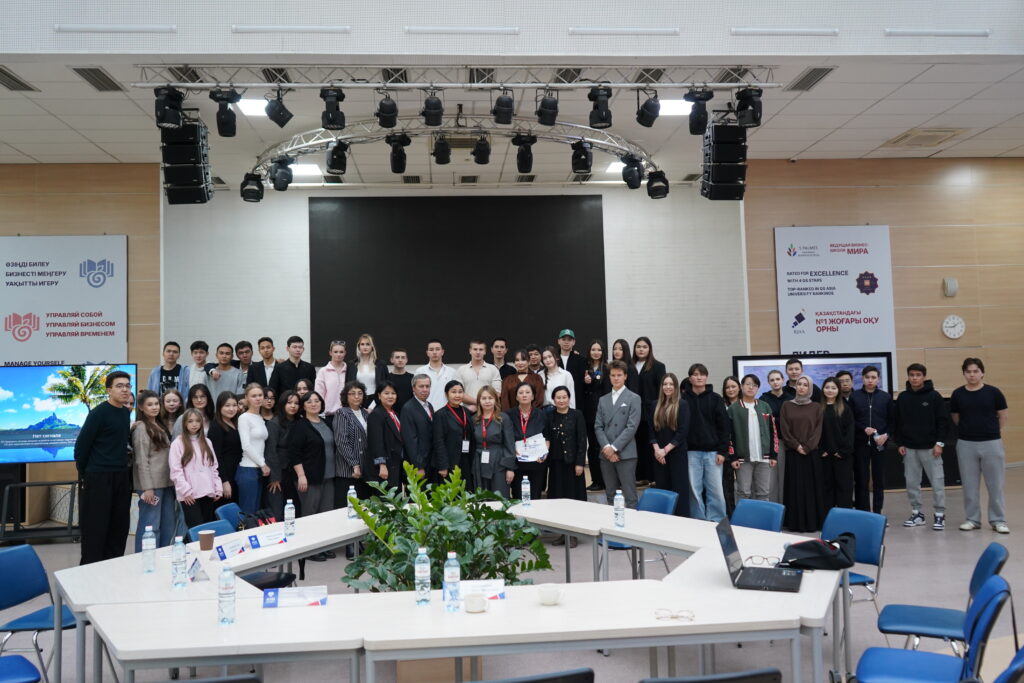
On February 27, AlmaU hosted its Annual Round Table titled “Countering Corruption in the Context of Institutional Reforms and Globalization: Compliance, Legislation, and Anti-Corruption Education.”
The event brought together representatives of the academic community, judiciary, prosecution authorities, legal profession, members of representative bodies, experts in compliance and sustainable development, as well as students of the “Law” educational program.
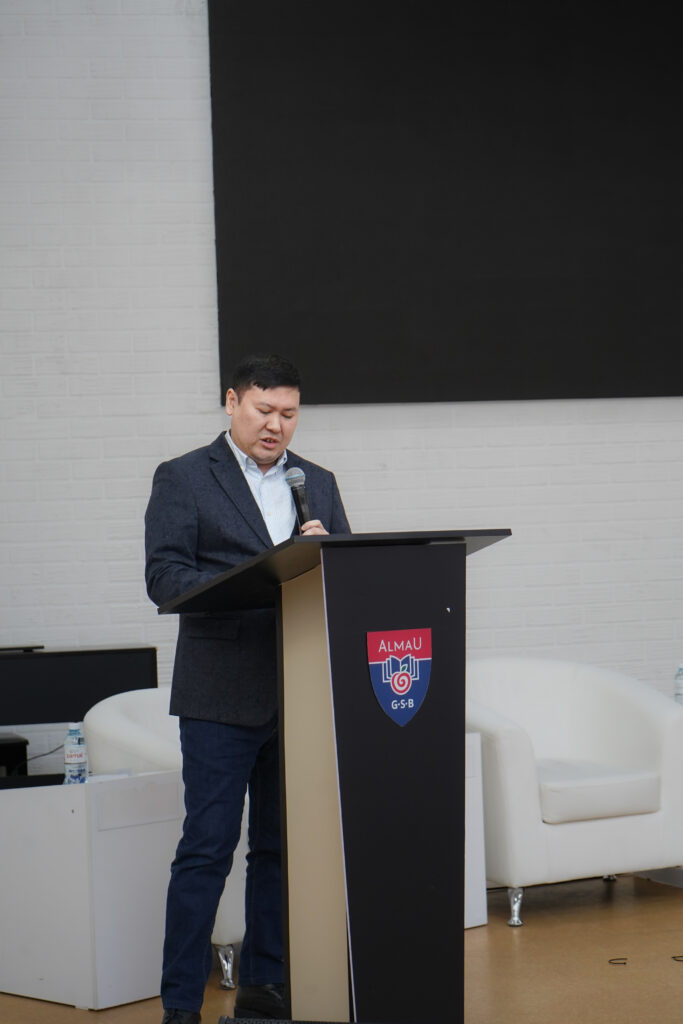
Welcoming remarks were delivered by First Vice-Rector of AlmaU Timur Buldybayev and Dean of the School of Social Sciences and Transformative Humanities Aizhan Sapargaliyeva. The speakers emphasized the crucial role of cross-sector cooperation between the state, business, academia, and civil society in building a sustainable anti-corruption ecosystem. Particular attention was paid to the importance of education and the implementation of international transparency standards in achieving sustainable development goals. The expert sessions were moderated by Gulzhaukhar Kazieva, Director of the Institute of Law SSHE.
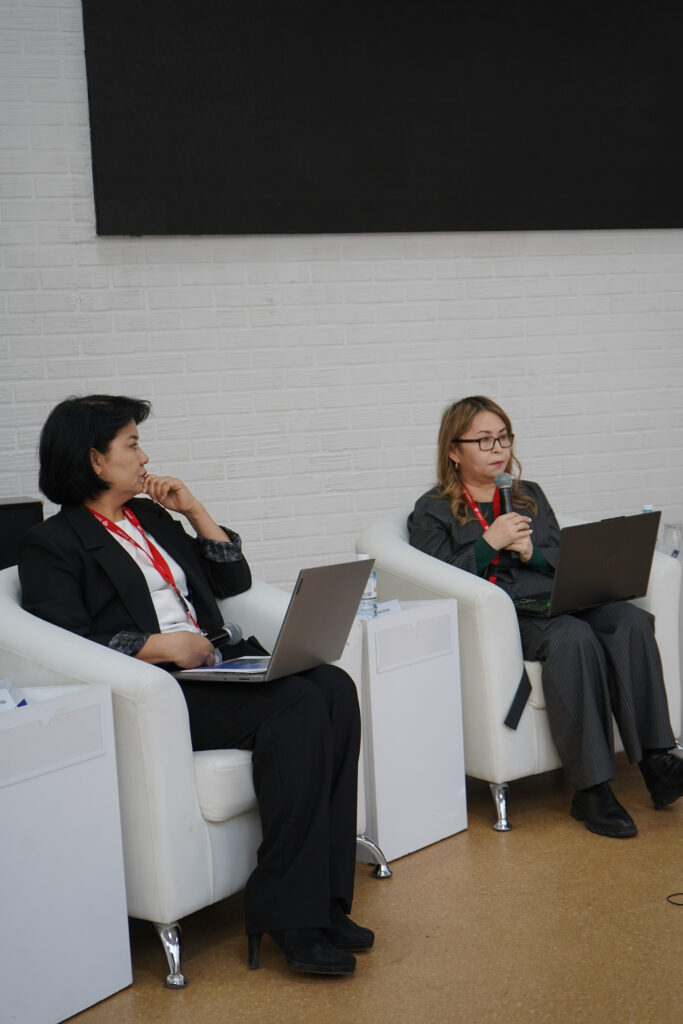
Session I: Improving Legislation, Strengthening Control Institutions, and Law Enforcement Practices
-
Dana Asylbekkyzy, Judge of Bostandyk District Court, Almaty – The role of compliance officers and compliance services in the internal control system of organizations.
-
Anar Zharkova – Analysis of mechanisms for implementing Kazakhstan’s anti-corruption policy and prospects for institutional coherence of reforms.
-
Alipasha Karaev – Parliamentary oversight as a tool for ensuring executive accountability.
-
Shyngys Bimukhanov – Balancing inevitability of punishment and proportionality of liability.
-
Roman Khusainov – Legal and institutional guarantees for protecting whistleblowers.
-
Zauresh Battalova (online) – Transforming anti-corruption review of legal acts from a formal procedure into a preventive mechanism.
-
Olga Safonova – Digital cross-border transparency: blockchain and AI as tools for preventing corruption.
-
Nikolay Turetsky – Criteria for assessing legislation effectiveness and anti-corruption potential.
-
Gulnar Kuatbayeva – Institutional factors for improving anti-corruption policy in the context of sustainable development and corporate governance.
The first session focused on improving legislation, strengthening control institutions, and enhancing law enforcement practice. Speakers discussed compliance mechanisms, parliamentary oversight, proportionality of liability, protection of whistleblowers, improvement of anti-corruption review of legal acts, and the use of digital technologies such as blockchain and artificial intelligence to increase transparency.
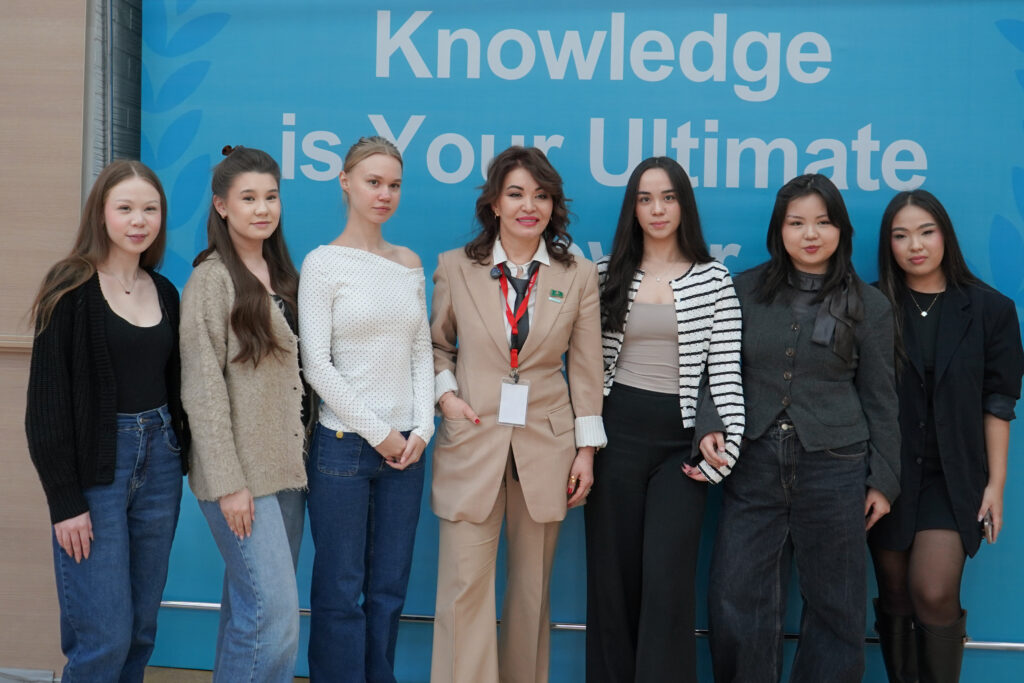
Session II: Practical Tools for Preventing Corruption in the Context of Digital Transformation
-
Khalbuyi Sharifbayeva (retired judge, online) – Judicial standards for evaluating evidence and proportionality of liability.
-
Karashash Dzhuzeyeva, Almaty City Maslikhat Deputy – Parliamentary oversight and increasing transparency at the local level.
-
Gaukhar Uvakbayeva – Role of civil society institutions in public monitoring and corporate compliance.
-
Rasul Sadik, Head of Pre-Trial Investigation Department, Almaty Region Prosecutor’s Office – Practical aspects of investigating corruption offenses and inter-agency cooperation.
-
Abay Zharlykasin – Digitalization of judicial administration and enhancing institutional transparency.
-
Meirzhan Saginaev – Legal mechanisms for countering electoral corruption in the context of political modernization.
-
Zaure Samaldykova – Anti-corruption education as a preventive factor in a globalizing world.
-
Gulzhaukhar Kazieva, Director of the Institute of Law SSHE – Integrating anti-corruption modules into educational programs, developing competencies in compliance, legal responsibility, and academic integrity.
The second session addressed practical tools for corruption prevention in the context of digital transformation. Participants examined judicial standards, local transparency mechanisms, public monitoring, investigative practice, digitalization of judicial administration, electoral risks, and the role of anti-corruption education.
In the concluding presentation, the Director of the Institute of Law highlighted the integration of anti-corruption modules into educational programs and the development of competencies in compliance, legal responsibility, and academic integrity.
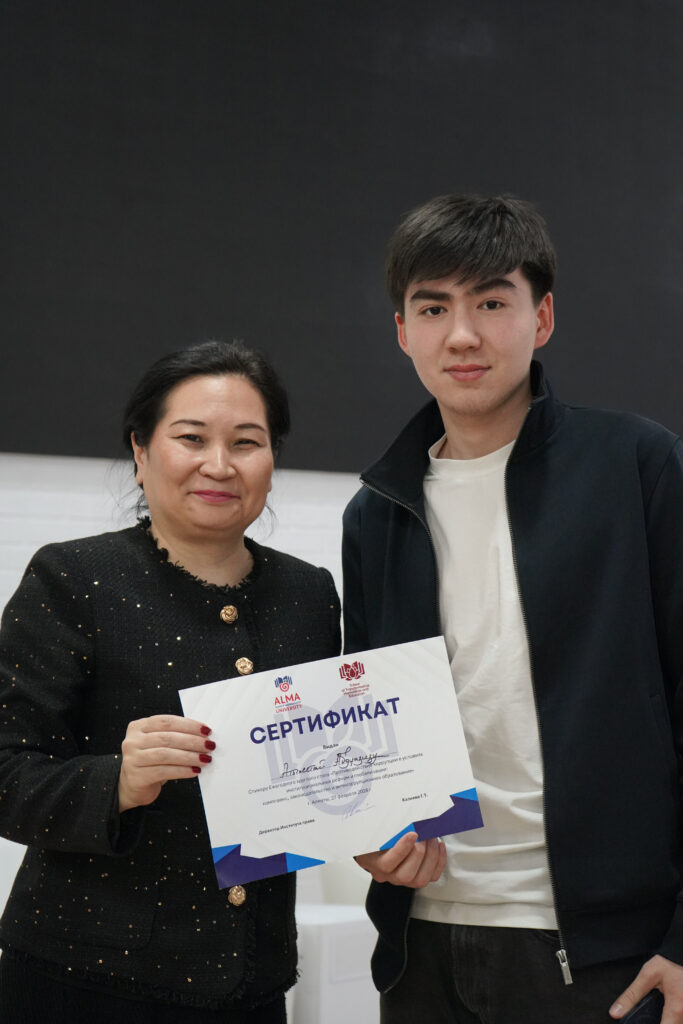
The student session featured research on public procurement, sectoral corruption risks, lobbying, international models, and the role of youth in promoting a culture of zero tolerance for corruption.
The key takeaway of the round table was clear: effective anti-corruption efforts require a systemic and collaborative approach. Sustainable change begins with strong legislation and transparent procedures and continues through education and professional culture.
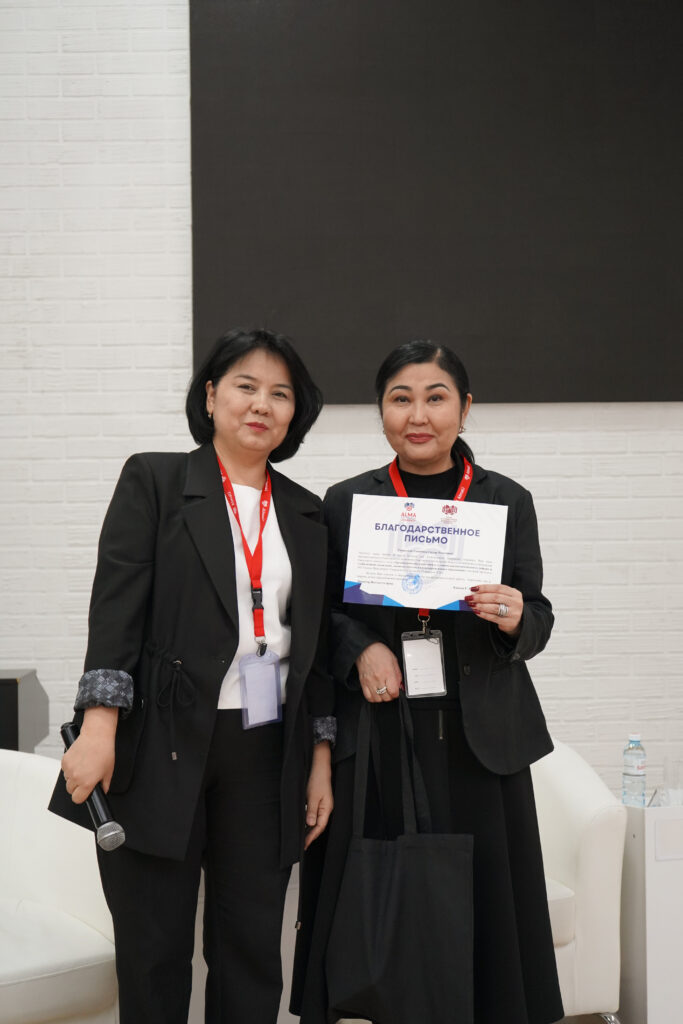
The event once again confirmed AlmaU’s role as an open expert platform that brings professionals together and contributes to the development of legal culture and responsible governance.