
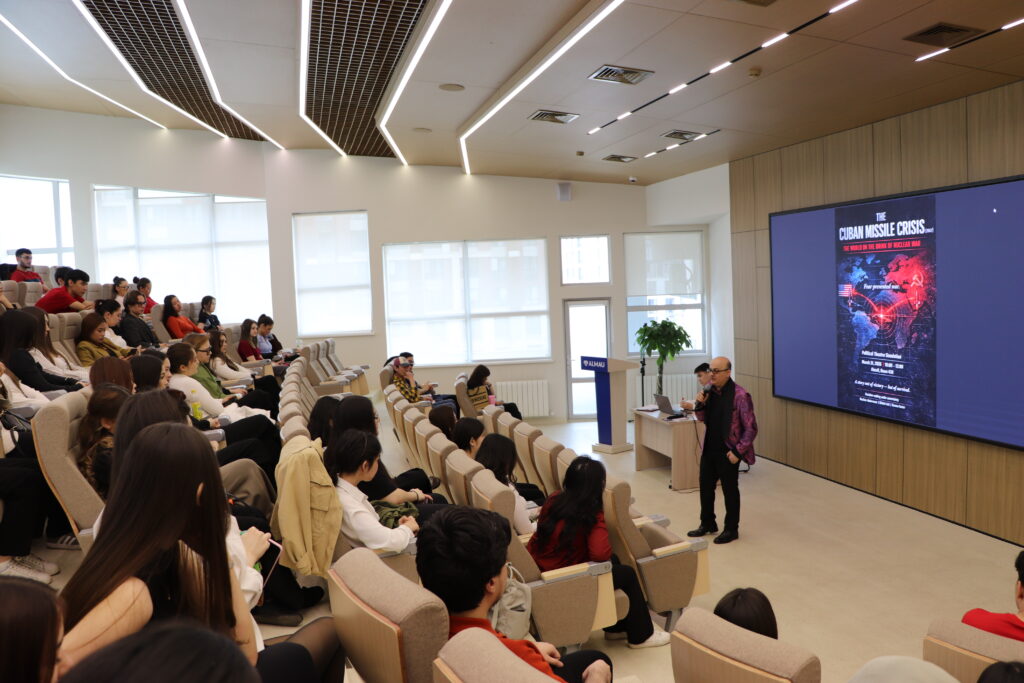
On March 31, AlmaU held a unique educational event – a political theatre performance dedicated to the 1962 Cuban Missile Crisis, one of the most tense episodes of the Cold War, when the world stood on the brink of nuclear conflict.
This project became the first of its kind in Kazakhstan, presenting an international crisis in the format of political theatre – as a live reconstruction of decision-making by world leaders. The concept, script, and direction were developed by Daniyal Saari, Director of the Political Study Center, giving the project a distinctive авторский and methodological character.
The project integrates academic analysis, political simulation, and theatrical dramaturgy. The focus was not on the chronology of events, but on the logic of decisions made under uncertainty, time pressure, and the risk of global conflict.
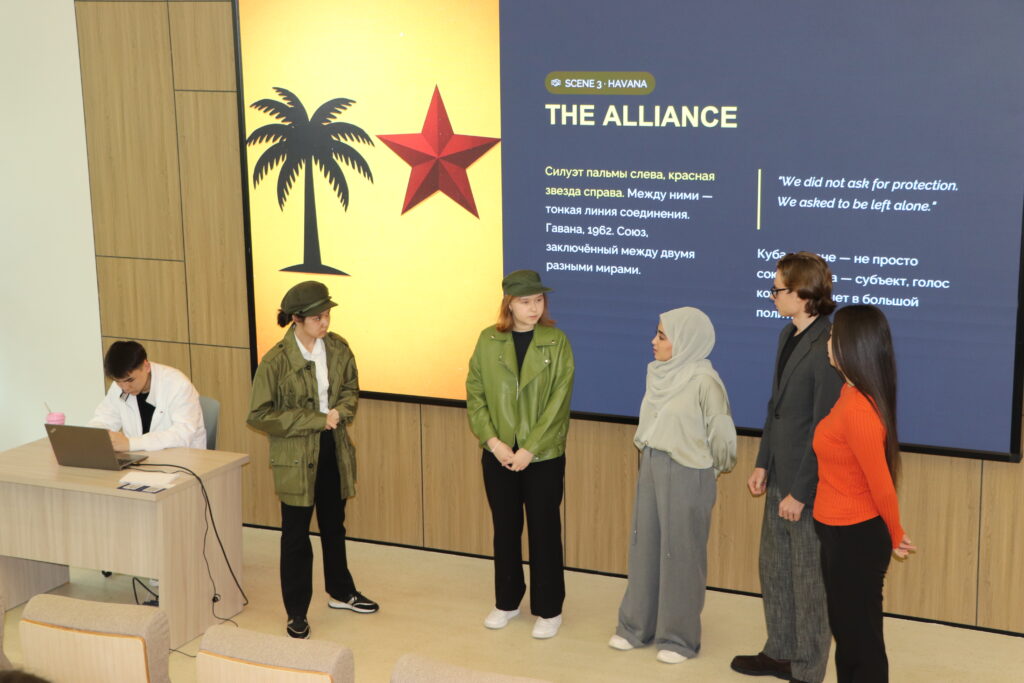
The audience observed the interaction of key actors – the USSR, the USA, Cuba, NATO countries (including Turkey and Italy), and the UN. The performance demonstrated that politics is not only about strategy, but also about doubt, fear, pressure, and responsibility.
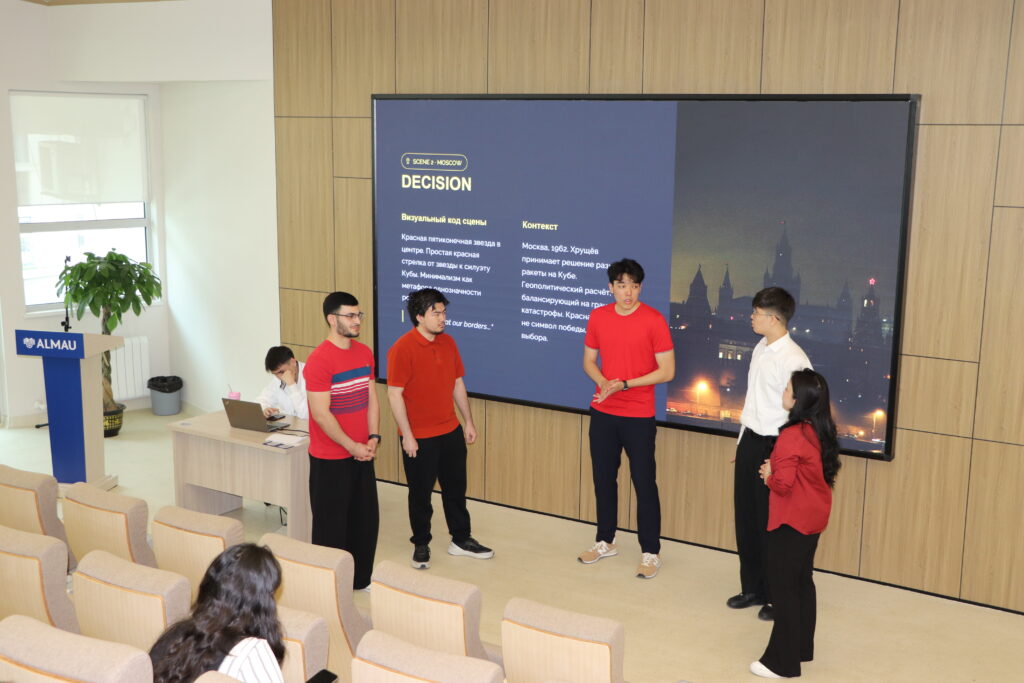
The play was structured as a political drama with parallel developments across key locations – Moscow, Washington, Havana, NATO, and the UN. Act I depicted the escalation, while Act II (“13 Days”) showed the peak of the crisis. The climax featured the B-59 submarine episode, where one decision prevented a nuclear catastrophe.
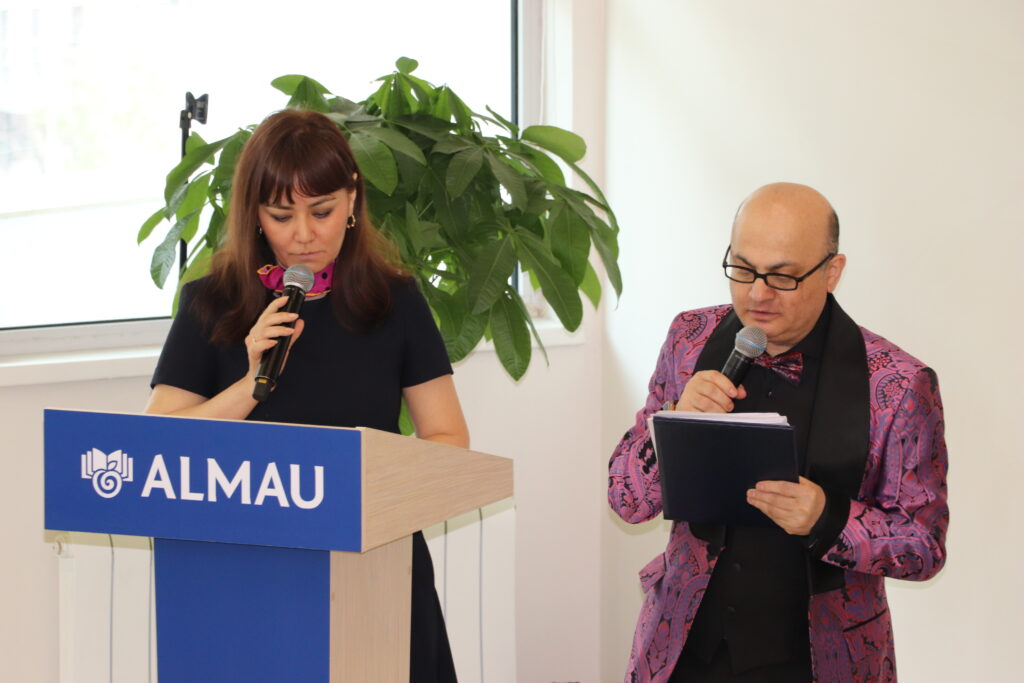
The project was implemented with the participation of the university’s academic team: Kamran Guseynov, Dameli Nosubaliyeva, Dinara Tumabekova, and Dulat Yessenbayev. The moderators were Daniyal Saari and Dinara Tumabekova.
Around 50 students took part in the performance, portraying political leaders, diplomats, military personnel, and journalists. They not only acted but experienced the pressure of decision-making, diplomatic dilemmas, and responsibility.
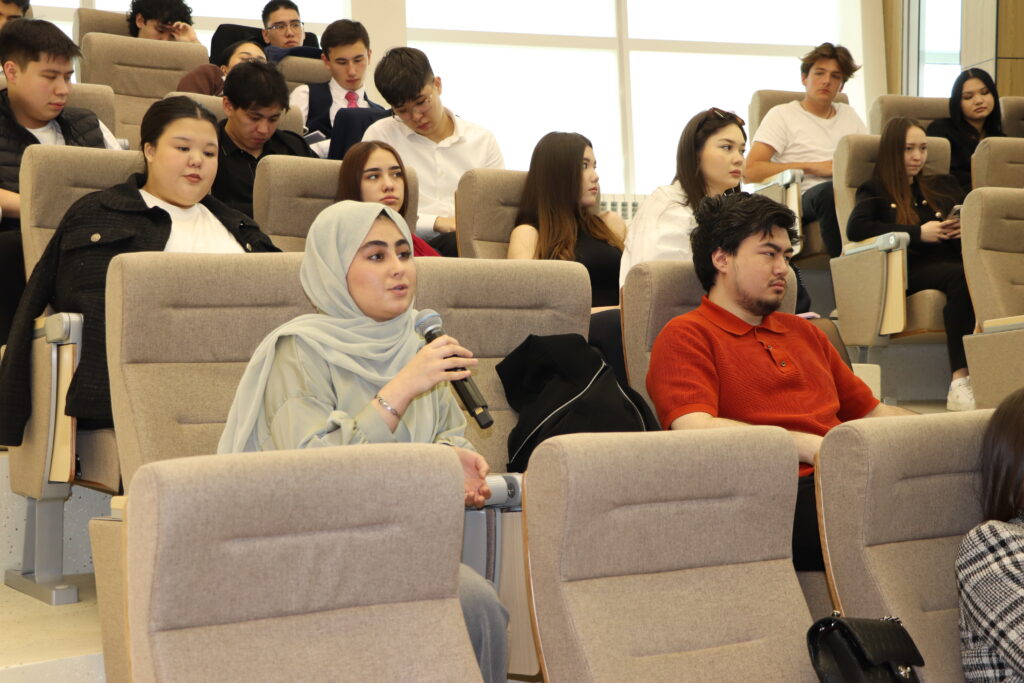
A discussion following the performance allowed participants to reflect on the relevance of the crisis today, global risks, and the role of the human factor in preventing conflicts.
The project demonstrated that this format effectively combines theory and practice, developing strategic thinking and a deeper understanding of international relations.
The key message of the performance:
The Cuban Missile Crisis is not a story of victory, but a story of how the world survived thanks to responsibility, doubt, and the ability to stop in time.