
Students of Almaty Management University (AlmaU) with the support of the Institute of Entrepreneurship have developed an original board game called “Plan B” – an educational tool aimed at developing analytical thinking, teamwork, and decision-making skills under uncertainty. The project was created as part of an academic assignment and has already received positive feedback from both students and university staff.
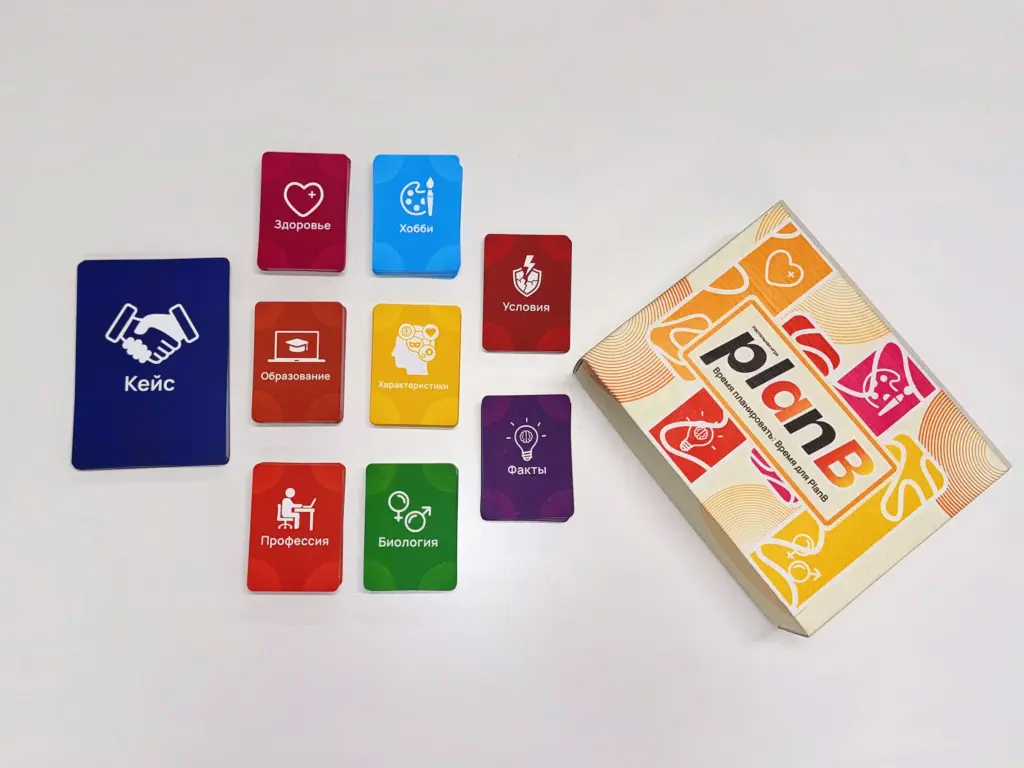
“Plan B” is a board game in which participants solve business problems through game-based scenarios. The concept is inspired by the popular board game “Bunker” but unlike traditional entertainment formats, this game is designed for corporate and professional audiences. During the game, participants receive cards describing individual characteristics such as profession, skills, education, interests, health status, and unusual personal facts.
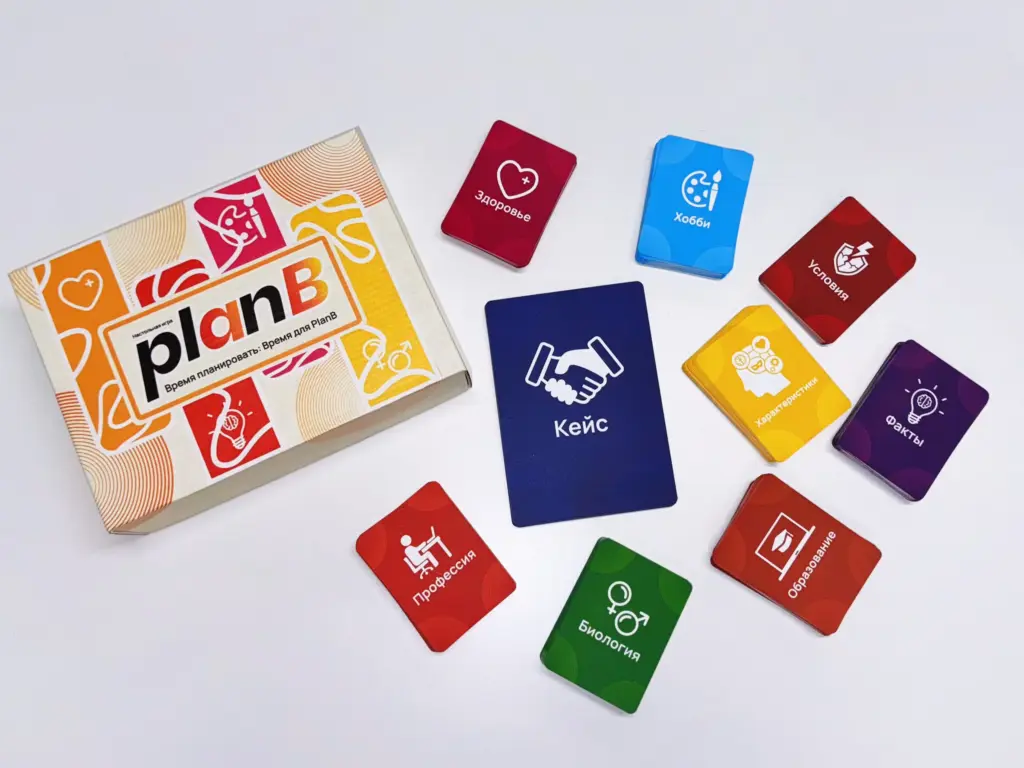
In addition, business case and hazard cards are used to create problem situations and define the overall scenario. The gameplay revolves around collective decision-making. Participants must convincingly demonstrate their professional value and explain how they can contribute to solving the given case. Some characteristics may initially seem paradoxical or unrelated to business, but the ability to logically justify the usefulness of unconventional traits becomes a key element of the game. Ultimately, participants who demonstrate the most relevant competencies and effective problem-solving skills are declared winners.

The idea for the game originated as an academic assignment. According to the author of the concept, Elina Karamergenova, the idea was developed within just a few days:
“While studying in college, we were assigned to develop a project for our midterm week. After participating in a business game called ‘Factory,’ I came up with the idea of combining game mechanics with business problem-solving – this led to a concept similar to ‘Bunker,’ but designed for a business environment. ‘Plan B’ is an evolution of my earlier project ‘Empire of Success’ which I created during my college years. Now we have updated the concept, design, and cards, turning the idea into a fully developed board game” she explained.

The name of the game also reflects its philosophy. According to team member Artem Nam, “Plan B” represents the ability to adapt in any situation:
“Plan B is about adaptability. In real business, things rarely go according to plan A, so it is important to be able to quickly adjust and find alternative solutions” he shared.

One of the key features of the project is its practical focus. Unlike most board games that are primarily entertainment-oriented, “Plan B” was designed as a tool for analyzing professional competencies and solving business cases. Team member Anelya Utegenova highlighted the uniqueness of the game:
“There are no predefined correct answers in our game. Everything depends on how convincingly a participant can demonstrate their value in solving the case. This closely resembles a real working environment,” she noted.

“As a result, the game mechanics help participants better understand their strengths, develop communication skills, and learn to make decisions under conditions of limited information,” added another team member, Diana Mandrovskaya.
Interest in game-based learning formats is growing worldwide. According to international educational research, game-based methods increase participant engagement and improve knowledge retention compared to traditional lectures. In many countries, business schools and corporate training programs actively use simulation games as tools to develop strategic thinking and managerial skills. In this context, the developers note that there are currently very few similar board games in the Kazakhstani market focused specifically on modeling business cases and developing professional competencies.
Therefore, the next step is to further develop the project and bring it to market. The team plans not to limit the product to the university environment and is considering scaling opportunities:

“Among the planned directions are releasing a physical retail version of the game, listing it on marketplaces, and developing a digital version of the product,” shared team member Saida Latypayeva.
The project demonstrates that AlmaU students are capable of creating products with real value for business and society. The team members emphasize that working on the game has been an important experience and a source of motivation:
“We hope this will inspire other students to create their own projects. For us, it was important not just to come up with an idea, but to package it into a real product. The costs are minimal, but the opportunities are significant. We truly believe Plan B will be useful, and for us, developing this game is only the beginning”.