
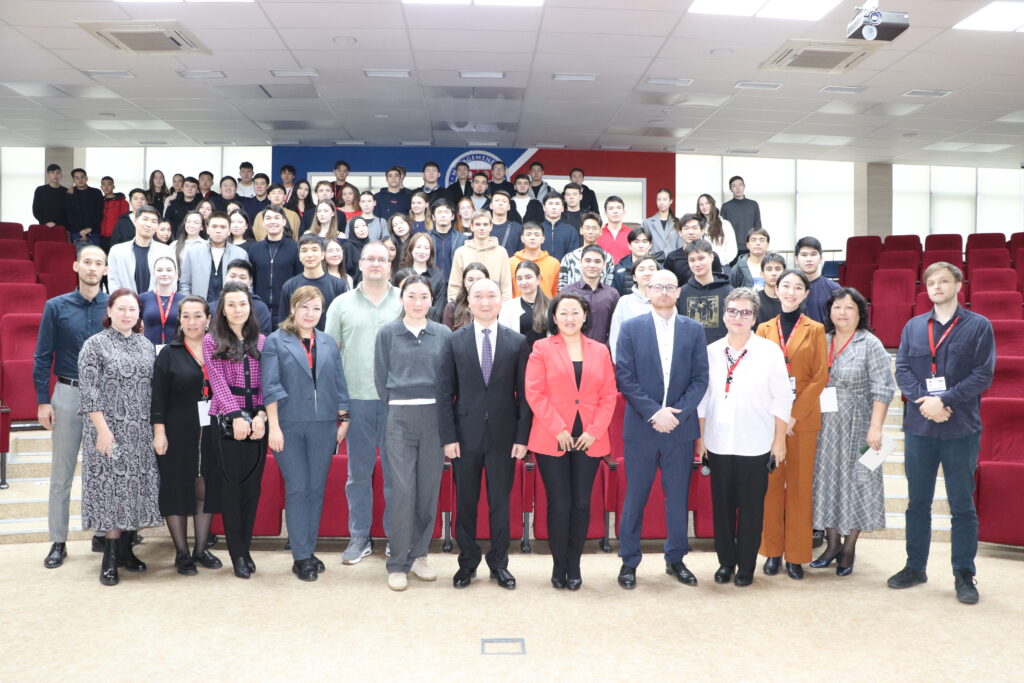
 On December 5, AlmaU hosted the II International Scientific and Practical Conference titled “Integration of Science, Education and Business: The Path to Leadership in Logistics.” The event brought together leading industry experts, representatives of government bodies, international businesses, and the academic community to discuss the strategic development of Kazakhstan’s transport and logistics potential.
AlmaU’s Vice-Rector for Science and Commercialization, Renata Kudaibergenova, opened the conference with a ceremonial welcome speech.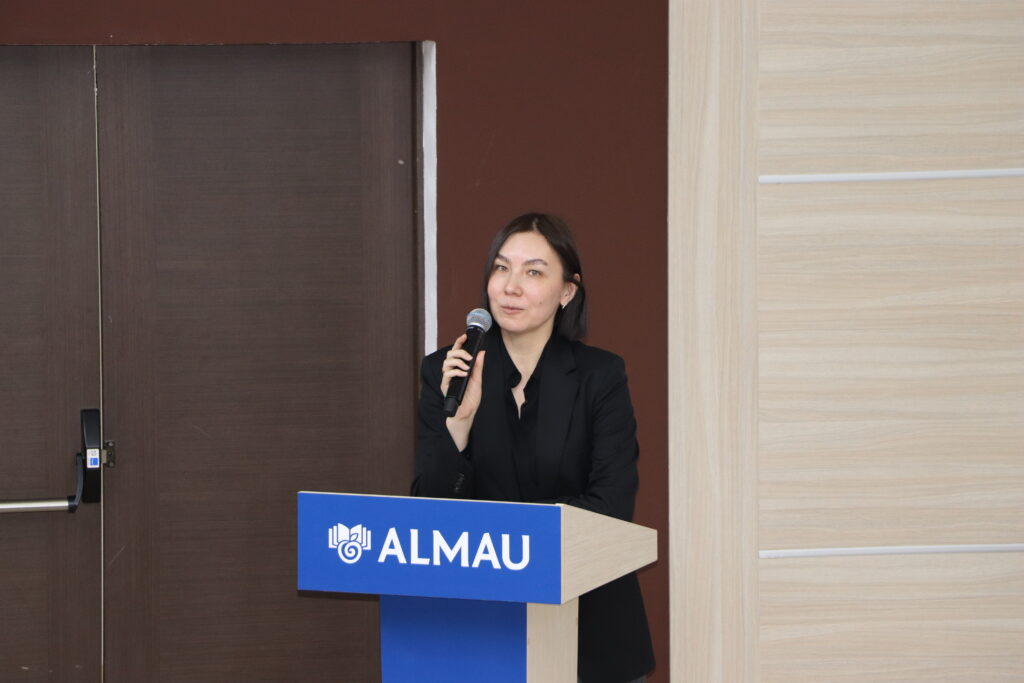
The professional discussion was set in motion by Mukhtar Tolegen, Executive Director for Transport Logistics of the Union of Transport Workers of Kazakhstan KAZLOGISTICS. In his presentation, he outlined the current state of the industry and highlighted major infrastructure projects that are being implemented or nearing completion.
A key topic of discussion was workforce development. Marat Shurenov, Head of the Academic School “IT and Services” at Q University, presented a revolutionary approach to education based on the GEMS Education model.
He proposed revising the structure of Kazakhstan’s bachelor’s programs by reducing the duration from four to three years, in line with international best practices. The key idea is to strengthen continuity between school and university. The speaker suggested introducing university-level modules (Foundation Year) already in the 11th–12th grades, enabling students to enter the labor market earlier while saving time and resources without compromising the quality of education.
Dinara Umirzakova, Professor of Practice at AlmaU, noted in her presentation on education trends that by 2030 Kazakhstan’s transport sector will require 75,000 additional jobs. She emphasized that as early as 2025, new professions such as BIM specialists, digital logistics operators, and external drone pilots are emerging. Comparing Kazakhstan’s experience with Europe’s, she highlighted the need to implement strict dual education standards and develop soft skills.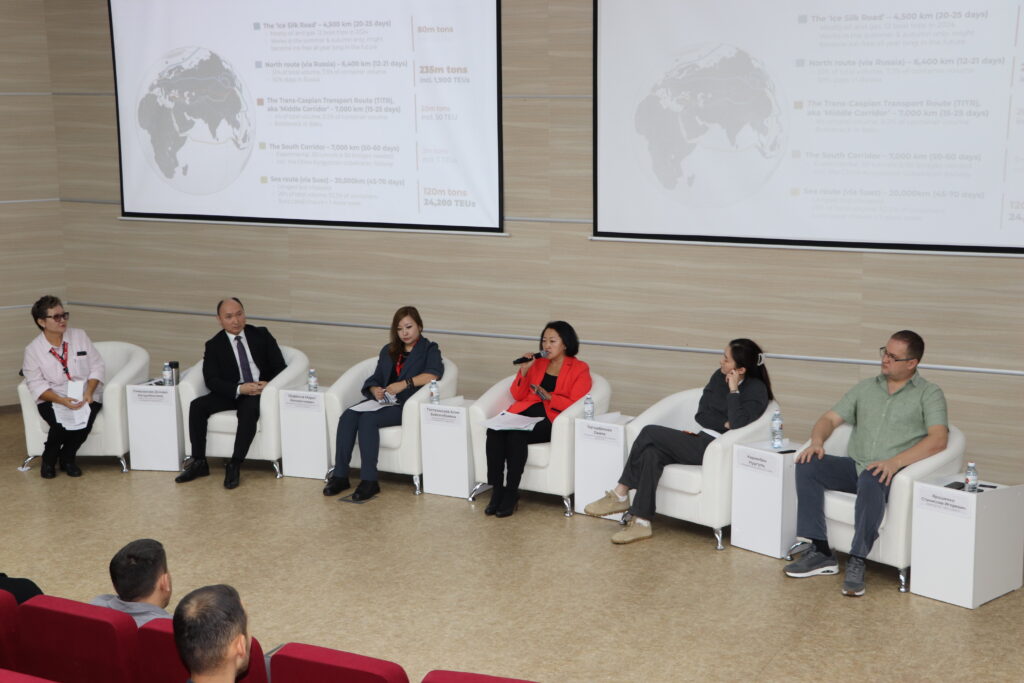
A practical case of implementing dual education was presented by Aliya Toktamysova, Advisor to the President of Shyngar Trans. She openly described the challenges businesses face when working with students—from insufficient basic preparation to outdated regulatory requirements. However, the company’s experience shows that investing in students pays off: adaptation periods shorten and businesses gain a loyal talent pipeline. The company actively cooperates with universities by organizing field classes at terminals and warehouses.
The final block of the conference was dedicated to technology. Stanislav Yaroshenko, Director of Sprint Logistics, emphasized in his talk “Logistics of the Future” that today’s logistics specialist is transforming into a data analyst.
Yaroshenko stressed the importance of systemic thinking—the ability to see the entire supply chain as a whole. He noted that businesses must create ecosystems where technologies do not replace people but complement them, enabling employees to become “architects of complex supply chains.”
The baton from strategic planning was picked up by the real sector. Nurgul Karimbek, Logistics Manager at PTC Cargo (a subsidiary of PTC Holding), delivered a presentation titled “The Pulse of Transport Connections,” showcasing how private capital is turning Kazakhstan into a transit hub in practice.
Her presentation reinforced the conference’s key message: leadership in logistics is impossible without deep asset integration and the creation of multimodal services that synchronize flows between China, Europe, and Central Asia.
International expertise was provided by Berk Kucukaltan, Associate Professor at the University of Bradford (UK). His presentation focused on digitalization projections and the use of blockchain in supply chains.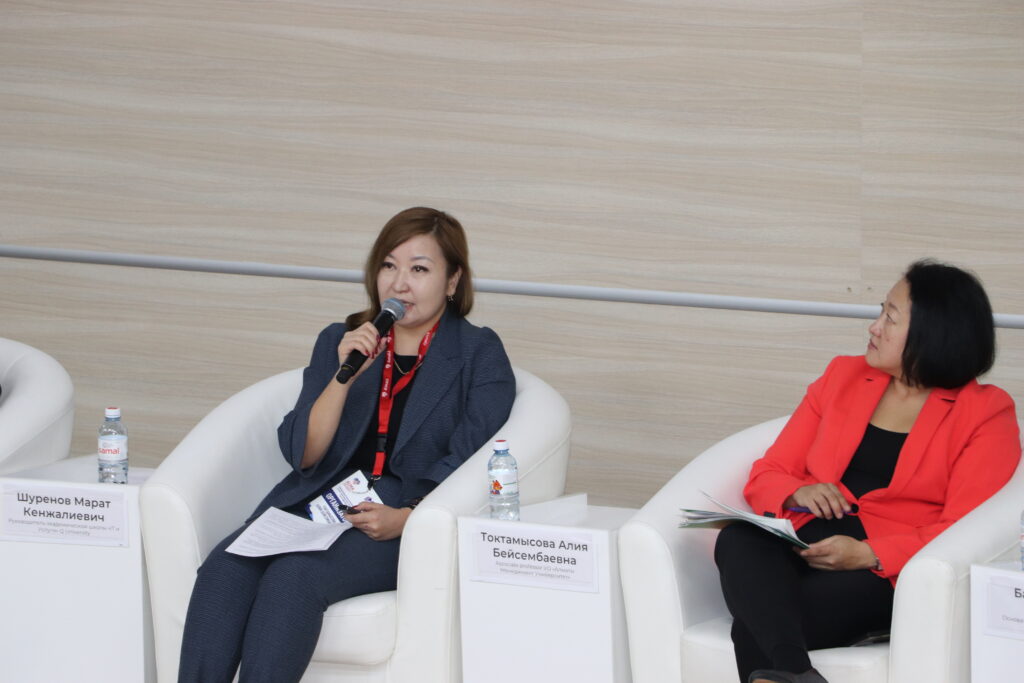
In an online format, Mangal Azgarhil, President of Mangal Group (Germany), also spoke, reaffirming Kazakhstan’s status as a reliable investment partner in the logistics sector.
The international dimension of the conference was further expanded by Leila Batyrbekova, Founder and Secretary-General of the Europe & Central Asia Transport and Trade Association (ECATA), based in Brussels.
In her presentation, she analyzed the efficiency of existing China–Europe routes, noting that the “Middle Corridor” (TITR) is becoming increasingly in demand. In 2024–2025, the direction is seeing explosive growth in container transportation. She also emphasized the importance of transport digitalization as a space for integrating science and business, enabling seamless logistics chains between Asia and Europe.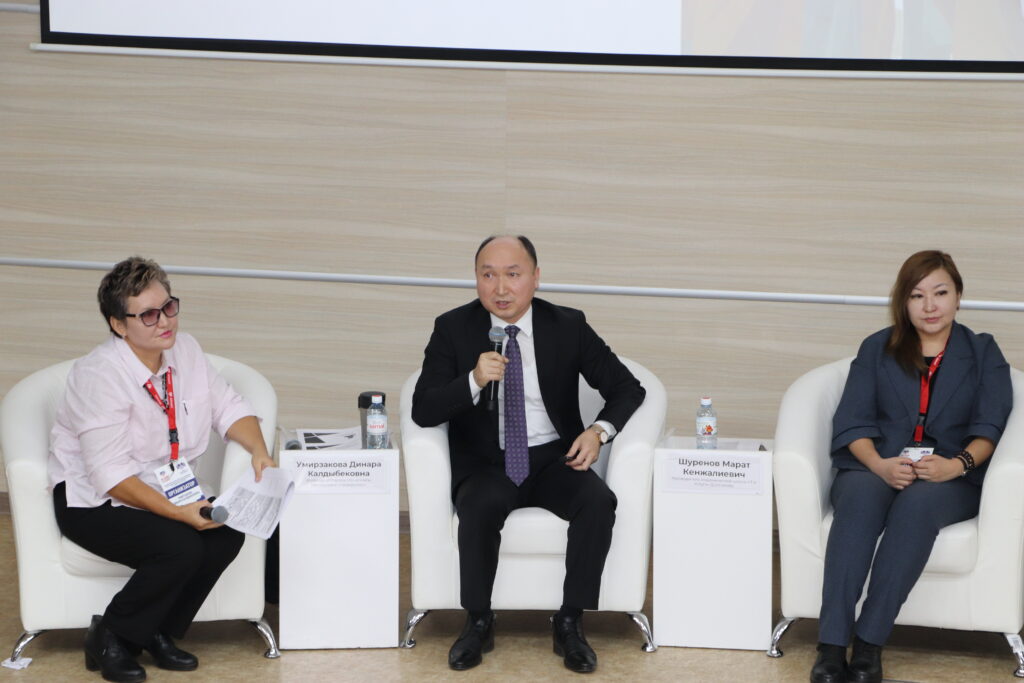
The professor presented a comparative analysis of technology use in the UK and Kazakhstan. He noted that to combat fraud, cyberattacks, and data opacity, the industry must more actively adopt blockchain as a tool for trust and traceability—not only as a financial instrument.
The conference demonstrated that Kazakhstan is on the verge of significant transformations in the logistics sector. The synergy of government infrastructure projects, the adoption of advanced business technologies, and the reform of educational models create a solid foundation for the country to strengthen its position as a key logistics hub of Eurasia.
Such events strengthen AlmaU’s collaboration with business structures, reinforce its position in the academic environment, and affirm the university’s status as a leading platform for professional dialogue in the field of logistics.