
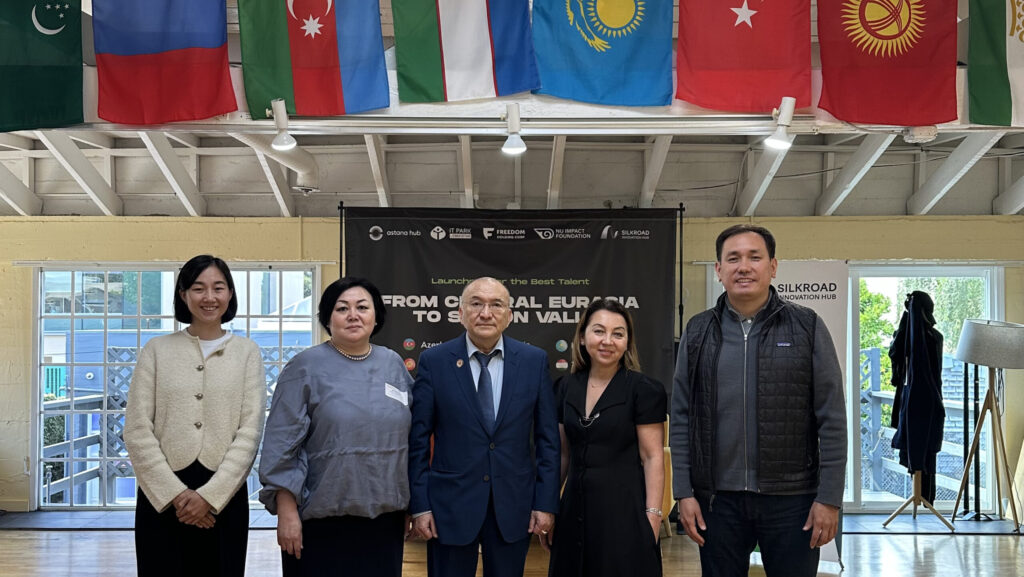
In April 2026, a delegation from Almaty Management Unversity (AlmaU) by its President and Founder, Assylbek Kozhakhmetov, along with Aigerim Yelibayeva, Director of the Institute of Leadership, and Dayana Balgabekova, Director of the Institute of Education – visited the United States. The visit included participation in the American Educational Research Association 2026 (AERA) Annual Meeting in Los Angeles, as well as a series of meetings with universities and expert centers aimed at strengthening partnerships and fostering knowledge exchange.
AlmaU at AERA 2026
Assylbek Kozhakhmetov spoke at a panel session on civic education and the development of civic competencies, organized by the Graduate School of Education and Human Development at George Washington University.
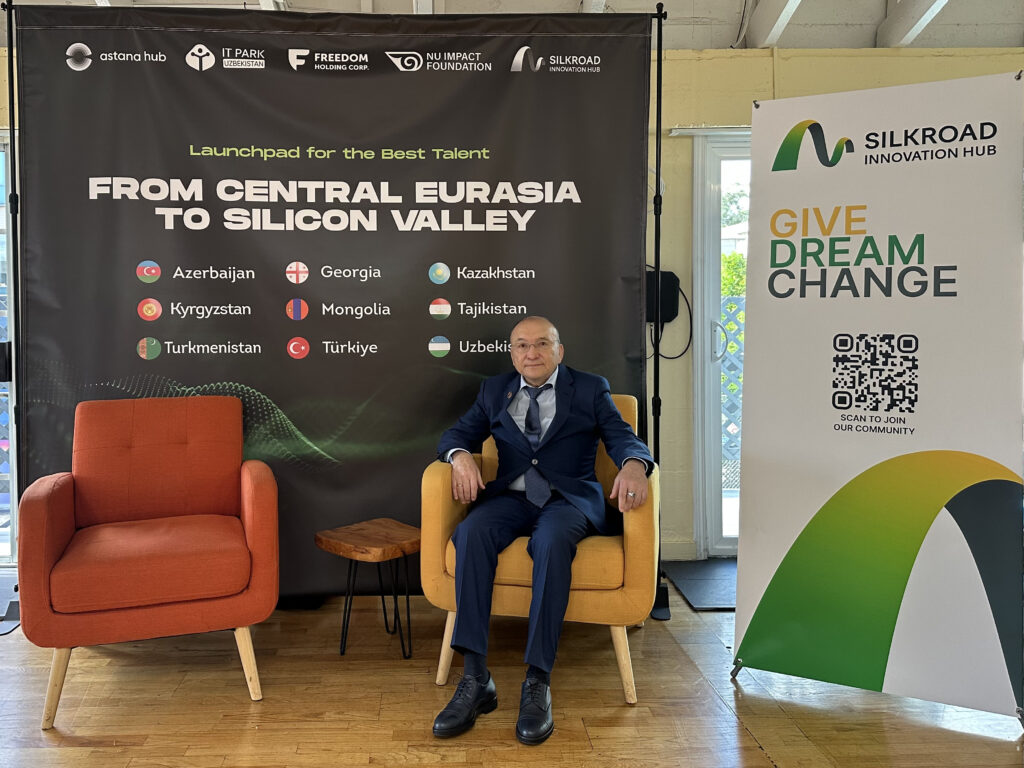
“Today, we face the need to move from ‘higher education’ to the concept of ‘deeper education.’ Its goal is not only to prepare individuals for the labor market, but to shape personality capable of maintaining an ethical compass and making a real impact on society. This approach is rooted in Abai Kunanbayev’s idea of the ‘Tolyq Adam’-a holistic individual in whom intellect, heart, and will are in harmony. Such unity teaches not only to accumulate knowledge, but to understand, feel, and act. In the era of artificial intelligence, education must focus on what truly matters-asking ‘Why do we think this way?’ and not accepting ready-made answers as absolute truth,” Assylbek Kozhakhmetov emphasized.
A New Architecture of Collaboration
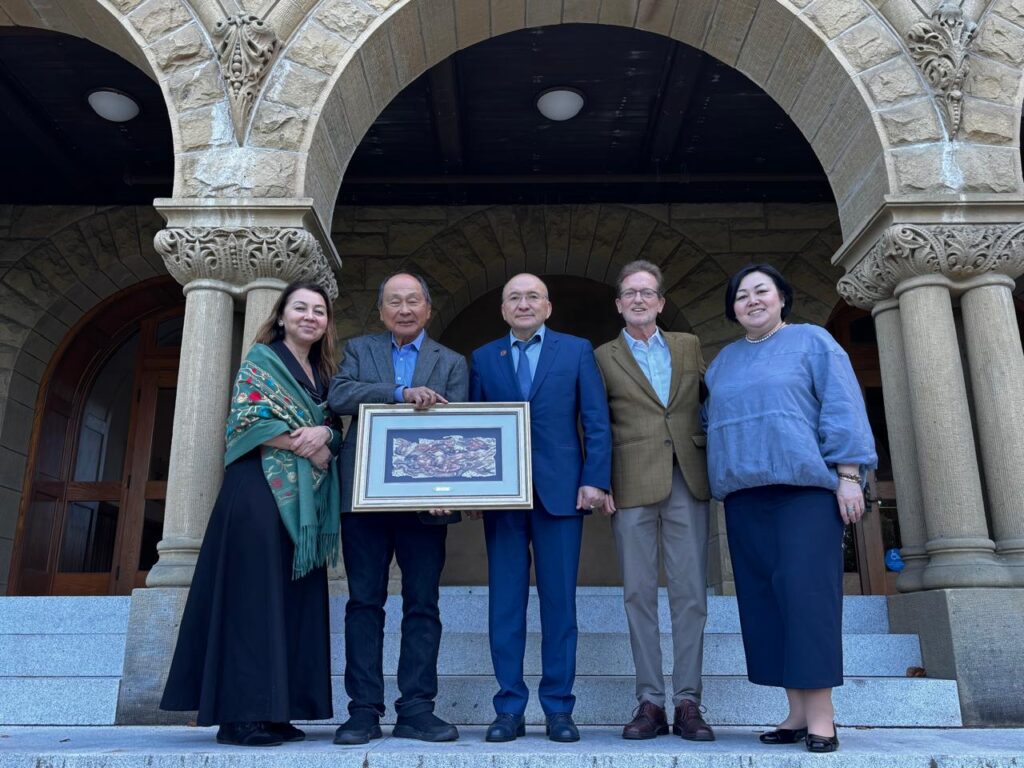
At Stanford University, one of the oldest institutions in the United States, the delegation held a series of strategic meetings focused on long-term academic and institutional collaboration.
A key meeting took place with the leadership of the Stanford Center on Democracy, Development, and the Rule of Law, part of the Freeman Spogli Institute for International Studies, including Professors Francis Fukuyama and Erik Jensen.
AlmaU identified strengthening academic ties and advancing regional initiatives in Central Asia among its top priorities. These efforts extend beyond traditional education agendas to include new interdisciplinary areas at the intersection of research, practice, and public policy. One of the proposed initiatives was the creation of a Central Asia Case Lab, potentially in collaboration with the Leadership Academy of Development.
“These initiatives have not yet reached a systemic level, despite earlier engagements, including Francis Fukuyama’s visit to AlmaU in 2023,” noted Aigerim Yelibayeva. “Our team proposed establishing the Central Asia Case Lab to support field research and applied projects. This would help shape a 5-10 year research agenda, build sustainable collaboration with international experts, and engage both faculty and students in an environment where academic knowledge meets practice.”
In the long term, AlmaU aims to become a key regional partner of Stanford University in both academic and research domains, grounded in deep local engagement.
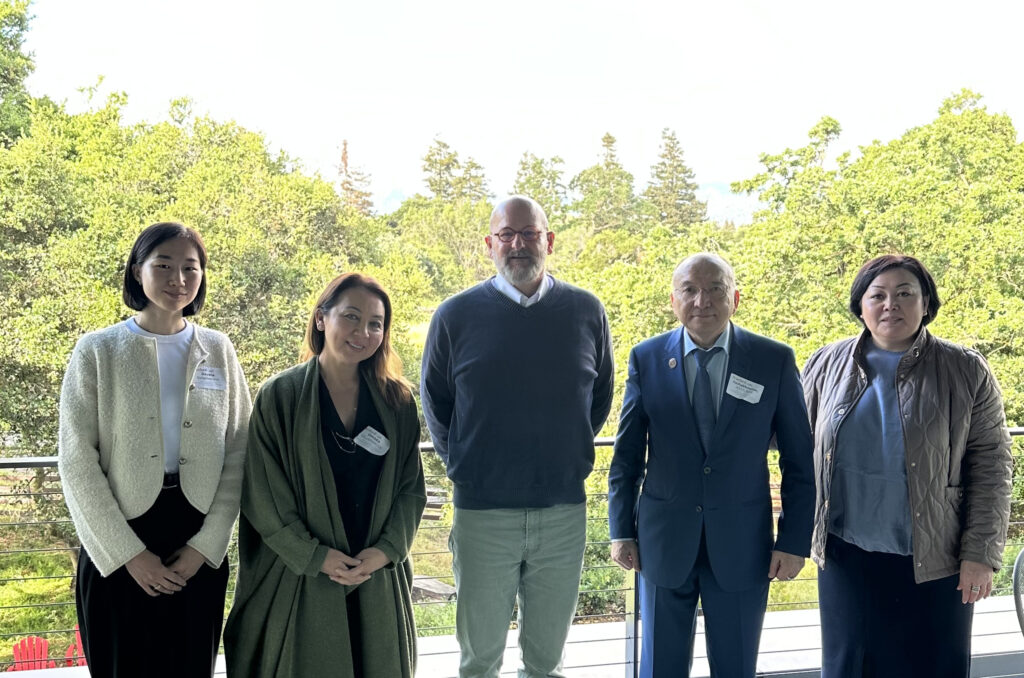
The delegation also met with Mona Wang Maye, Director of Business Development and Executive Education at Stanford Graduate School of Business, to outline priority areas of cooperation. Engagement with Stanford Graduate School of Education was also discussed. The visit included a tour of the GSE Makery, an innovative space designed for creative research, experimentation, and collaborative learning.
From Academic Exchange to Research Alliances
At the University of California, Berkeley, a new level of collaboration was defined, focusing on working with real-world data, conducting simulations, applied research, and joint publications involving both students and faculty. Discussions also covered adapting Berkeley’s partnership ecosystem-already implemented in European and Asian institutions – for AlmaU, as well as launching joint courses and programs, including potential collaboration with Berkeley Haas School of Business and the Berkeley Haas Center for Social Sector Leadership.
Representatives of the Washington international policy institute expressed readiness to sign a memorandum of understanding that would include the development of joint educational programs in both online and offline formats, integrating academic and cultural components.
At the Elliott School of International Affairs at George Washington University, agreements were reached on joint research initiatives and academic exchange programs for faculty and students.
At the Schar School of Policy and Government at George Mason University, both sides emphasized the importance of institutional collaboration in developing research centers and training professionals, alongside academic exchange.
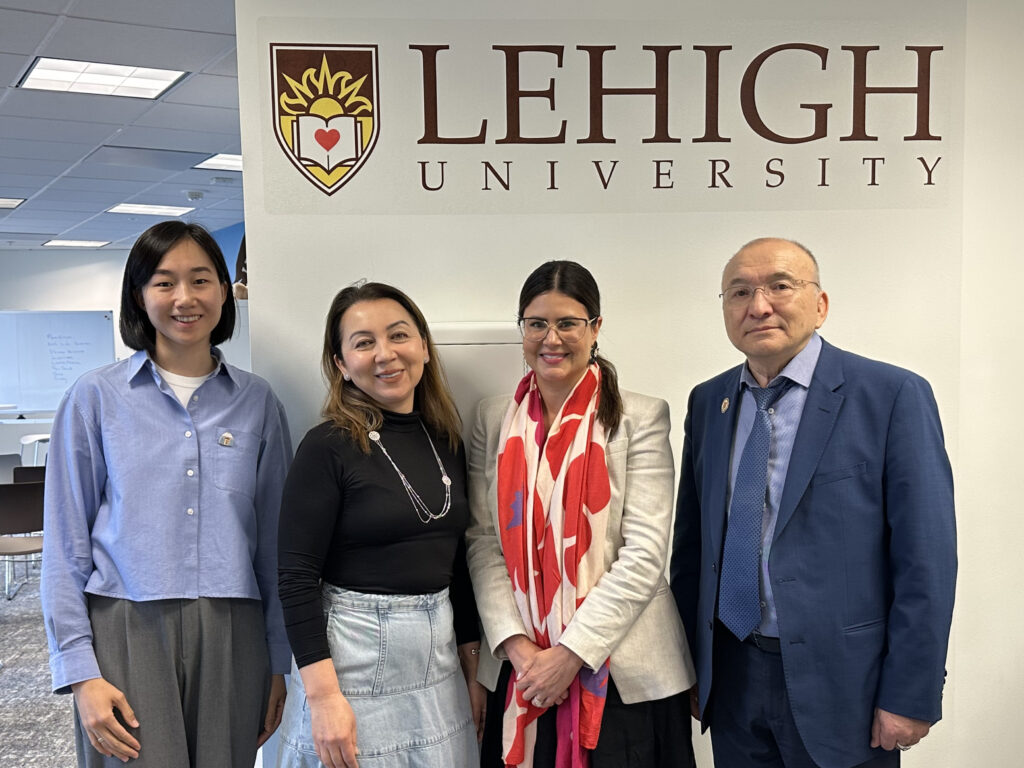
Lehigh University was highlighted as a model of dynamic growth in education, demonstrating an open approach to flexible learning formats, including hybrid programs with up to 60% online components, a focus on lifelong learning, and customized courses for prospective students.
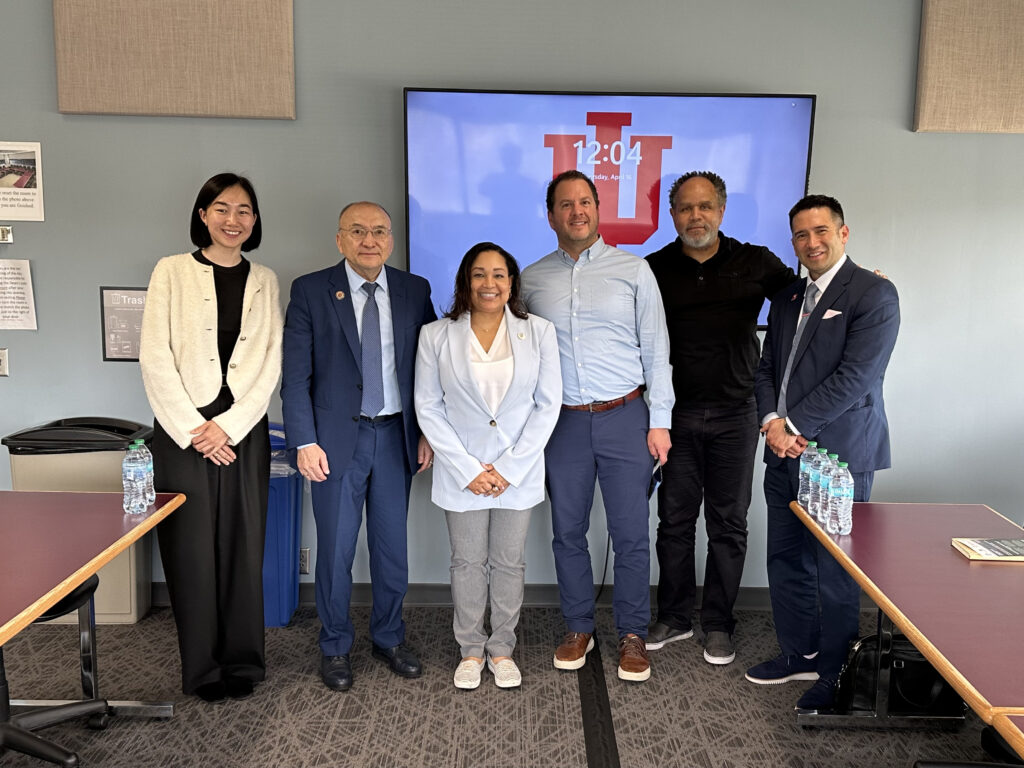
At Indiana University (Indianapolis campus), discussions focused on academic mobility, joint programs, and institutional collaboration.
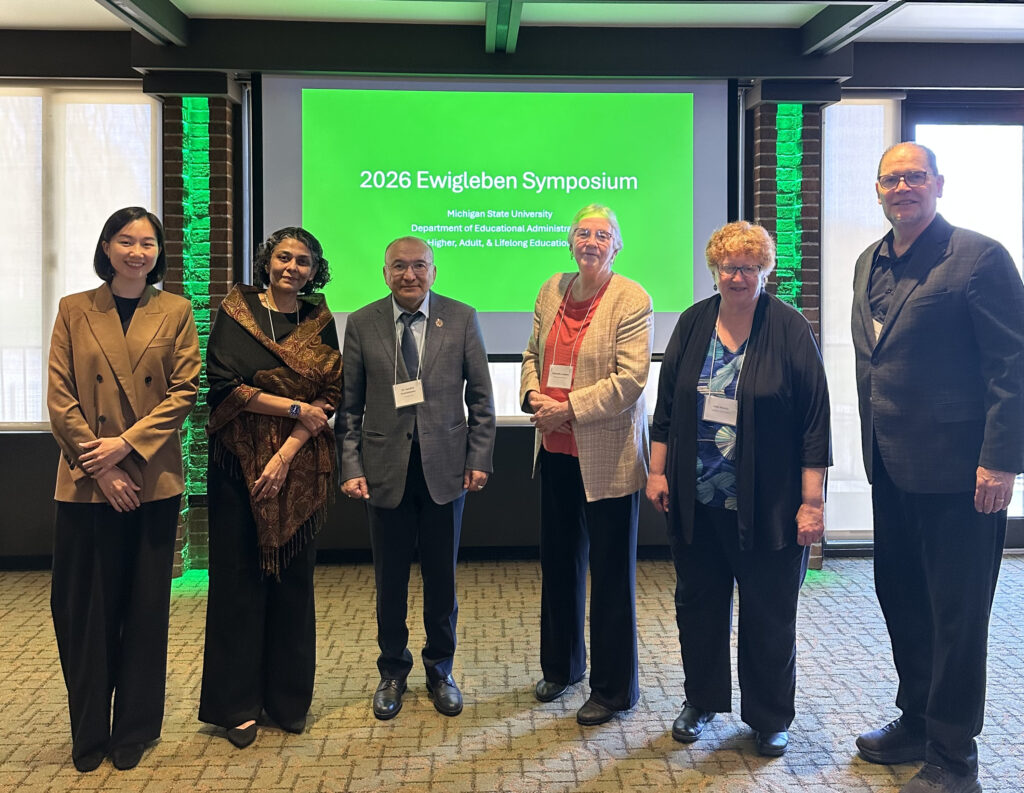
Michigan State University hosted an international symposium on education policy and global cooperation, where AlmaU presented its modern approaches to education development and strengthening global academic partnerships.
Transition to a Venture Mindset
The AlmaU delegation also visited the Silk Road Innovation Hub, founded by Asset Abdualiyev, a member of AlmaU’s Board of Trustees. He noted that the university’s progress calls for a new phase of development centered on strengthening a venture-oriented mindset.
“It is essential to cultivate a culture of creative thinking among faculty and students-the ability to ‘dream and transform,’ where ideas turn into real, socially meaningful outcomes,” he stated.
The next stage of AlmaU’s development will focus on strengthening its innovation ecosystem and expanding its role as a driver of societal change at the national, regional, and global levels.
Sustainable Campus
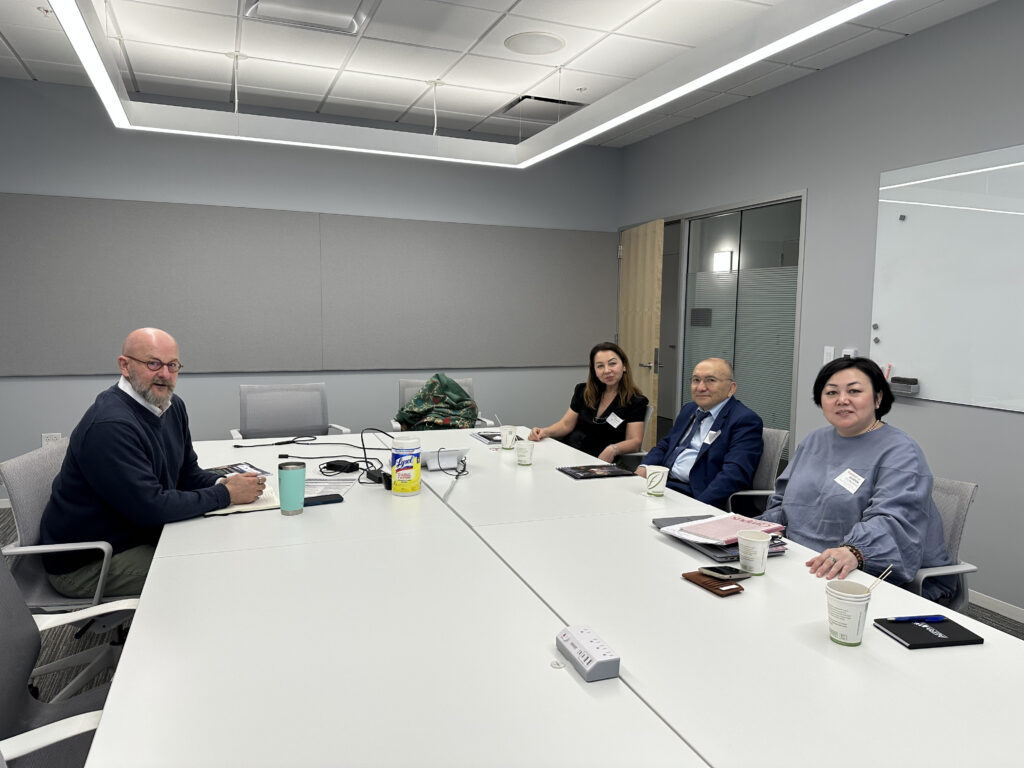
During a visit to UC Berkeley, the delegation met with Lincoln Bleveans, Director of Sustainability, Utilities, and Infrastructure. The discussion focused on sustainable campus development and modern approaches to managing university infrastructure, which could be applied to the design of AlmaU’s future campus.
At Stanford University, the delegation explored advanced practices in energy infrastructure management. The system integrates heating, water, and power supply into a unified automated complex based on digital sensors and closed-loop principles, enabling efficient resource use and energy redistribution.
The Stanford Engineering Summer Institute was also highlighted as a model where education is built around solving real engineering challenges, and the campus itself functions as a living laboratory for sustainable technologies.
This experience is seen as a key reference point for AlmaU’s future infrastructure and educational development, including the planning of a new campus and the implementation of sustainable engineering solutions.
As part of the visit, a meeting was also held at the Embassy of Kazakhstan in the United States. The parties exchanged updates on ongoing projects and identified potential areas for collaboration in academic and applied research. Special emphasis was placed on the need to expand objective research on Kazakhstan and the broader region, as well as to strengthen international research partnerships.
Overall, the visit to the United States demonstrated AlmaU’s strong international standing and opened new opportunities for partnerships with leading educational and research institutions worldwide.