
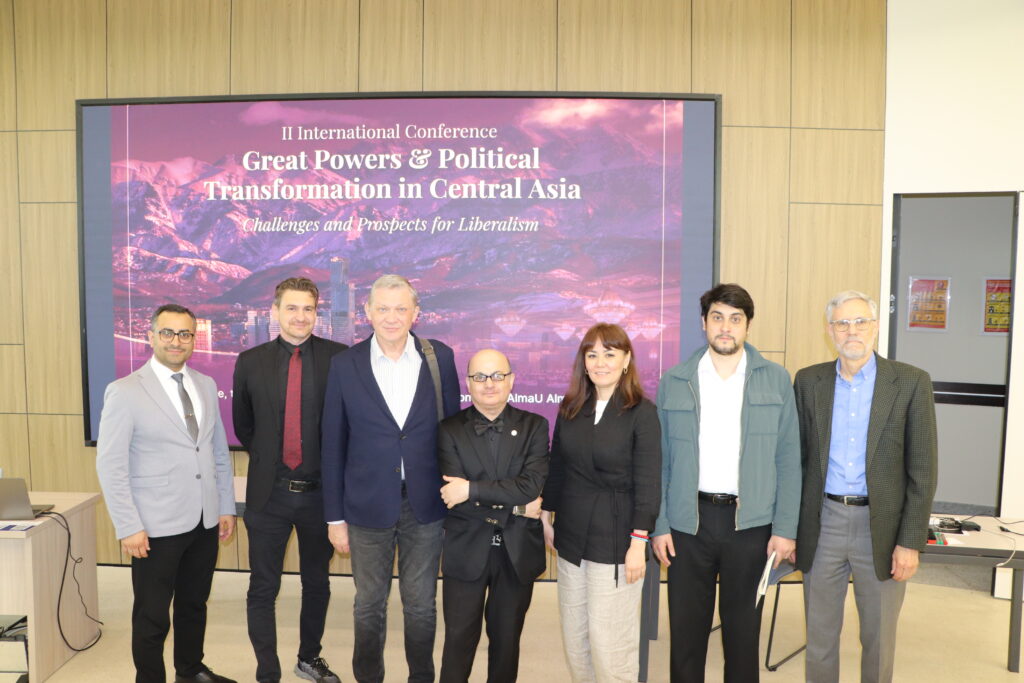
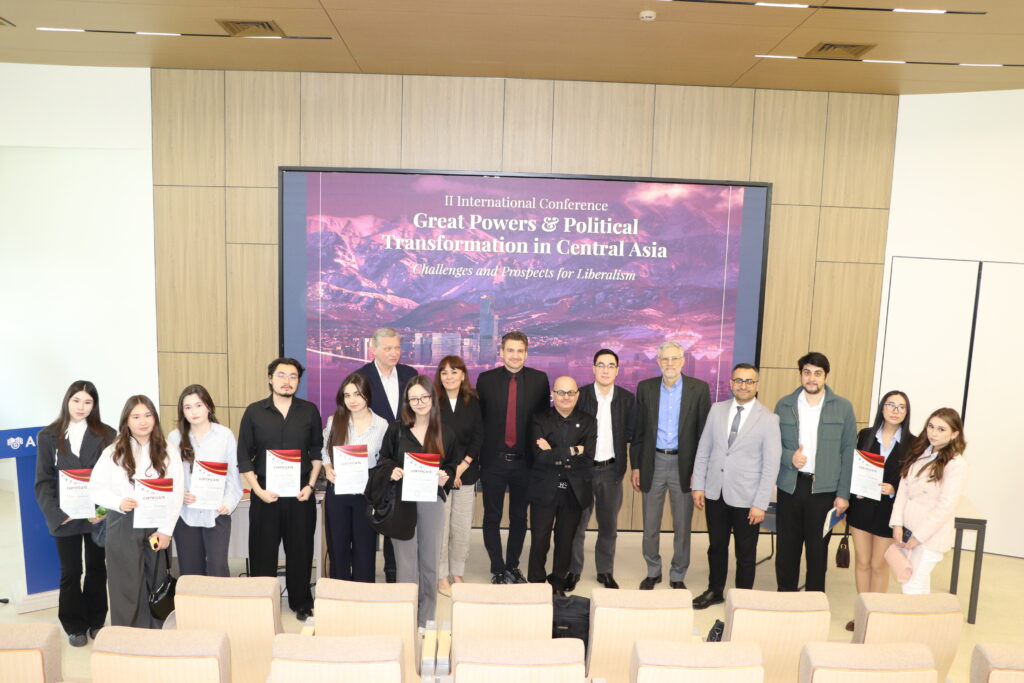
On April 7, AlmaU successfully hosted the II International Conference “Great Powers and Political Transformation in Central Asia: Challenges and Prospects for Liberalism” – a significant academic event that brought together experts, researchers, and students to discuss key challenges and development prospects for the region.
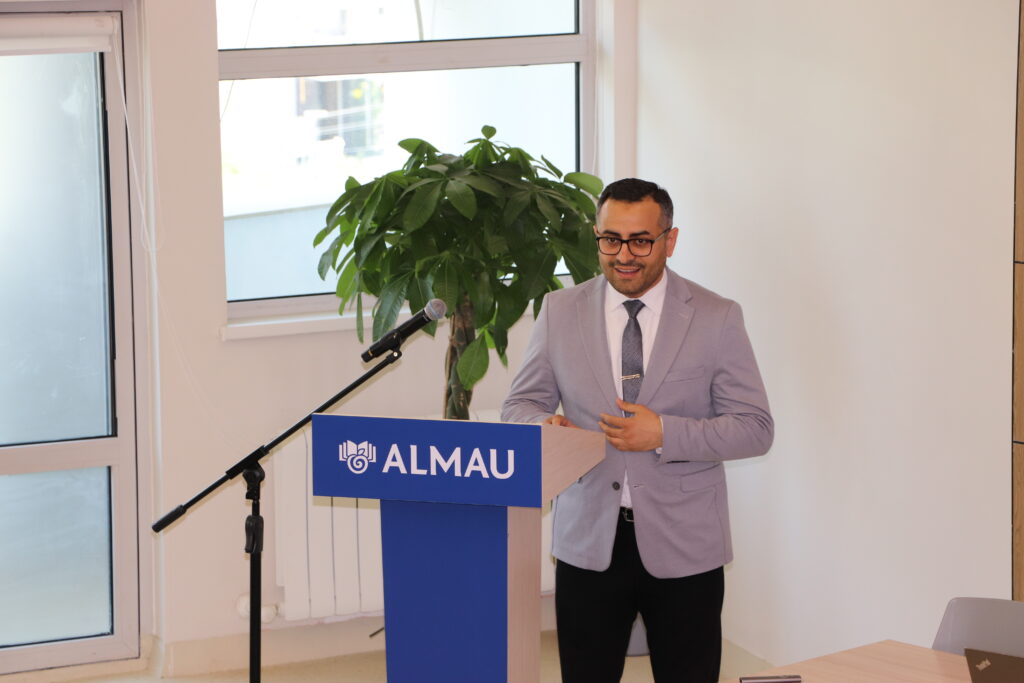
Welcoming remarks were delivered by AlmaU Vice-Rector for Science Renata Kudaybergenova and Advisor of the Ministry of Foreign Affairs of Kazakhstan in Almaty Anar Dutbaeva, who emphasized the importance of strengthening dialogue between academia and practice.
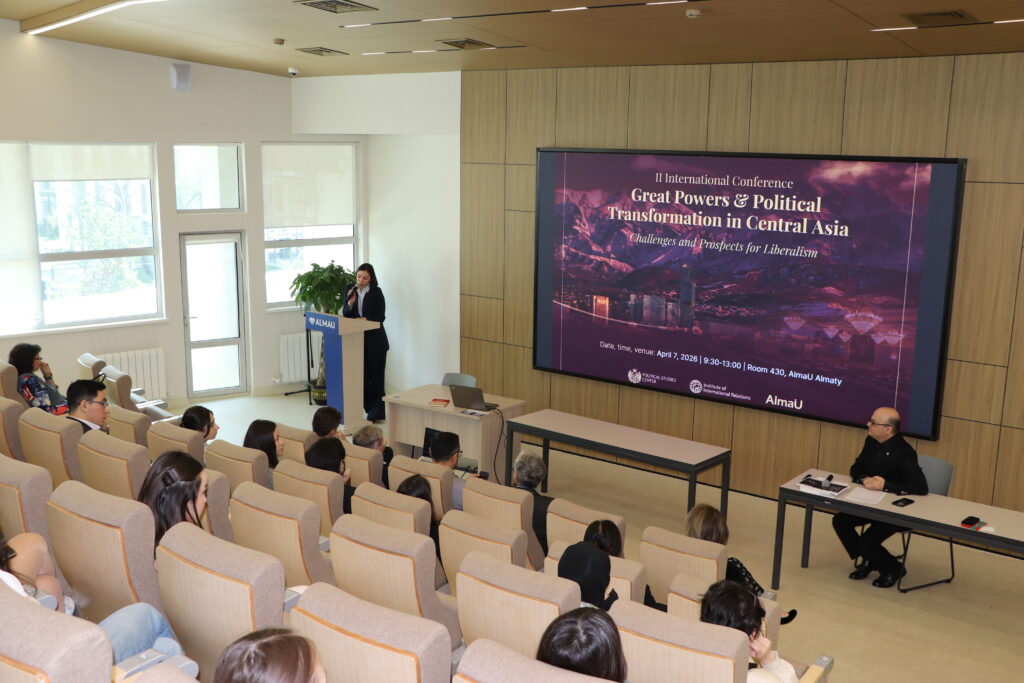
The first session, moderated by Danial Saari, focused on the western vector – the region’s engagement with the EU and the USA. Expert presentations by Alberto Frigerio and Randall Bruins offered a critical perspective on current Western policies, complemented by analytical reports from students of the “International Relations and Economics” program. Their participation demonstrated a high level of academic preparation and active engagement with the global agenda.
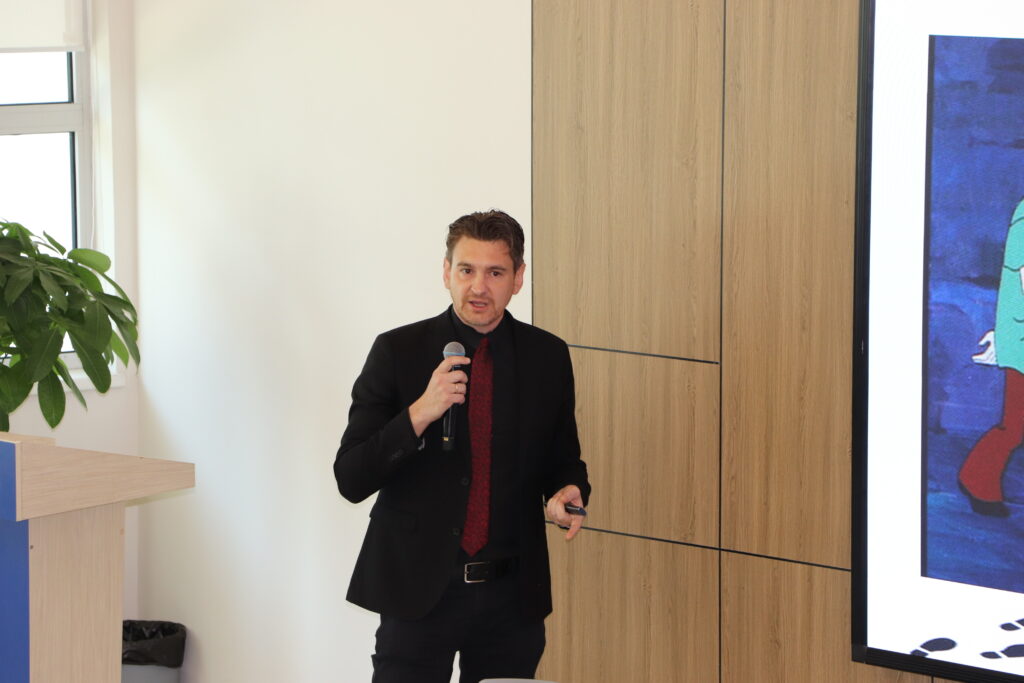
The second session, moderated by Dinara Tumabekova, focused on the eastern vector – the role of Russia and China in the region’s transformation. Speakers including Vladimir Ryzhkov, Azhar Serikkaliyeva, Emin Jabbarov, and Eldaniz Guseynov provided a comprehensive analysis of current geopolitical processes, highlighting international law issues, global players’ strategies, and the impact of external crises.
Participants focused on strategically important topics:
• the influence of great powers on regional political stability
• transformation of liberal ideas and institutions
• economic challenges amid global changes
• the role of international relations in shaping Central Asia’s long-term future
Active student participation and lively discussions added special value to the conference, allowing a deeper exploration of the balance between external influence and the internal agency of Central Asian countries.
The conference clearly demonstrated that Central Asia today is not a periphery of global politics but a space for strategic choice, intellectual reflection, and the development of new growth models.
AlmaU expresses gratitude to all participants, speakers, and organizers for their contribution to advancing academic dialogue and creating a substantive expert platform.