
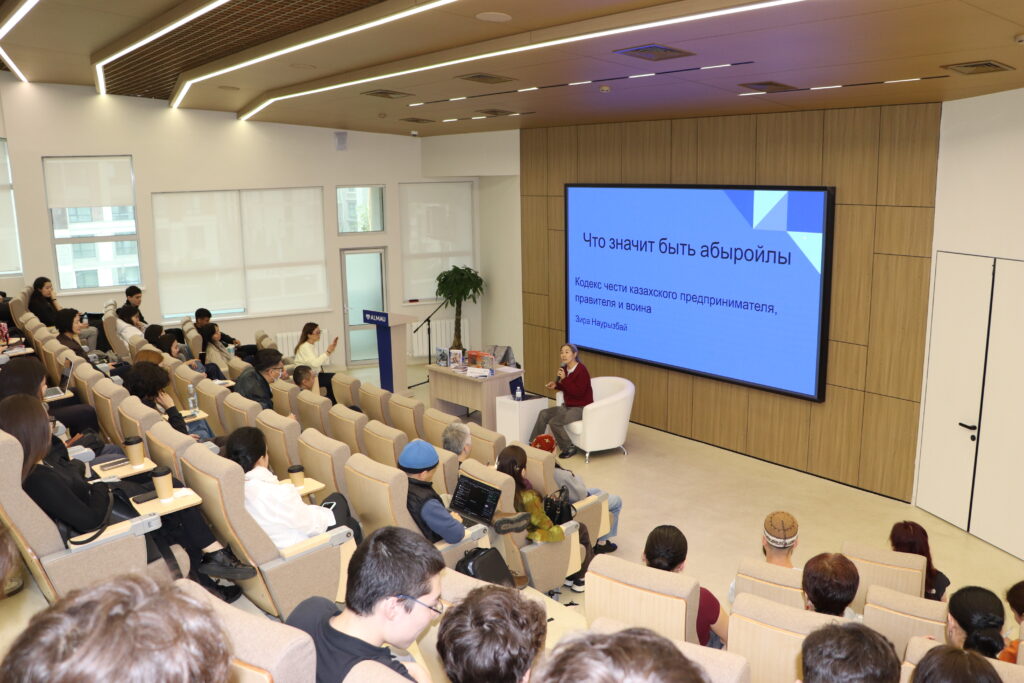
On April 16, a lecture by Kazakhstani cultural scholar and researcher of traditional culture, Zira Nauryzbai, was held at AlmaU on the topic «What does it mean to be honorable?». The lecture focused on the code of honor of the Kazakh bi-ruler and bai-entrepreneur.
The event was organized as part of the educational initiatives of the Tolyq Adam Institute and was dedicated to rethinking the traditional values of Kazakh culture in a modern social and educational context. The central theme of the lecture was the concept of “abyrоy” as a key moral category reflecting honor, dignity, and social responsibility of an individual.

During the lecture, key aspects of traditional culture were explored, including:
- the concept of “zhol” as a person’s life purpose;
- the traditional code of honor of a warrior and leader;
- the role of biys as carriers of justice and public authority;
- the image of the bai as a custodian and distributor of public welfare;
- the relationship between professional mastery and spiritual discipline;
- abyray as a form of social and ethical capital of an individual.
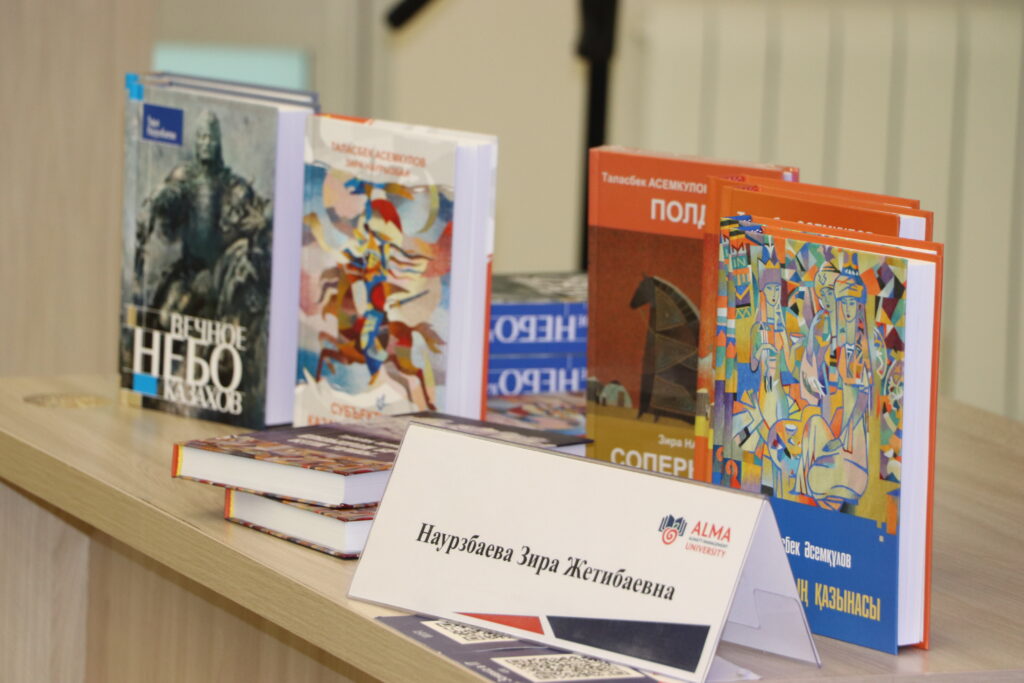
Special attention was also given to the historical and cultural foundations of the code of honor of the batyr, biy, and bai, as well as their role in shaping the value system of steppe society. The relevance of traditional values – abyrоy, ar, namys, uyat – in modern education, leadership, and public life was emphasized. It was noted that these categories continue to serve as important guidelines for personal and professional development.

The lecture sparked strong interest among students and faculty and became a platform for discussing national intellectual heritage, leadership ethics, and the role of tradition in shaping the values of modern society.