
On June 15th Almaty Management University hosted a working meeting with Cheryl Matherly, Vice President of Lehigh University. The parties reviewed the results of their long-standing cooperation and discussed a new stage of the partnership, with the establishment of the AlmaU & Lehigh Global Impact Collaboratory as its key element.

Cooperation between the two universities began in 2019 with joint research projects under the Global Social Impact Fellowship program. Over the past seven years, the partnership has expanded significantly to include student projects, academic exchanges, joint publications, and educational initiatives.
“What makes this collaboration special is that it began with a joint research project and has grown even stronger through genuine friendships,” said Assylbek Kozhakhmetov, Founder and President of AlmaU.
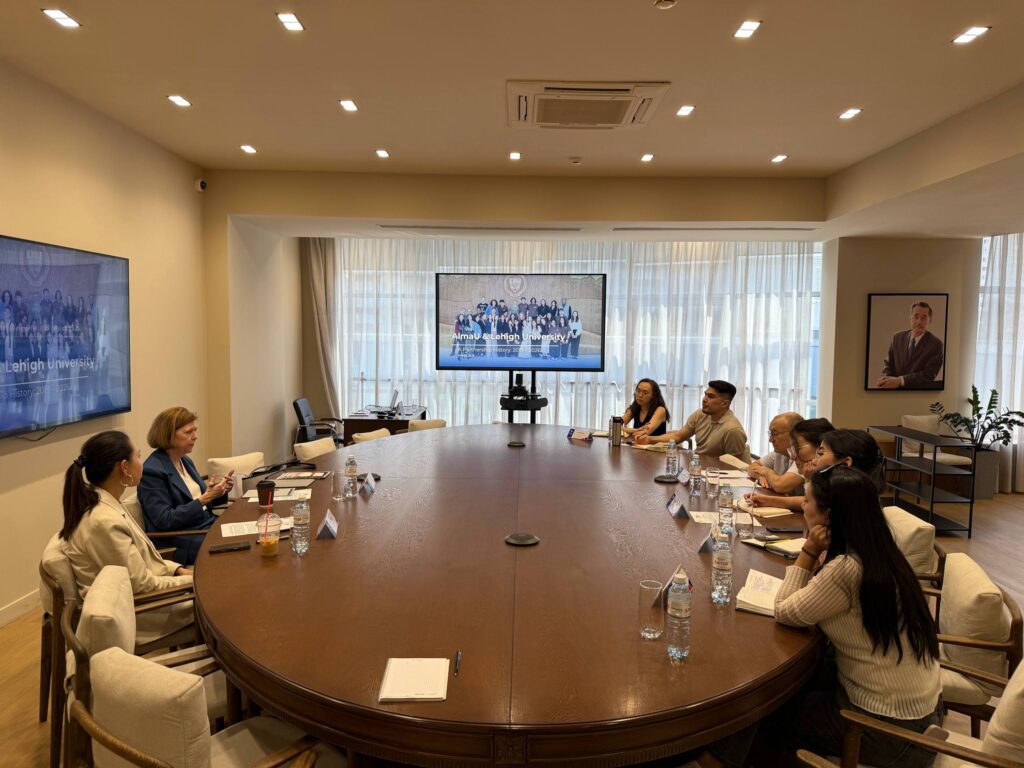
Today, the partnership includes six active joint projects. In 2026, the largest-ever group of Lehigh Global Social Impact Fellows—around 30 students—arrived in Almaty. Over the years, dozens of participants have been involved in joint projects, while the results of the collaboration have been presented through academic publications and at international conferences.
Cheryl Matherly described the seven-year history of cooperation as impressive and emphasized that the achievements to date provide a strong starting point for the next stage.
“We aim to build a truly strategic partnership with Lehigh University, based on trust and long-term cooperation,” Assylbek Kozhakhmetov emphasized.
The central topic of the meeting was the establishment of the Global Impact Collaboratory, a joint institutional platform whose name combines the concepts of collaboration and laboratory. Its purpose is to bring together students, faculty members, researchers, and external partners to jointly develop and implement projects addressing current social and technological challenges.

The future platform will integrate education, applied research, entrepreneurship, community engagement, and leadership development. Its model follows the sequence: Learn – Research – Make – Engage – Lead – Become. Students will act not only as participants in the educational process but also as co-creators of solutions, while faculty members will serve as project leaders and mentors.
A separate area of cooperation will involve the Iacocca Institute for Global Leadership and practice-oriented programs designed to prepare leaders who can work in an international environment and transform ideas into real-world projects.
The next step will be the preparation of a memorandum outlining the key areas of the Global Impact Collaboratory. These will include sustainability, leadership, engineering, entrepreneurship, the United Nations Sustainable Development Goals, and artificial intelligence.
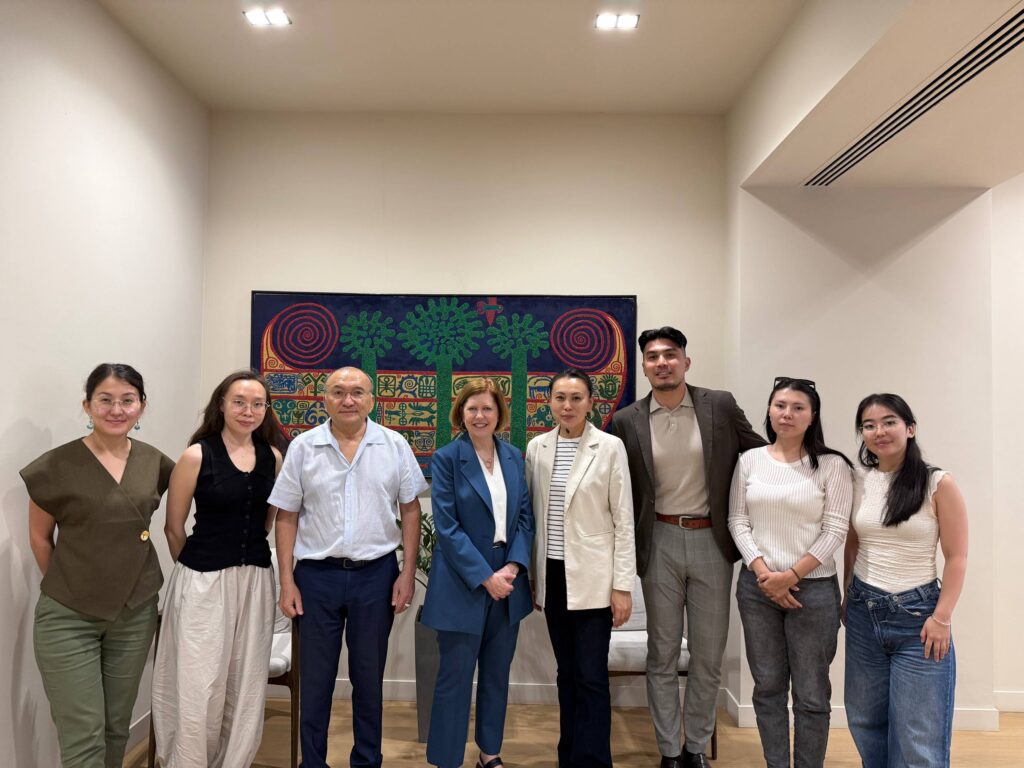
For AlmaU’s School of Digital Technologies and Engineering, the priority areas will be double-degree programs and projects in artificial intelligence. AlmaU’s Center for Sustainable Development proposed involving not only students from the two universities but also young people from other Central Asian countries in joint initiatives. The participants also discussed opportunities to submit joint applications for international grants and engage Lehigh University students in project implementation.
Cheryl Matherly noted that the proposed initiatives provide a strong foundation for further cooperation and could serve as a starting point for broader regional collaboration.
The meeting marked an important step in the transition from individual joint projects to a comprehensive strategic partnership. The new model of cooperation between AlmaU and Lehigh University will focus not only on knowledge exchange but also on preparing leaders capable of developing solutions with meaningful social impact.