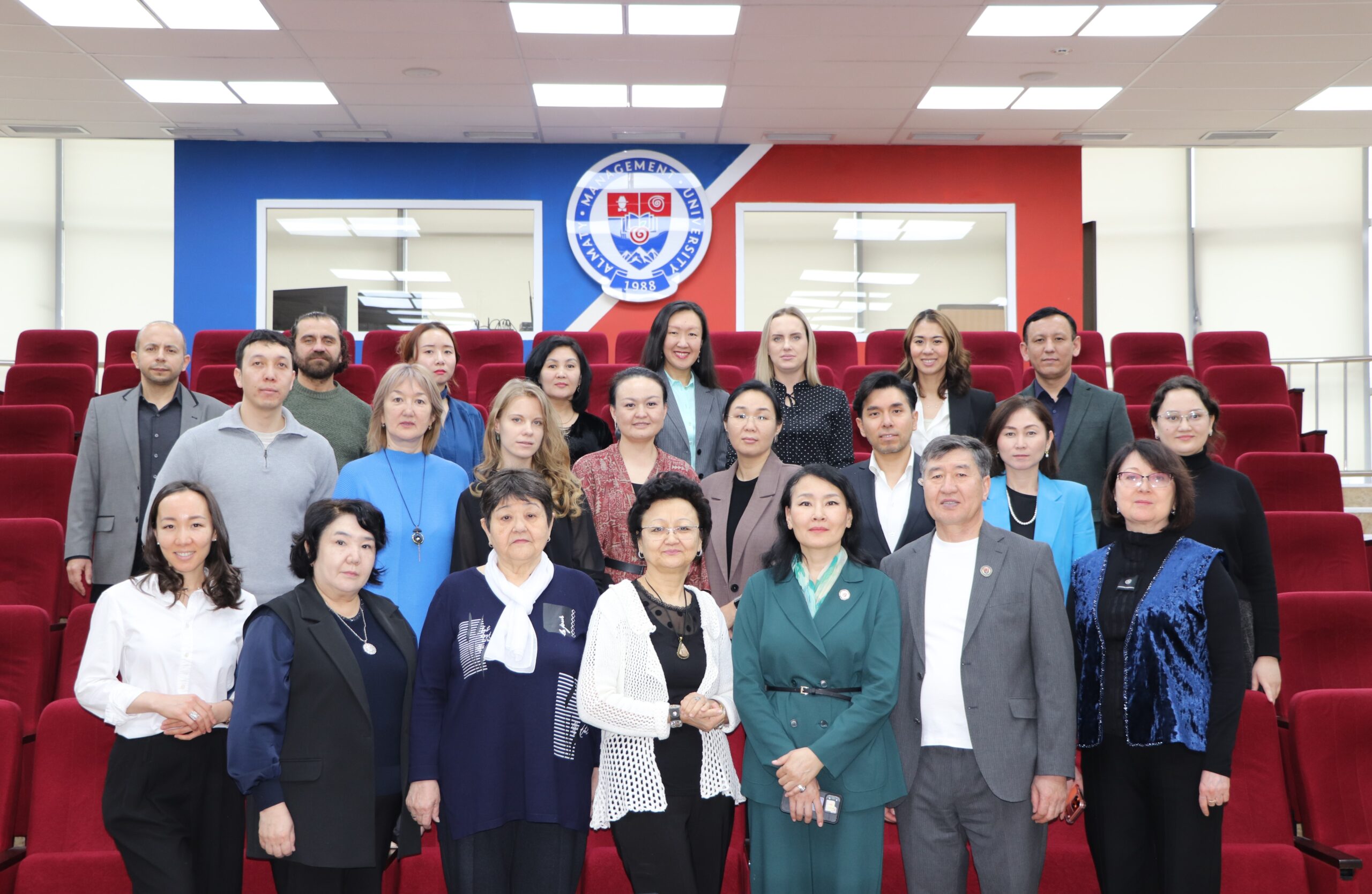
Tolyq Adam Institute at AlmaU is an environment where education becomes not only the acquisition of knowledge, but also a journey of personal growth, value formation, and conscious leadership.
The Tolyq Adam Program at AlmaU is grounded in the philosophy of Abai and contemporary humanities practices. At the center of its methodology is the concept of the “Tolyq Adam” (The Complete Human Being), which views a person as an individual engaged in continuous intellectual, moral, and personal development.
The foundation of the model is the harmony of intellect (Aqyl), heart (Zhurek), and willpower (Qairat) — a triad that shapes a well-rounded, mature, and socially responsible individual.
We believe that a university in the 21st century should educate not only professionals, but also individuals capable of critical thinking, ethical decision-making, resilience, and meaningful participation in society.
Through humanities education, research practice, project-based learning, and service to society, Tolyq Adam develops a new generation of human capital — citizens, leaders, and cultured individuals capable of responding to the challenges of the modern world, including technological transformation and the rise of artificial intelligence.
At Tolyq Adam, a person does not simply receive an education; they embark on a path of self-discovery, inner transformation, and the formation of a personal life philosophy that connects knowledge, values, and action.
The LEADER Competency Model
The methodological core of the Institute is the LEADER competency framework, designed to cultivate qualities that remain relevant regardless of profession or technological change:
- L – Lifelong Learning
Commitment to continuous learning, research culture, self-development, and lifelong education. - E – Empathy
Empathy, social awareness, civic responsibility, and the ability to collaborate effectively. - A – Analytical, Critical & Creative Thinking
The ability to analyze, evaluate, innovate, and solve complex problems creatively. - D – Discourse & Dialogue
A culture of dialogue, argumentation, academic communication, and respectful interaction. - E – Ethics & Eco
Ethical thinking, environmental awareness, and responsibility toward society and future generations. - R – Resilience
Adaptability, self-discipline, personal integrity, and the ability to thrive under conditions of uncertainty.