
From August 31 to September 6, the 2026 World Nomad Games were held in Bishkek. The Games are a major international sporting event and cultural festival dedicated to ethnic and traditional sports of nomadic peoples.
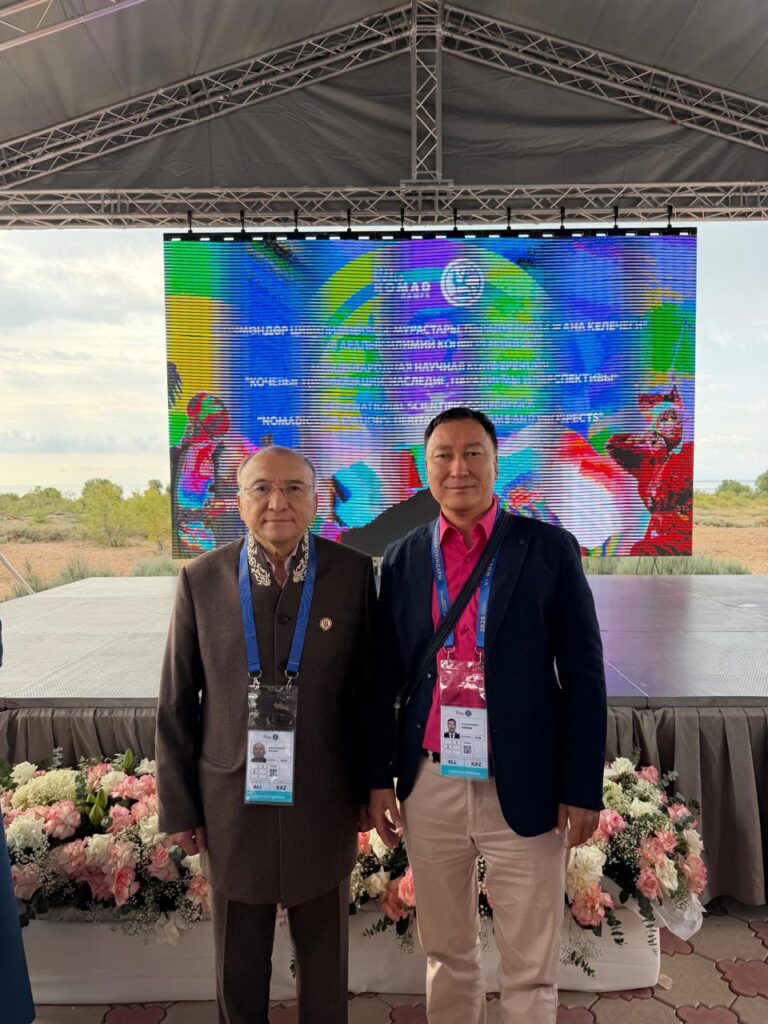
AlmaU President Asylbek Kozhakhmetov and Nurzhan Kulumzhanov, PhD, Director of the AlmaU Scientific Center “Great Steppe Academy”, took part in the World Nomad Games, representing the university and presenting its scholarly approach to understanding the heritage of the Great Steppe.
For AlmaU, participation in the Games was a continuation of the university’s systematic work to study the history, culture, worldview and intellectual heritage of the Great Steppe. Established in February 2026, the Scientific Center “Great Steppe Academy” views the Steppe experience as an independent civilizational phenomenon that can contribute to contemporary academic and public dialogue. Its key areas include Steppe Philosophy, Steppe Thinking, as well as Steppe Governance and Leadership.
Speaking at the World Nomad Games, AlmaU representatives emphasized that the significance of this international event goes far beyond sporting competitions. The Games bring together sport, culture, art, historical memory and international communication, creating a space for people from different countries and cultures to meet and better understand one another.
“Historically, the Great Steppe was a space of movement, encounters, exchange and communication. Trade routes, diplomatic missions, languages, religious ideas, technologies and artistic traditions intersected here. Openness was not merely an external characteristic of Steppe culture, but one of the conditions of its historical existence,” said AlmaU President Asylbek Kozhakhmetov.
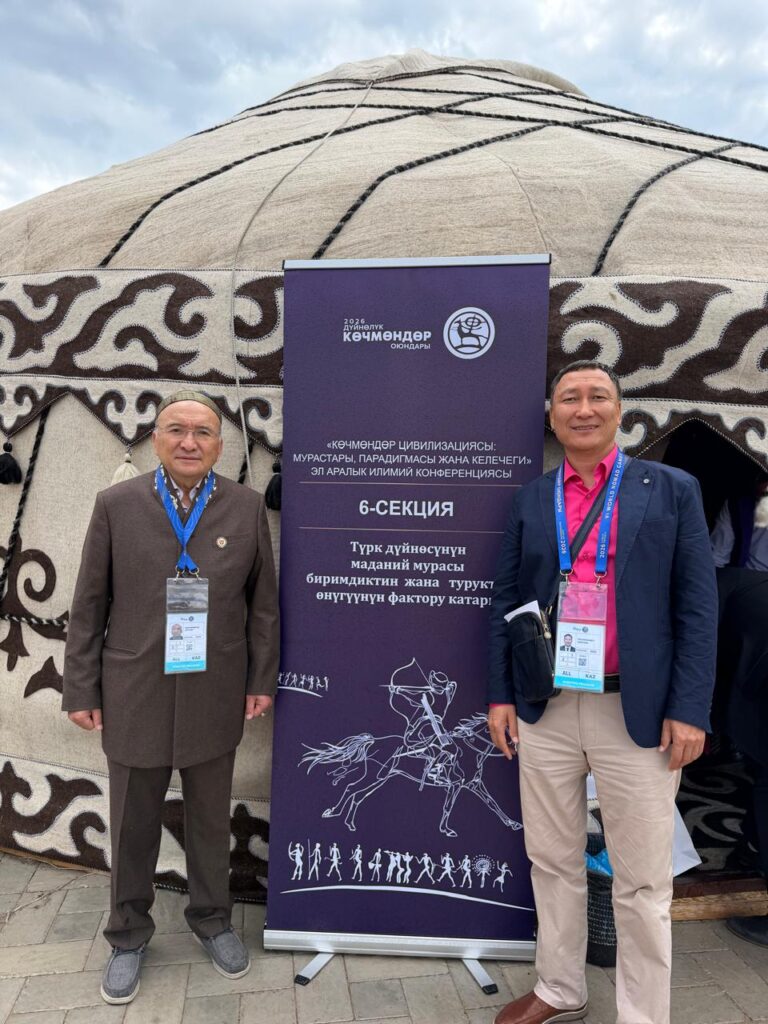
According to him, turning to the heritage of the Great Steppe today is important not only for preserving historical memory, but also for seeking answers to the challenges of the modern world. The experience of Steppe societies shows that differences between cultures can become a basis for interaction rather than a cause of division.
Nurzhan Kulumzhanov continued this idea in his presentation, offering a cultural and philosophical perspective on the heritage of the ancient Turks. At the center of his research is “Irk Bitig”, an ancient symbolic system of the Great Steppe that reflects people’s understanding of the world, nature, destiny and the right path in life.
“Reading ‘Irk Bitig’, we enter a world that is inherently open to dialogue. Here, the world itself is a direct participant in communication, while the sign helps a person consciously find their place in the world and choose the right orientation and direction in conditions of unpredictability and uncertainty,” emphasized Nurzhan Kulumzhanov.
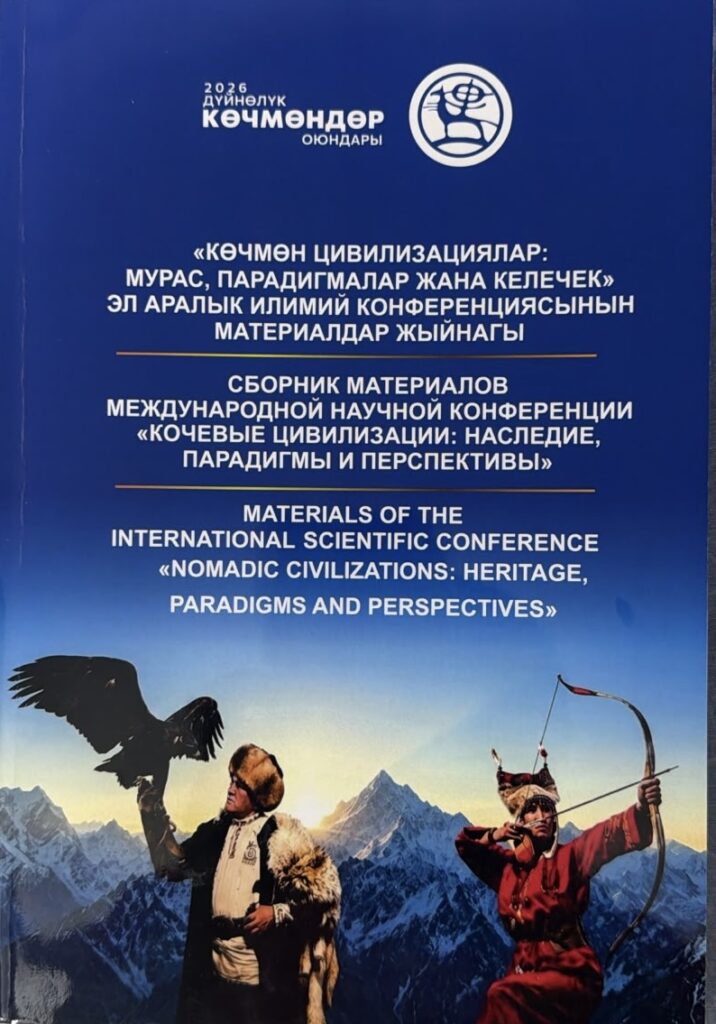
The AlmaU research was also included in the collection “Nomadic Civilizations: Heritage, Paradigms and Perspectives,” prepared following the international scientific conference held as part of the VI World Nomad Games. The book brings together research by scholars from different countries on the history, culture and heritage of nomadic civilizations, traditional knowledge and its significance for the modern world.
AlmaU representatives highlight the special significance of the World Nomad Games in their ability to bring together cultural diversity and international interaction. Today, representatives of more than 100 peoples take part in the Games, turning traditional sports into a universal language of cultural communication and mutual understanding.
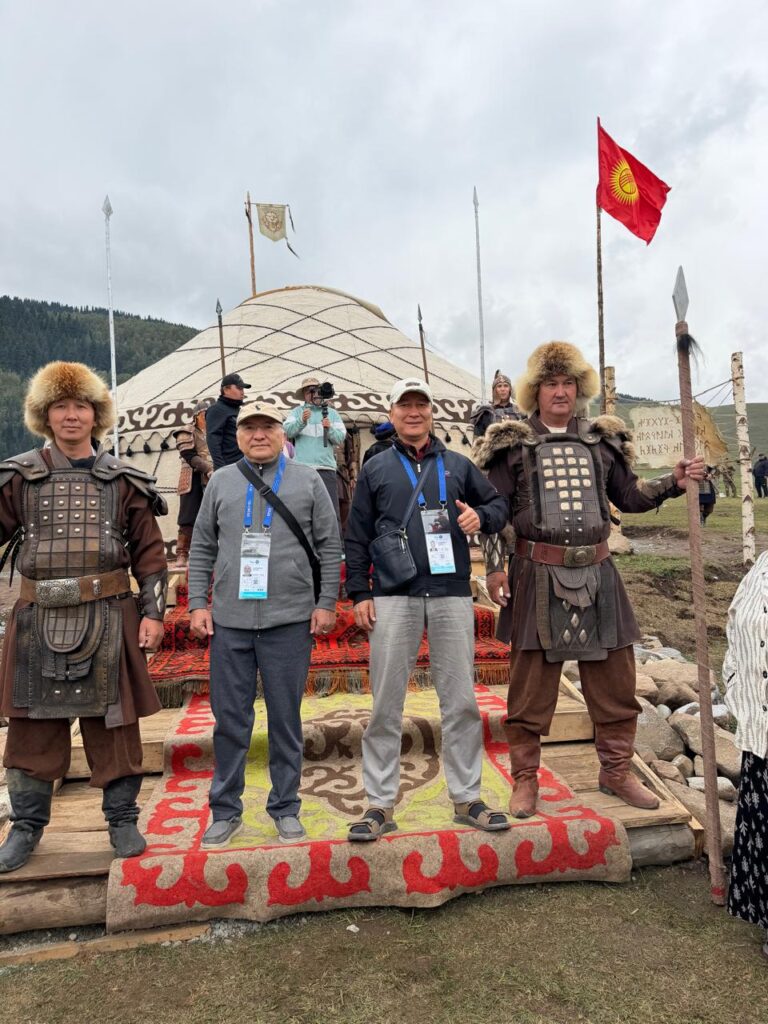
In this context, the World Nomad Games can be viewed as an important international space where the heritage of the Great Steppe takes on contemporary meaning. Their potential lies in bringing together sport, the humanities, culture, education and youth engagement.
For AlmaU, this area is of particular importance. The university continues to develop research on the Great Steppe and build international partnerships aimed at studying and rethinking Turkic and Steppe heritage in a contemporary context. In the future, the World Nomad Games can become a lasting space for international cooperation, where cultural heritage serves as a foundation for dialogue between countries and continents.

The participation of AlmaU representatives in the World Nomad Games marked another step in advancing scholarly and cultural dialogue about the Great Steppe – a dialogue in which historical memory becomes a source of new knowledge, while cultural diversity becomes a foundation for mutual understanding and cooperation.