
November 5, 2026, Almaty – The II International Shoqan Forum, titled “The Phenomenon of Shoqan Walikhanov: The Intellectual Heritage of the Great Steppe in a Global Context,” is taking place at the National Academy of Sciences of the Republic of Kazakhstan under the President of the Republic of Kazakhstan (NAS RK).
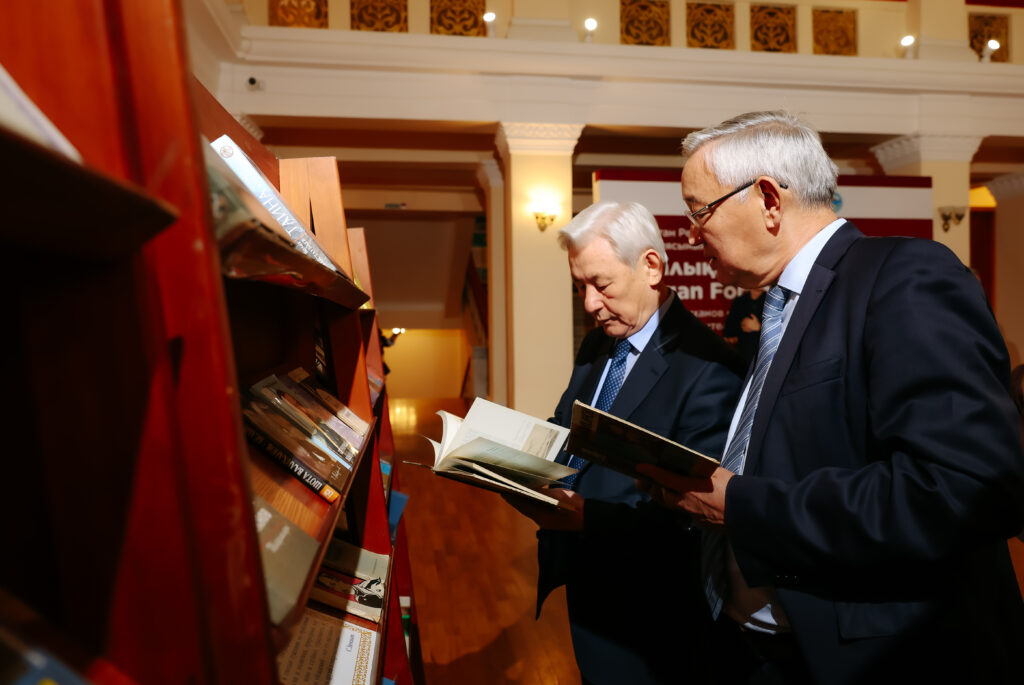
Dedicated to the 80th anniversary of the National Academy of Sciences of the Republic of Kazakhstan, the Forum has brought together Kazakhstani and international scholars, historians, researchers, representatives of academia, culture and the media. Participants are exploring Shoqan Walikhanov’s scholarly legacy, his contribution to the study of Central Asia, and the significance of his research for contemporary science.
The Forum is organized by the National Academy of Sciences of the Republic of Kazakhstan, the Ұлы Дала Академиясы Research Center, and the Center for Creative Industries at Almaty Management University (AlmaU), with the support of the Zhetysu Region Akimat.
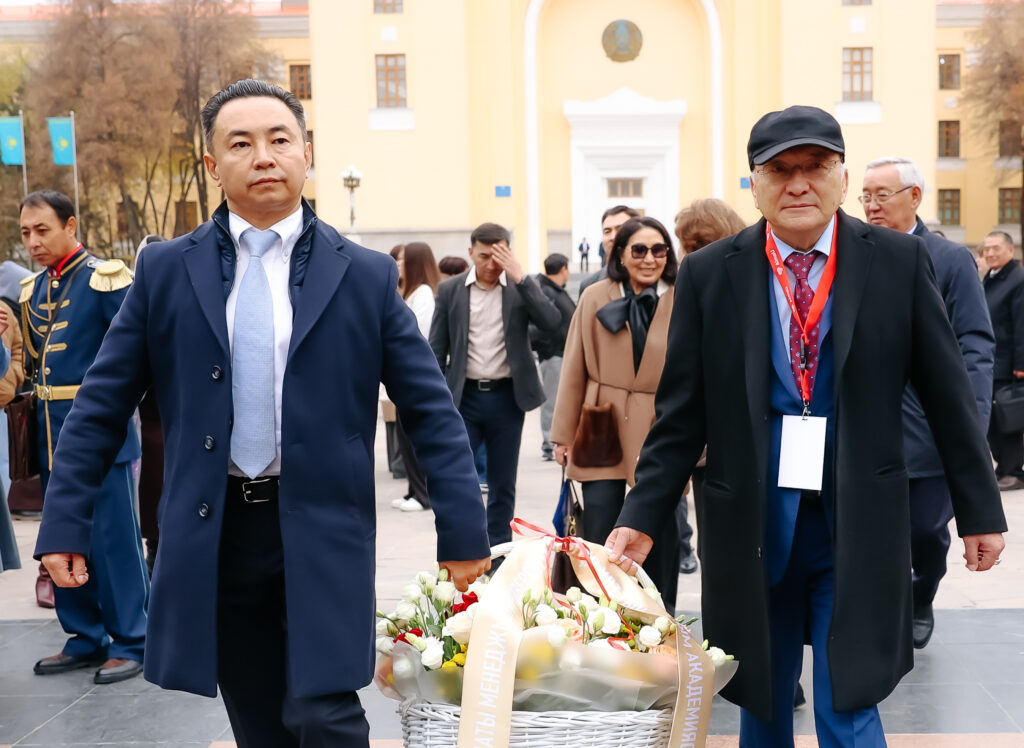
The event opened with a wreath-laying ceremony at the monument to Shoqan Walikhanov. The ceremony was attended by members of the National Academy of Sciences and students from two schools named after Shoqan Walikhanov, who gathered to pay tribute to the distinguished scholar. The schoolchildren recited poems and tributes in his honour, highlighting the continuity of generations and the enduring relevance of his legacy.
An official welcome message from Sayasat Nurbek, Minister of Science and Higher Education of the Republic of Kazakhstan, was presented at the Forum. “The future of national science lies in a profound understanding of our historical heritage and its continuity with new scientific achievements,” the message stated. The Minister emphasized the importance of integrating historical heritage with contemporary scientific research and fostering international partnerships.
The welcome address by Akhylbek Kurishbayev, President of the National Academy of Sciences of the Republic of Kazakhstan, was delivered by the Academy’s Vice-President, Abay Serikkanov. “Only when interest in Shoqan’s legacy develops into systematic academic research will its rich intellectual and scientific potential be fully realized,” the address noted.
The message also highlighted the need to introduce archival documents and manuscripts into academic circulation, ensure the reliability of historical sources, and expand collaborative research. Particular attention was given to the opportunities offered by modern digital technologies in studying the scholar’s legacy, as well as the importance of maintaining academic accuracy and responsibility when using artificial intelligence tools.
It was further emphasized that the academic discussions held within the Forum should translate into concrete research initiatives and contribute to strengthening cooperation between Kazakhstani and international scholars.
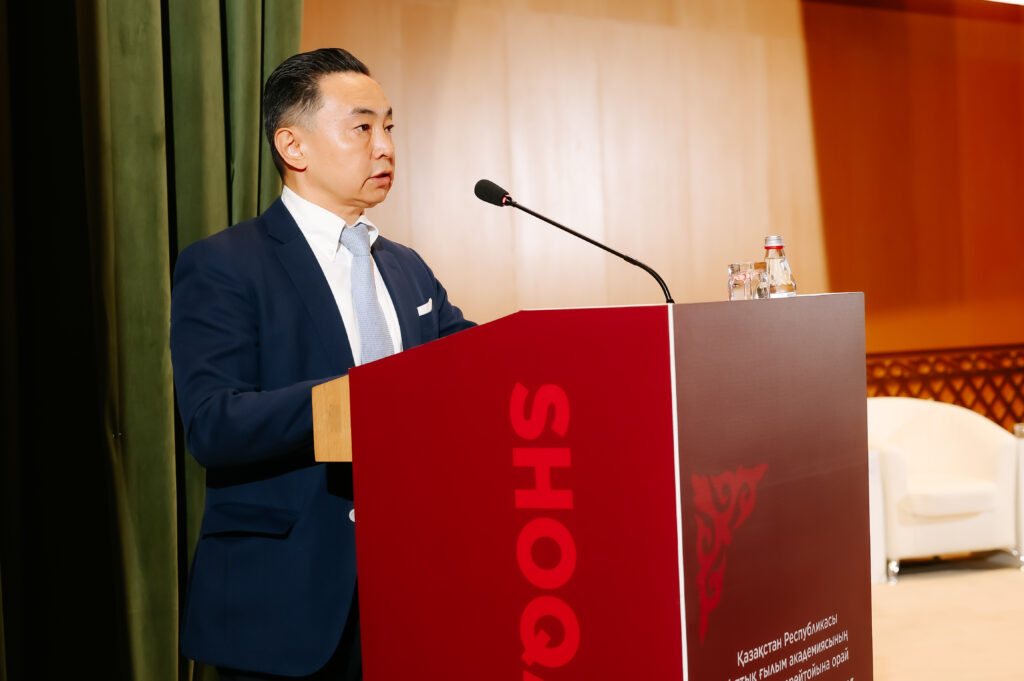
In his address, Assylbek Kozhakhmetov, President and Founder of AlmaU, highlighted the purpose of the Forum:
“Shoqan Walikhanov’s legacy is an important part of Kazakhstan’s intellectual history and remains highly relevant today. To support its further study and promotion, AlmaU has established the Ұлы Дала Академиясы Research Center, which brings together researchers’ efforts and contributes to advancing the historical and cultural heritage of the Great Steppe,” he noted.
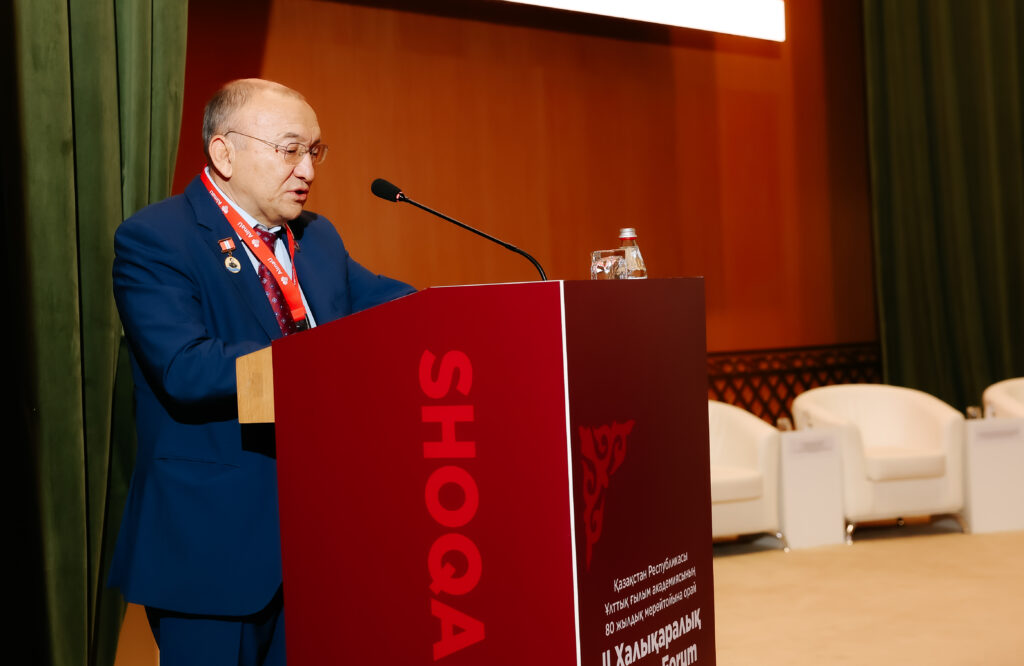
The opening ceremony also featured a video address by Artem Manukyan, First Vice-President of the Russian Geographical Society, and an address by Aqtoty Raimkulova, President of the International Turkic Culture and Heritage Foundation.
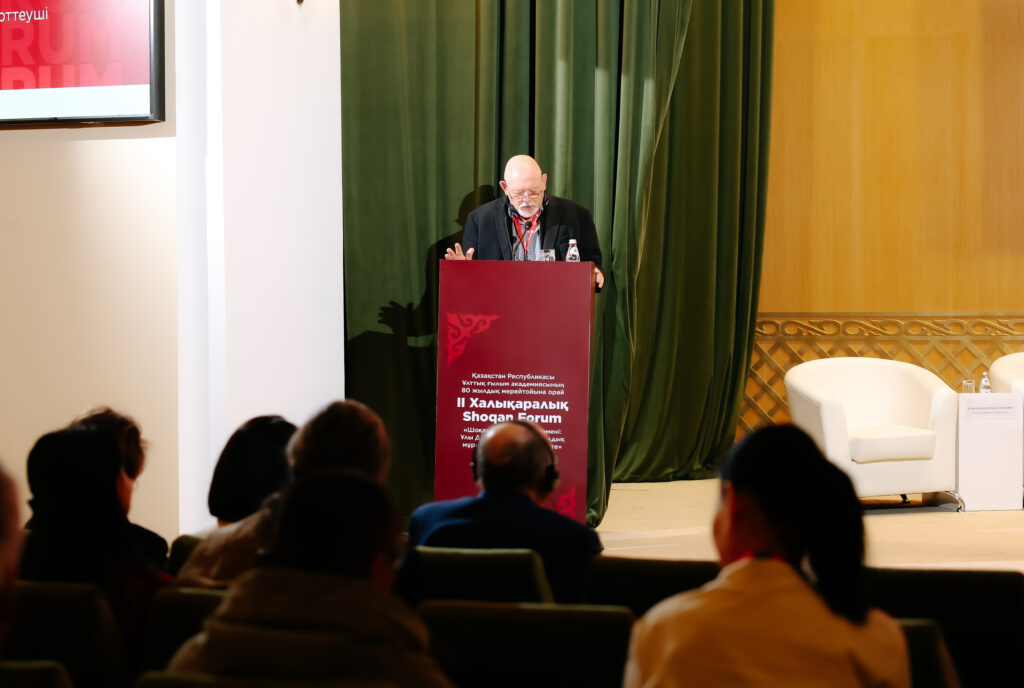
The Forum’s keynote speakers included Ziyabek Kabuldinov, Doctor of Historical Sciences and Director of the Sh. Sh. Ualikhanov Institute of History and Ethnology, and Nick Fielding, writer, journalist and Central Asia researcher. In his presentation, Fielding explored the relevance of Walikhanov’s scholarly works in the 21st century.
“Shoqan Walikhanov was not only an outstanding scholar but also a public figure who used his knowledge to protect the interests and cultural heritage of his people. Today, his works deserve renewed international attention, while his scholarly approach remains an example of how academic objectivity, social responsibility and intercultural dialogue can be brought together,” noted Nick Fielding.
Two panel sessions were held as part of the Forum, focusing on Shoqan Walikhanov’s historical legacy and contemporary approaches to its promotion.
The first panel session explored the image of the Great Steppe in Shoqan Walikhanov’s research. Participants discussed various aspects of Kazakh history, the portrayal of Walikhanov in historical literature, and his contribution to the study of the Kyrgyz epic Manas.
The session was moderated by Nurzhan Kuluzhanov, PhD and Director of the Ұлы Дала Академиясы Research Center at AlmaU. Participants examined different dimensions of Walikhanov’s scholarly and historical legacy, including 19th-century Kazakh history, the geopolitical context of his era, intercultural connections and the significance of ethnographic research.
The discussion featured contributions from several distinguished scholars and researchers: Mairam Akaeva, Professor and First Vice-President of the International Academy of Creativity, drew a parallel between Shoqan Walikhanov and Leonardo da Vinci, describing him as the “Leonardo da Vinci of the Steppe.”. Dauren Yeskekbayev, Candidate of Historical Sciences and Academician of the Academy of History and Social Sciences, explored the history of the Kazakh people during Walikhanov’s era. Vladimir Fetisov, writer and author of historical novels about 19th-century Central Asia (Tashkent, Uzbekistan), presented on the topic “Shoqan Walikhanov: A Prominent Figure in the Great Game.”. Cholpon Alieva, Doctor of Philosophy, Professor and Head of the Department of Interdisciplinary Social and Medical Sciences at Ala-Too International University (Bishkek, Kyrgyzstan), addressed intercultural dialogue and Chokan Walikhanov’s contribution to the study of the Manas epic. Dr. Iman A. Bokhari, PhD, Princess Nourah bint Abdulrahman University (Riyadh, Saudi Arabia), delivered a presentation entitled “Mobility, Materiality, and Spatial Order: Re-reading Shoqan Walikhanov’s ‘Yurt’ through a Saudi Arabian Comparative Lens.”. Saule Uderbayeva, Candidate of Historical Sciences and Senior Lecturer in the History of Kazakhstan at Al-Farabi Kazakh National University, spoke about the lives and legacies of Chokan and Gazi Walikhanov in their historical context.
The discussion also included Zhaksybek Kulekeev, Academic Director of the Applied Economics Research Centre (AERC) and Chairman of the Board of Trustees of the International Public Foundation BILIM-INNOVATION.
“Shoqan Walikhanov was not only an outstanding scholar and educator but also a talented graphic artist who captured the historical and cultural landscape of 19th-century Central Asia. His artistic legacy represents one of the foundations of Kazakh visual art and deserves further in-depth study,” noted Zhaksybek Kulekeev.
The second panel session brought together representatives of journalism, filmmaking and the creative industries to explore new formats for promoting Shoqan Walikhanov’s legacy in the digital age. The discussion focused on projects that reinterpret his biography and scholarly contributions through documentary and animated films, as well as digital platforms.
The second panel session brought together representatives of journalism, filmmaking and the creative industries to explore new formats for promoting Shoqan Walikhanov’s legacy in the digital age. The discussion focused on projects that reinterpret his biography and scholarly contributions through documentary and animated films, as well as digital platforms.
The session was moderated by Asel Khamza, PhD and Director of the Center for Creative Industries at the AlmaU Graduate School of Business. Darkhan Abdik, journalist and Artistic Director of the AlmaU Media and Film School, presented on “The Documentary Film ‘Aqqan Zhuldyz’: A New Perspective on Shoqan Walikhanov’s Life.” His presentation explored how documentary filmmaking can shed light on lesser-known aspects of historical figures’ lives and foster renewed interest in national history. Maya Bekbayeva, journalist, documentary filmmaker and Kazakhstan’s Goodwill Ambassador, presented on “21st-Century Docudrama: Bringing Shoqan Walikhanov’s History to Life.” She introduced her new documentary film Shoqan and discussed contemporary approaches to bringing historical narratives to modern audiences. Samat Alim, producer at Idea Cinema and producer of the animated film “Shoqan: A Journey to Kashgaria,” shared insights into the development of the animation project. His presentation, “From History to Fantasy: How the Animated Film ‘Shoqan: A Journey to Kashgaria’ Was Created,” explored the possibilities of creatively reinterpreting historical material and adapting it for contemporary audiences. The session concluded with a presentation by Dauren Merkeev, journalist and Head of the www.shoqan.kz project. Speaking about digital Shoqan studies and the development of the Shoqan.kz portal, he presented digital approaches to promoting the scholar’s legacy and highlighted the potential of online resources for systematizing, preserving and disseminating historical knowledge.
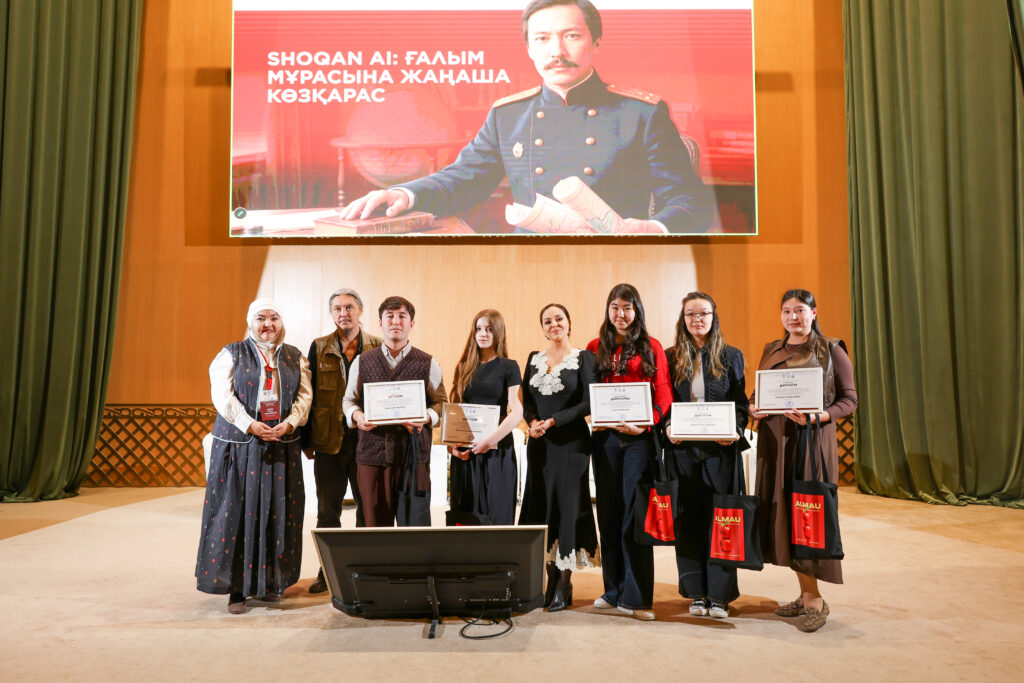
As part of the Forum, an award ceremony was held to recognize the winners of the national video competition “Shoqan AI: A New Perspective on the Scholar’s Legacy.” A total of 96 participants from different regions of Kazakhstan submitted 90 video entries created using artificial intelligence technologies. The competition winners were: 1st place – Denislam Mukhtar, a second-year Tourism student at Abylai Khan Kazakh University of International Relations and World Languages. 2nd place – Adeliya Tukenova and Milena Serebrennikova, second-year students of the Digital Filmmaking programme at AlmaU. 3rd place – Adilzhan Gabduluokhap, a fourth-year student at the Faculty of History of Astana International University; Nazerke Nauryzbay, a third-year student majoring in Pedagogy and Psychology at Almaty University of Humanities and Economics; and Karakат Mustafayeva, a second-year Finance student at AlmaU.
On November 6, the Forum will continue in Shankhanai village, Kerbulak District, Zhetysu Region, at the Shoqan Walikhanov Memorial Complex. Holding the off-site part of the Forum in Shankhanai, with the support of the Zhetysu Region Akimat, highlights the region’s important role in preserving the memory of one of the most distinguished figures in Kazakh history and science.
Now held for the second time, the Shoqan Forum serves as an international academic platform dedicated to studying and reinterpreting Shoqan Walikhanov’s legacy in a contemporary context. It provides a space for international academic dialogue and the exploration of new approaches to preserving and promoting the intellectual heritage of the Great Steppe.