

On November 18, AlmaU hosted a philosophical evening titled “The Illusion of Happiness: Does a Person Need to Know the Truth?”, bringing together students from AlmaU and Turan University, as well as invited guests: Qairat Zhanabayev, Kapyshyev Akramqan, Sergazy Qudaibergenov, Sholpan Aidaraliyevna Ibzharova, Alden Nurakynov, and Qamza Asel Kakenqyzy.
The philosophical evening was organized by the Uly Dala Academy Research Center and AlmaU’s Zholshy Philosophical Community.
The event was led by Aruzhan Ispеrgenova, Chair of the Zholshy Philosophical Community, and Tansholpan Igdirbay, a member of the community.
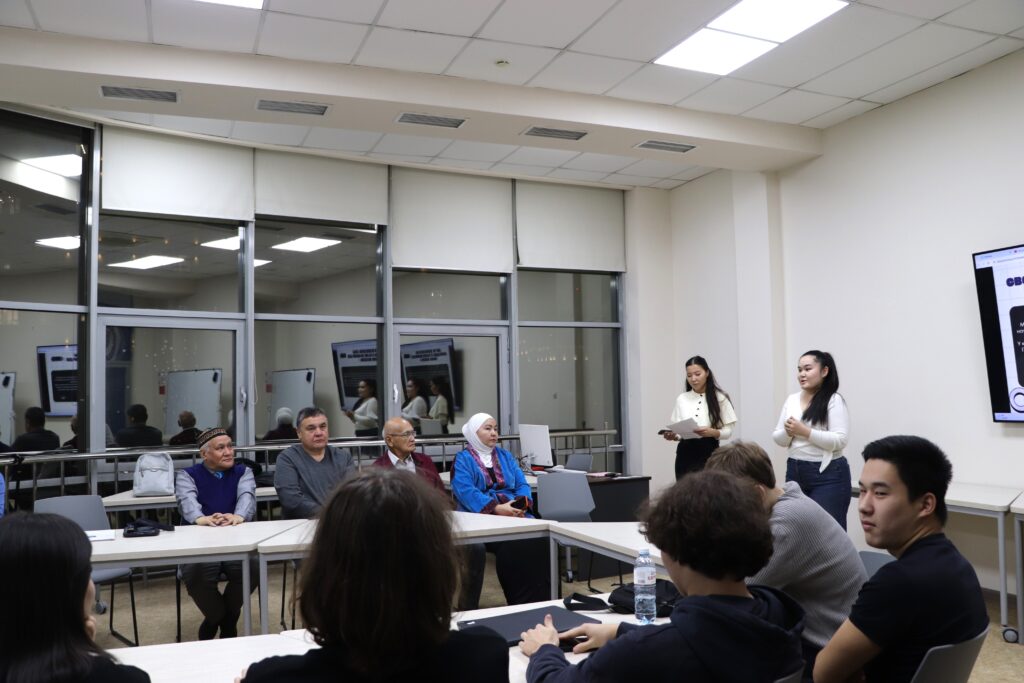
The main objective of the meeting was to explore how people perceive reality, the relationship between consciousness and dreams, and individuals’ perspectives on the world they live in. Through various examples, participants examined how subjective perceptions of reality can be and discussed questions that encouraged philosophical reflection.
Section 1. Zhuangzi’s Butterfly Dream
The first section explored Zhuangzi’s famous philosophical parable about the butterfly. In his dream, the philosopher experienced himself as a butterfly; upon waking, he realized that he was a human being. This example prompted a discussion about the boundaries between dreams and reality, as well as the challenge of distinguishing truth from illusion.
Following the discussion, the audience was asked: “What evidence do we have that the world we live in is real?”

Section 2. Anesthesia and the Problem of Consciousness
The second section examined the state of human consciousness through the example of general anesthesia. During surgery, a person does not respond to the external environment, raising complex scientific questions about the nature of consciousness. Participants discussed how anesthesia affects consciousness, perception, and a person’s sense of self.
This example helped illustrate why a person’s state of consciousness and outward behavior do not always correspond.
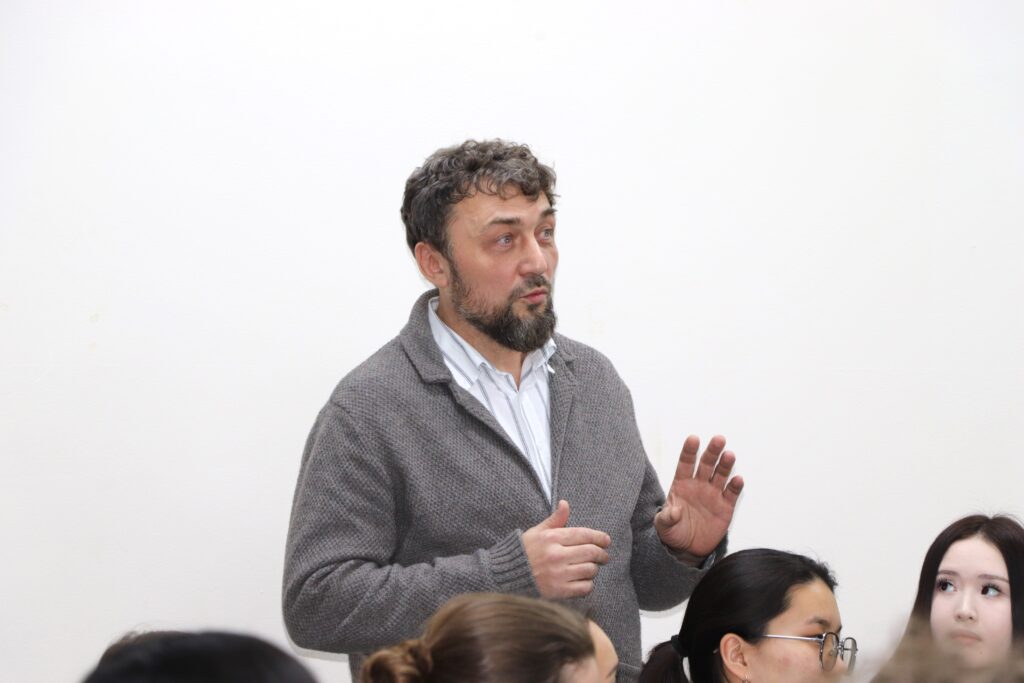
Section 3. The Films The Truman Show and The Matrix
The third section focused on the perception of reality through the films The Truman Show and The Matrix. The characters in these films gradually begin to question the world they have always known and realize that their surroundings may be artificial or different from what they had assumed.
Using these films as examples, participants discussed the perception of reality, human freedom, and the possibility of living within an illusion.
The audience was invited to consider the following questions:
- If we discovered that the world we live in was artificial, would we try to change it?
- Can a person live happily without knowing the truth?
- What is more important: knowing the truth or living in a comfortable illusion?

Section 4. Conclusion and Discussion with the Audience
The final section brought together the examples and questions explored throughout the evening. Participants reflected on the perception of reality, consciousness, dreams, and illusions, drawing broader conclusions from the discussion.
The evening concluded with a quote by Immanuel Kant:
“Have the courage to use your own understanding!”
Perhaps the essence of true happiness lies not in knowing everything, but in being able to choose for yourself what to believe in and how to live.
During the open discussion, participants shared their thoughts and perspectives on the questions raised. The conversation highlighted the connection between reality and happiness, showing that knowing the truth is not the only thing that matters to people; feeling happy is equally important.
The philosophical evening encouraged participants to take a critical look at their own beliefs, perspectives on life, and the extent to which their perception corresponds to objective reality.