
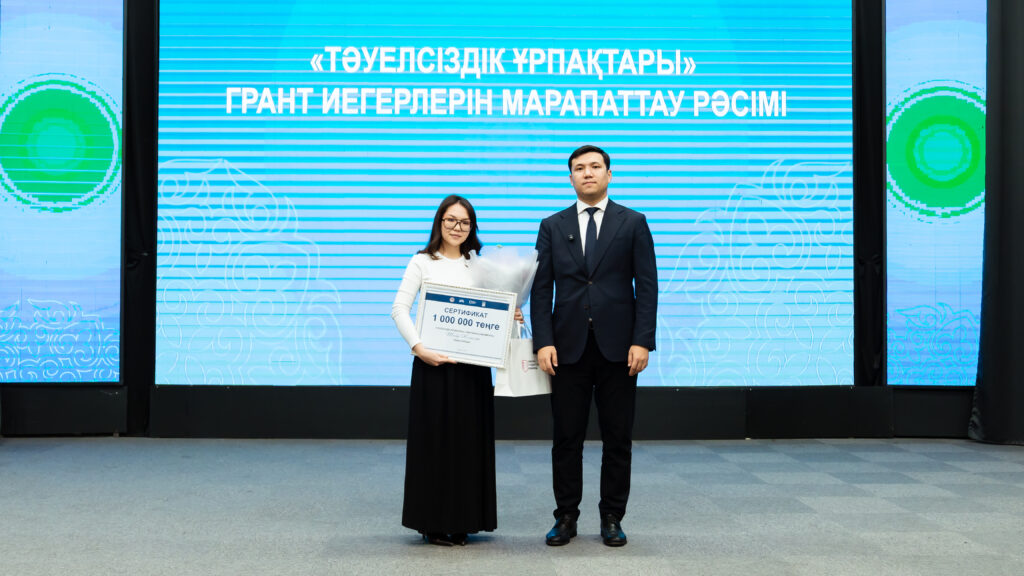
Jamila Tabar, a third-year student at AlmaU, has been named one of the winners of the «Тәуелсіздік ұрпақтары» (Generation of Independence) grant programme, receiving KZT 1 million to develop her initiative, QanattyQoldar. The project aims to support children with fine motor skill difficulties living in regions of Kazakhstan where access to professional developmental and corrective support is limited.
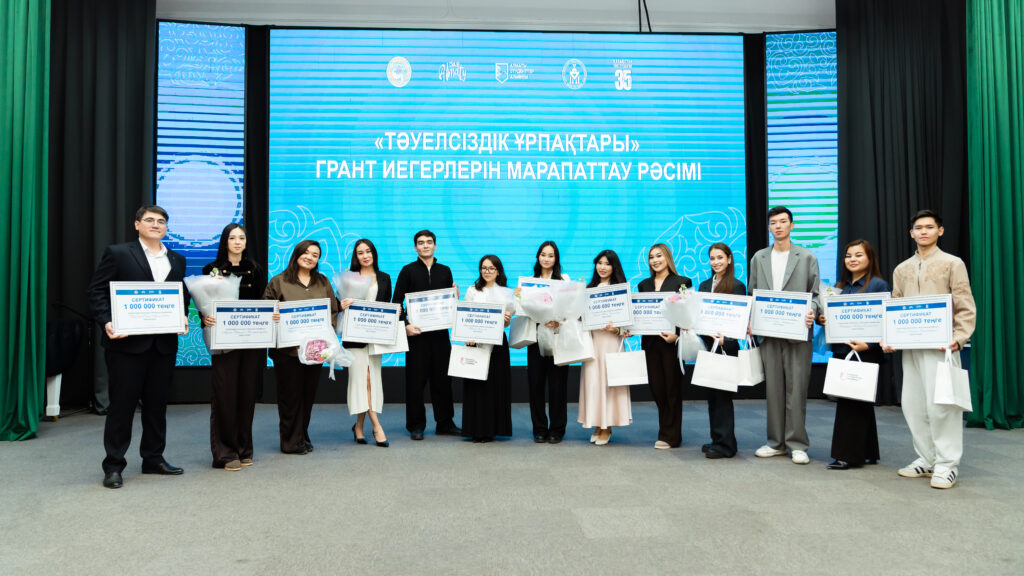
The «Тәуелсіздік ұрпақтары» competition was organised by the Almaty Students Alliance Corporate Foundation with the support of the Almaty Department of Youth Policy. This year’s competition was dedicated to the 35th anniversary of the Independence of the Republic of Kazakhstan. Participants presented their initiatives in six categories: science, culture, volunteering, IT, business and media. Following the selection process, the authors of the best projects received grants to bring their ideas to life.
Jamila Tabar is pursuing a degree in Business Administration in Entrepreneurship at AlmaU. Her QanattyQoldar initiative was submitted in the Volunteering category and received a grant of KZT 1 million.
“Creativity has been part of my life since childhood, while volunteering and social initiatives have always held a special place for me. I spent a long time volunteering and also developed social projects as part of Enactus at the university. That is why it is important for me not only to pursue something I am passionate about, but also to make a meaningful contribution to society. This is what I see as my mission,” she says.
QanattyQoldar is a social initiative that provides free art therapy sessions for children aged 4 to 12, helping them develop fine motor skills. The project seeks to make these activities more accessible to families in regions where specialised developmental and corrective support may be limited. Particular attention is given to creating equal opportunities for children, regardless of their place of residence or their families’ socioeconomic circumstances.
The project’s distinctive feature is its combination of modern art therapy approaches with elements of traditional Kazakh folk crafts. During the sessions, children work with felt, developing their fine motor skills through creative activities. The sessions are conducted by specially trained volunteers with the support of a therapeutic physical education specialist.
In addition to providing direct support to children, the initiative aims to engage students, parents and volunteers interested in learning art therapy techniques and working with children with special needs.
“In the near future, we plan to develop a programme of activities, train volunteers and launch free art therapy sessions for children in collaboration with a therapeutic physical education specialist. It is important for us to see tangible results and eventually make the programme accessible to children in other regions as well,” Jamila Tabar shares.
The main mission of QanattyQoldar is to make developmental activities accessible to all children, regardless of where they live or their families’ financial circumstances, while also reducing the burden on parents. The grant will support the further development and implementation of this initiative.
Jamila Tabar’s story demonstrates how student initiatives can go beyond university projects and become meaningful solutions to pressing social challenges. Supporting young people behind such initiatives creates opportunities to turn their ideas into action, contribute to society and make a positive difference in people’s lives.