
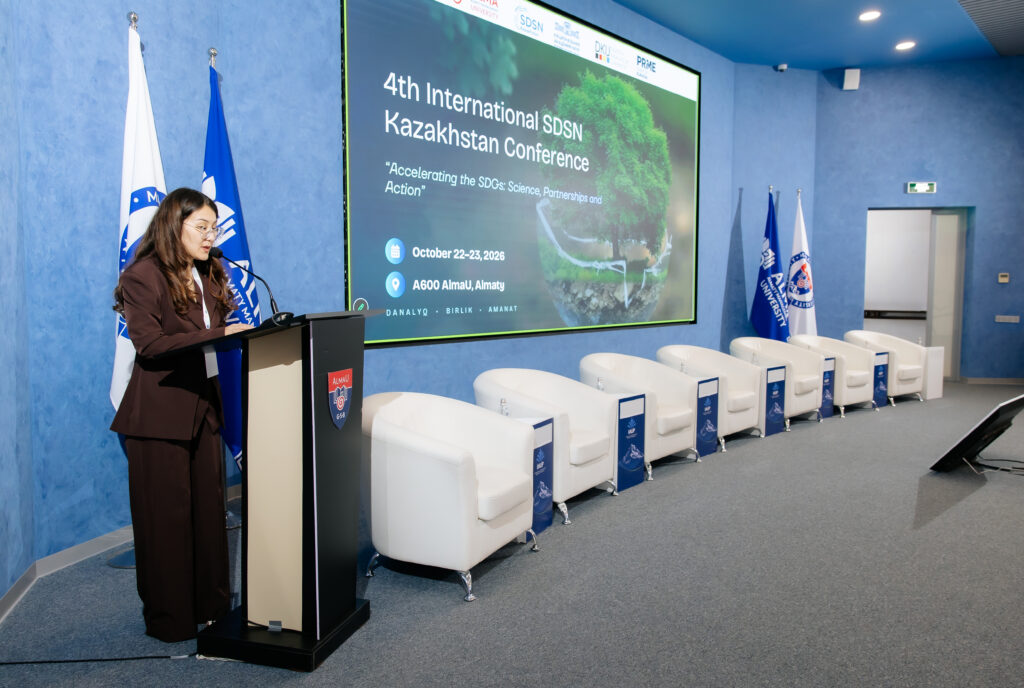
On October 23, 2026, Almaty Management University (AlmaU) hosted the IV International SDSN Kazakhstan Conference, titled “Accelerating the SDGs: Science, Partnerships and Action.” The conference was organized by AlmaU, SDSN Kazakhstan, and PRME Chapter Eurasia, in partnership with the Kazakh-German University (DKU) and the National Academy of Sciences of the Republic of Kazakhstan. The event brought together representatives of the United Nations, international expert communities, universities, businesses, and civil society to discuss practical solutions for sustainable development.
Over two days, participants explored climate policy, water resource management, economic decarbonization, air quality, public health, gender equality, and the use of artificial intelligence to address social challenges. The central theme of the conference was moving from international commitments to concrete action based on scientific evidence and cross-sectoral cooperation.
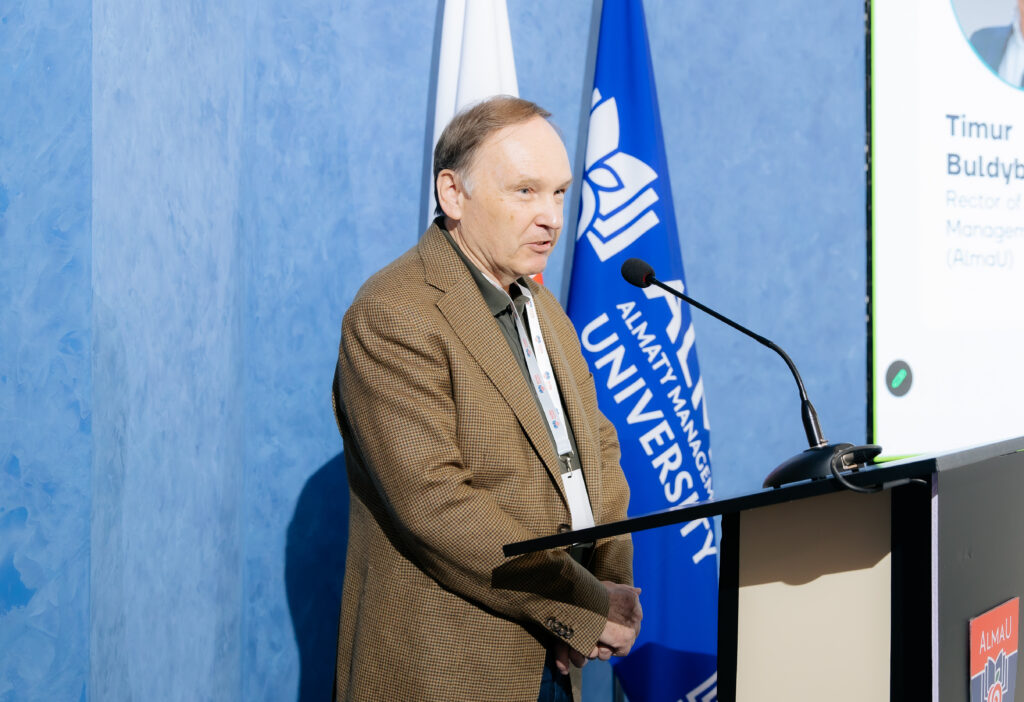
“Universities play an important role in advancing sustainable development by bringing together research, education, and practical initiatives. Achieving long-term results requires stronger cooperation between academia, government, and business,” said Timur Buldybayev, Rector of AlmaU, in his welcoming remarks.
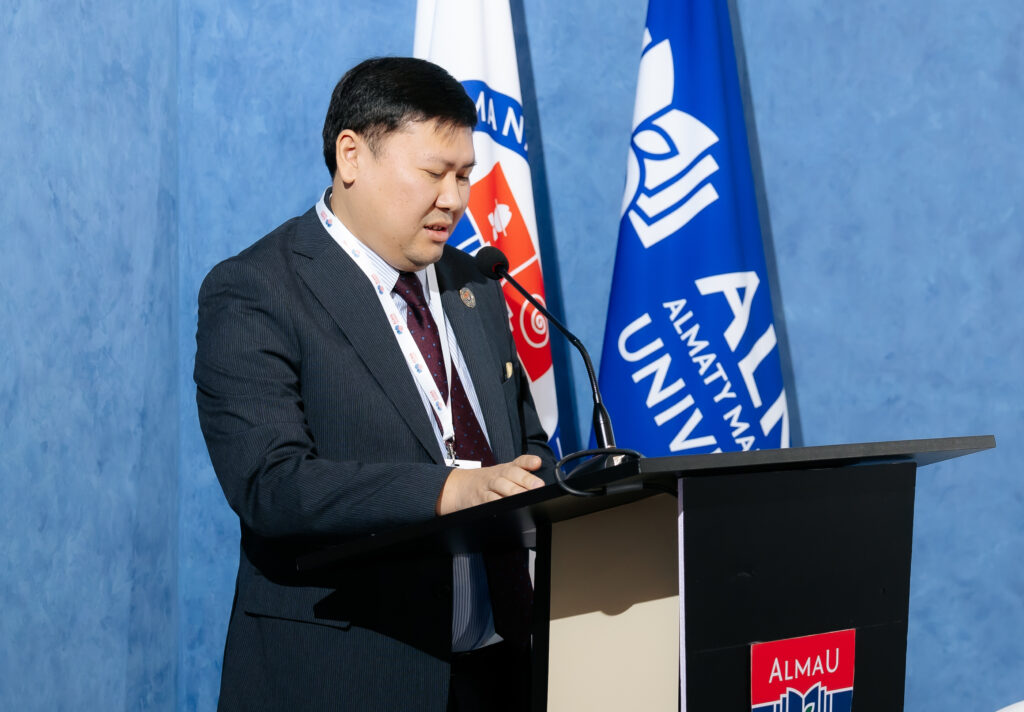
The first day of the conference was dedicated to Youth Action Day, a youth-focused event held in the PreCOP31 format and organized in partnership with the Kazakhstan-German University.
“Youth movements are actively developing in Almaty. Around 20% of the city’s 60,000 young activists are eco-volunteers who participate in environmental initiatives every day. In addition, a Science Council was established last year, and this year the city administration allocated grants to commercialize scientific developments and help researchers put their findings into practice,” noted Askar Azamatov, Director of the Almaty Youth Policy Department.
Throughout the day, young leaders and experts discussed the importance of international COP climate negotiations, the role of young people in shaping the climate agenda, and opportunities for contributing to the Sustainable Development Goals (SDGs).
“Today, we have more opportunities than ever to collaborate, conduct interdisciplinary research, and implement joint initiatives. Whether we contribute through science, governance, or volunteering, we need to work together, continue our research, and maintain hope for the future,” said Rasul Baidalin, Coordinator of SDSN Youth Kazakhstan.
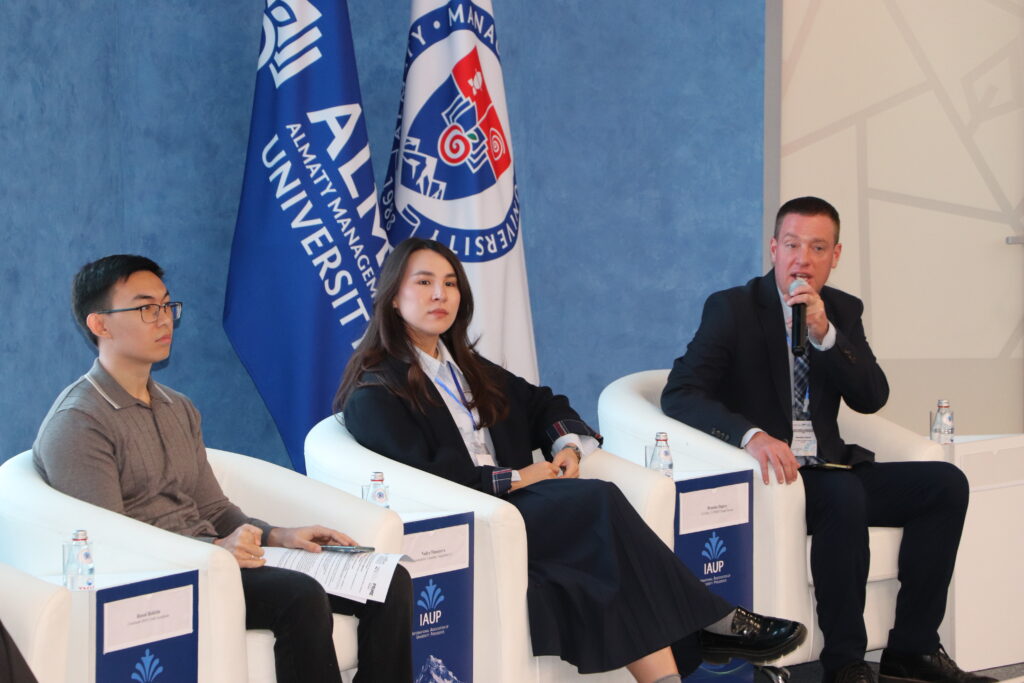
The first panel session featured Aida Kumarbayeva, Manager of SDSN Kazakhstan; Azamat Kauazov, Climate Change and Climate Education Coordinator at CAREC; Alua Karimbayeva, Coordinator of Climate for Us/LCOY; Rasul Baidalin, Coordinator of SDSN Youth Kazakhstan; Nailya Musaeva, Sustainability Consultant at Aequilibria S.r.l.; and Larisa Kogutenko, UNESCO Cryosphere Project Manager. The session was moderated by Brendan Duprey, Co-Chair of the UN PRME Eurasia Chapter.
Participants shared their professional experience in sustainable development, discussed career opportunities in the field, and explored practical tools for addressing climate challenges.
“Last year, we surveyed more than 200 young people from different regions of Kazakhstan and prepared a National Youth Statement. We later saw that some of our recommendations had been incorporated into Kazakhstan’s national climate plan. This showed that young people’s voices can indeed be heard,” noted Alua Karimbayeva.
The Q&A session featured Ekaterina Gorshkova of the Center for Natural Resources and Sustainable Development; Tais Reznikova, Water Management and Policy Specialist at CAREC; Aida Kumarbayeva, Manager of SDSN Kazakhstan; Dameli Tileshpayeva, Coordinator of UNICEF’s Jastary programme; and Muza Yelgezek and Aruzhan Zhienali, AlmaU students and coordinators of the HDSE Leadership Intensive at Lehigh University. The session was moderated by Aigerim Sagintayeva, Head of International Partnerships at GSB and partner of the Babson Collaborative.
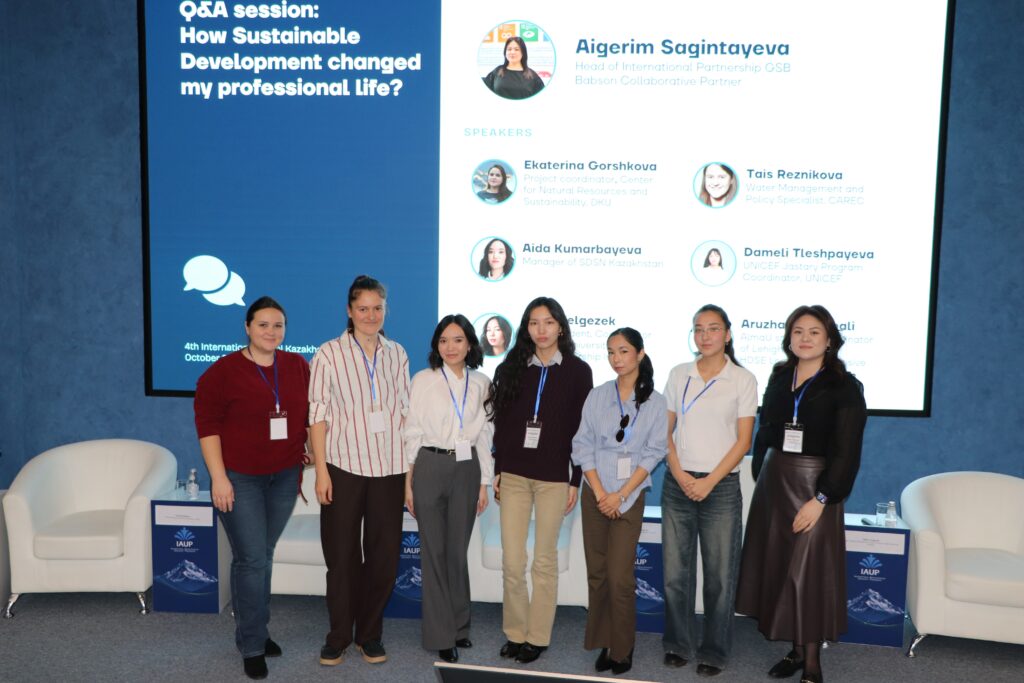
“Young people are proactive leaders who can bring teams together and implement their own projects. Through UNICEF’s Jastary programme, youth hubs are now operating in six cities across Kazakhstan. We are also developing an online platform where young people can organize events, take courses, and participate in challenges, further expanding opportunities for engagement,” said Dameli Tileshpayeva.
As part of the workshop programme, young participants took part in a UNFCCC COP negotiation simulation, the Nexus game, and the interactive Climate Fresk workshop. These activities explored climate challenges through the lenses of international diplomacy, the interconnections between natural resources, and systems thinking.
On October 23, the main conference programme brought together international experts and representatives of Kazakhstani organizations.
“Only 16% of the targets under the Sustainable Development Goals are progressing sufficiently to be achieved by 2030. Meanwhile, areas such as zero hunger, quality education, clean water, and sanitation continue to experience stagnation,” said Guillaume Lafortune, Vice President and Head of the Asia Office of the UN Sustainable Development Solutions Network (SDSN).
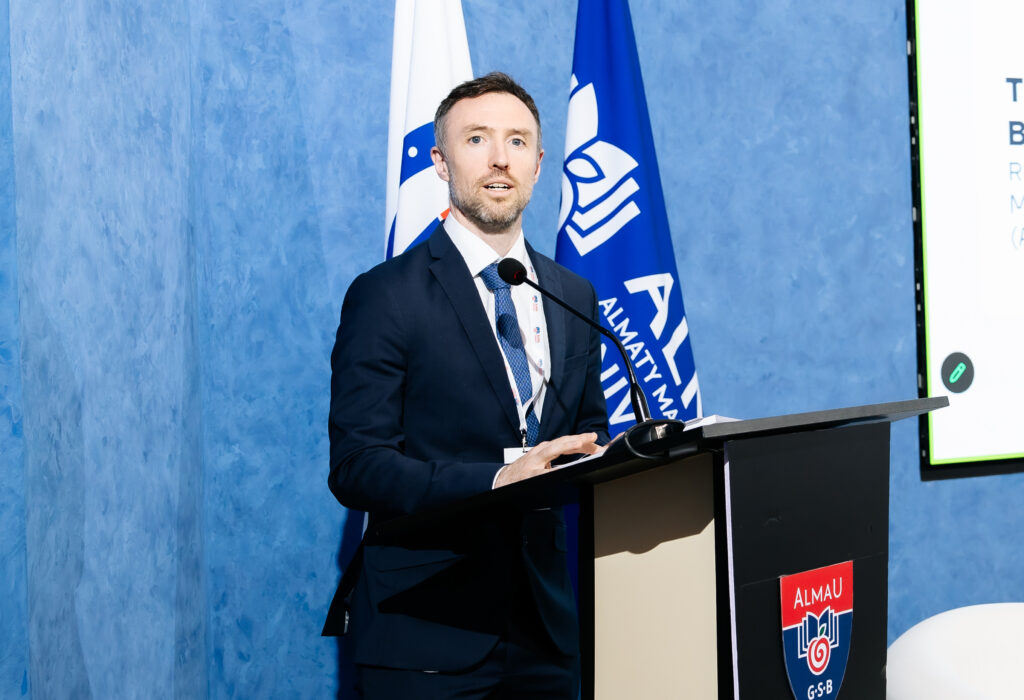
In his presentation, Lafortune also noted that Kazakhstan ranked 67th out of 169 countries in the SDG ranking. He highlighted progress in the area of poverty reduction, while moderate improvements were observed in good health and well-being, decent work and economic growth, and several other goals.
“The National Academy of Sciences develops proposals to help regions and cities formulate strategies for adapting to natural and technological changes. Sustainable development policy must be proactive, enabling the necessary measures to be identified and implemented in advance,” noted Elena Shevchenko, Vice President of the National Academy of Sciences of the Republic of Kazakhstan.
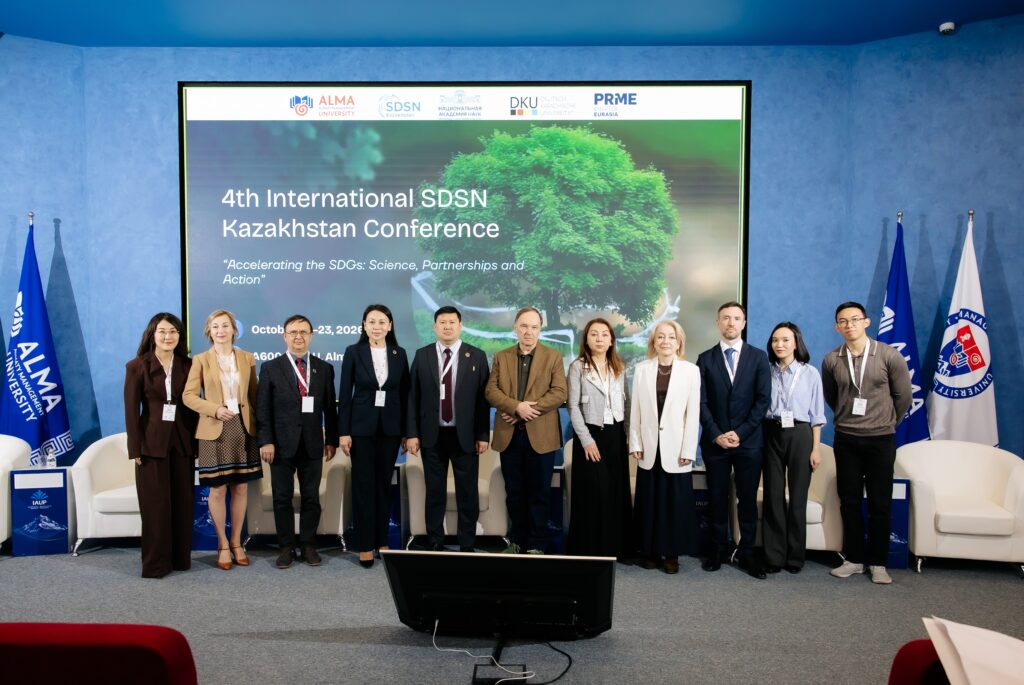
The plenary session on advancing the SDGs featured Asylbek Kozhakhmetov, President of AlmaU; Volrad Rommel, President of the Kazakhstan-German University; Dinara Seizhapparova, Executive Director of the UN Global Compact in Eurasia; and Rafis Abazov, Director of the International Institute for Green and Sustainable Development at KazNARU. The session was moderated by Irina Gorbacheva, Director of Sustainability Solutions.
“I believe universities will become a third sector capable of shaping the direction of societal development. They must evolve beyond outdated models, adapt to contemporary realities, and keep pace with the times. For AlmaU, the Sustainable Development Goals are important guiding principles,” said Asylbek Kozhakhmetov.
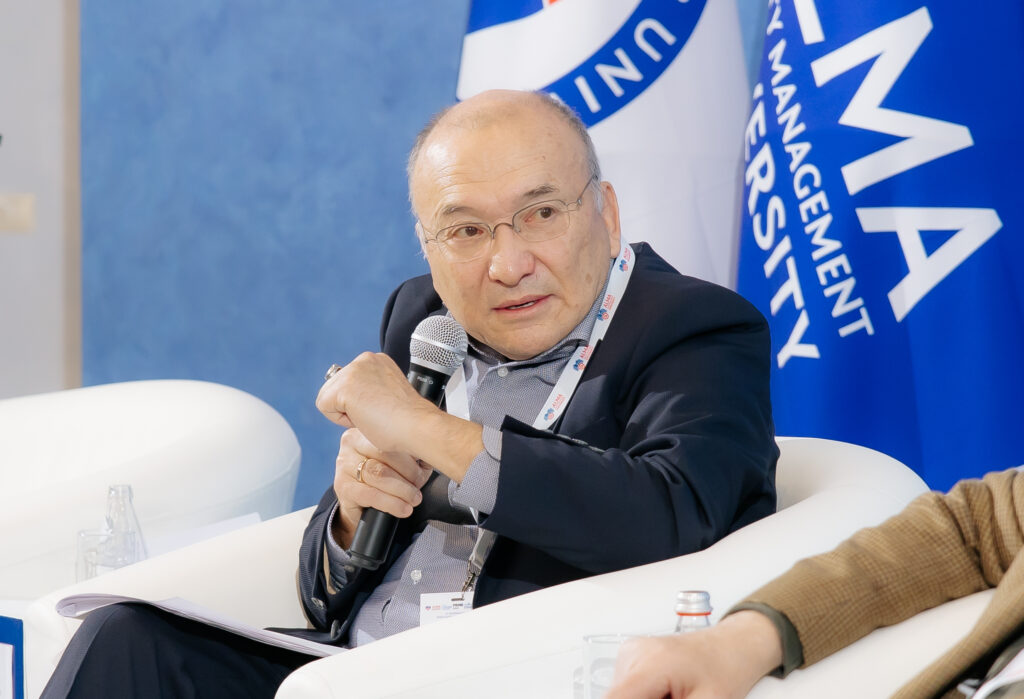
“The SDGs are not philanthropy; they are an opportunity for businesses to improve efficiency and generate returns on investment. Implementing them requires the involvement of all employees, especially senior executives, because businesses are part of the wider social ecosystem and share responsibility for addressing societal challenges,” noted Dinara Seizhapparova, Executive Director of the UN Global Compact in Eurasia.
“The Sustainable Development Goals must be integrated at every level of education. In its energy transition, Kazakhstan needs to adapt international experience to its own circumstances rather than simply replicate European models,” said Volrad Rommel, President of the Kazakhstan-German University.
During three thematic sessions, experts presented research and practical approaches to addressing environmental, social, and economic challenges. The first session focused on air pollution, water resource management, and the energy transition.
Rafkat Mukhtarov presented research findings on public awareness of air quality, highlighting the gap between residents’ concern and their actual behaviour. According to the study, 70% of respondents in Almaty expressed emotional concern about air pollution, while only 16.8% reported taking concrete action.
“In Almaty, cognitive awareness of the issue stands at 37.6%, while readiness to act is 40.2%,” he noted.
Vadim Yapiyev of Nazarbayev University discussed the regionalization of Kazakhstan’s major river basins. Zhansaya Temerbulatova, Professor-Researcher at AlmaU, presented scenarios for the country’s energy transition and decarbonization. Ravkat Mukhtarov and Nasiba Baimatova addressed public environmental awareness and analytical research. The session was moderated by Pakizat Sailaubekova, Chief Manager at Almaty Development Center JSC.
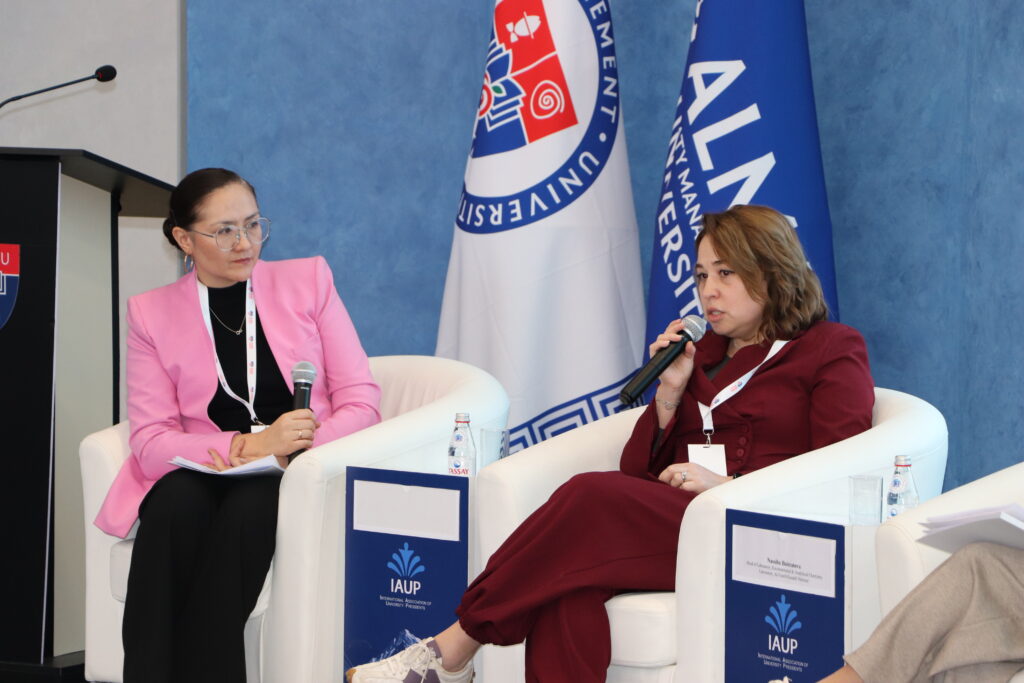
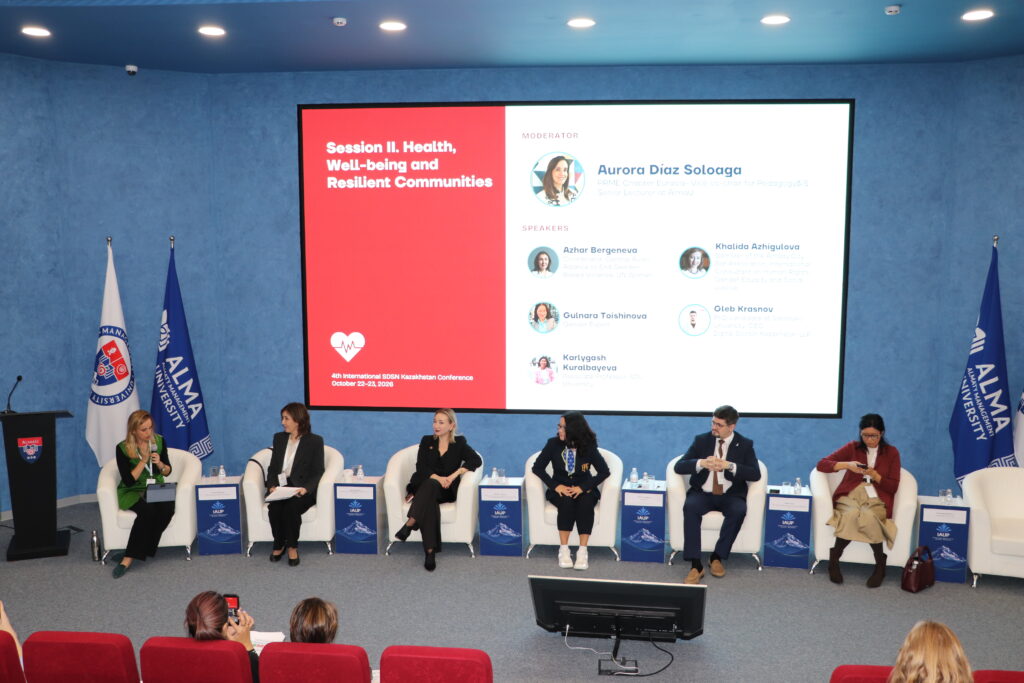
The second session focused on health, well-being, and sustainable communities. Participants included Azhar Bergenova, Coordinator of the Central Asian Alliance to End Gender-Based Violence at UN Women; Khalida Azhigulova, lawyer at the Almaty City Bar Association; Gulnara Toishinova, Gender Expert; Gleb Krasnov, CEO of Digital Doctor Kazakhstan LLP; and Karlygash Kuralbayeva, Associate Professor. The session was moderated by Aurora Díaz-Soloaga, Vice-Chair for Pedagogy and i5 of the PRME Eurasia Chapter.
Experts discussed regional cooperation to combat gender-based violence, the use of scientific evidence in policymaking, and the application of digital tools and artificial intelligence to support clinical decision-making in regions facing shortages of medical specialists.
“We are currently developing new legislative initiatives to protect citizens’ rights against all forms of gender-based violence. Our goal is to secure their support from Parliament and the Government,” said Khalida Azhigulova.
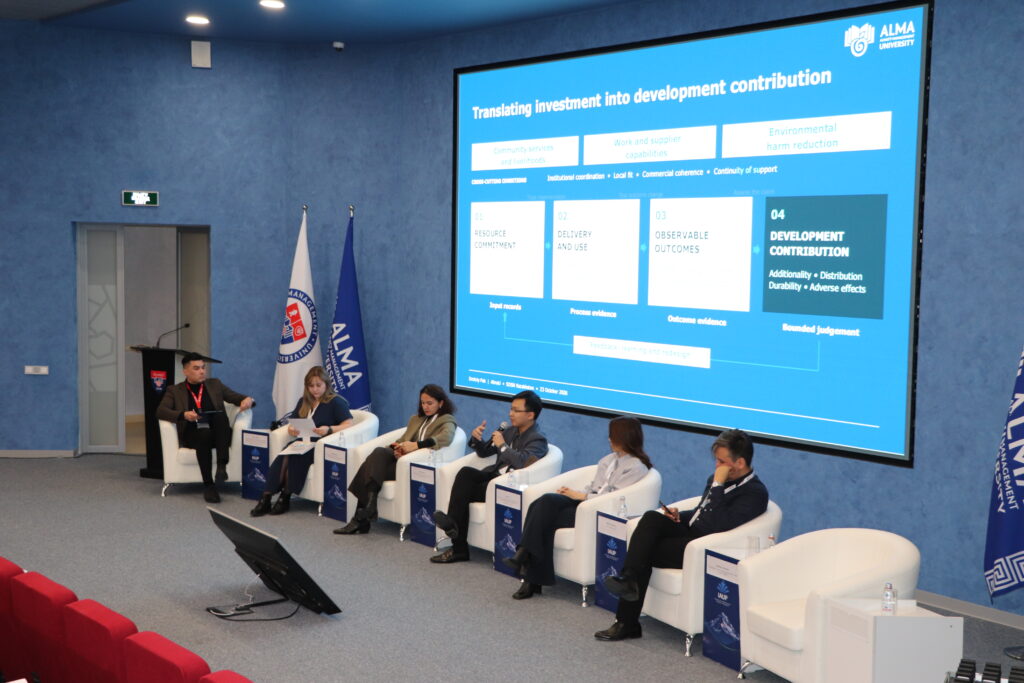
The third session explored the role of universities, businesses, and international institutions in advancing sustainable practices.
Rafis Abazov, Director of the Institute for Green and Sustainable Development, discussed the role of universities in sustainable transformation, the integration of AI into education, and the development of green skills. Diana Burlibayeva of the Executive Directorate of the International Fund for Saving the Aral Sea in the Republic of Kazakhstan addressed the implementation of the Aral Sea Basin Programme (ASBP-4). Akmaral Sman presented approaches to inclusive green growth, while Dmitry Pak explored ways to turn corporate investment in sustainability into tangible results. Zhuldyz Saulebekova focused on communicating about air pollution, and Temirlan Erbosynov discussed connecting scientific research with practical initiatives.
The session was moderated by Daniyar Medetov, Director and Assistant Professor of Entrepreneurship and Associate Dean for Research and Industry Engagement at AlmaU’s Graduate School of Business.
The closing part of the conference focused on key takeaways, new initiatives, and the announcement of the forthcoming casebook, “Accelerating the SDGs: Science, Partnerships and Action.”
The IV International SDSN Kazakhstan Conference provided a platform for dialogue among the scientific community, universities, international organizations, businesses, and civil society. The discussions aimed to strengthen partnerships and identify practical approaches to advancing the Sustainable Development Goals in Kazakhstan and Central Asia.