
October 2, 2026, Astana – The 8th meeting of the Rectors’ Club: Central Asia+ was held in Astana under the theme “Universities After AI: New Leadership, the Human Dimension, and the Future of Universities in Central Asia+.” University leaders and experts from across the region discussed how the development of artificial intelligence is transforming education, research, and the role of the university, as well as what approaches are needed to preserve human agency amid rapid technological change.
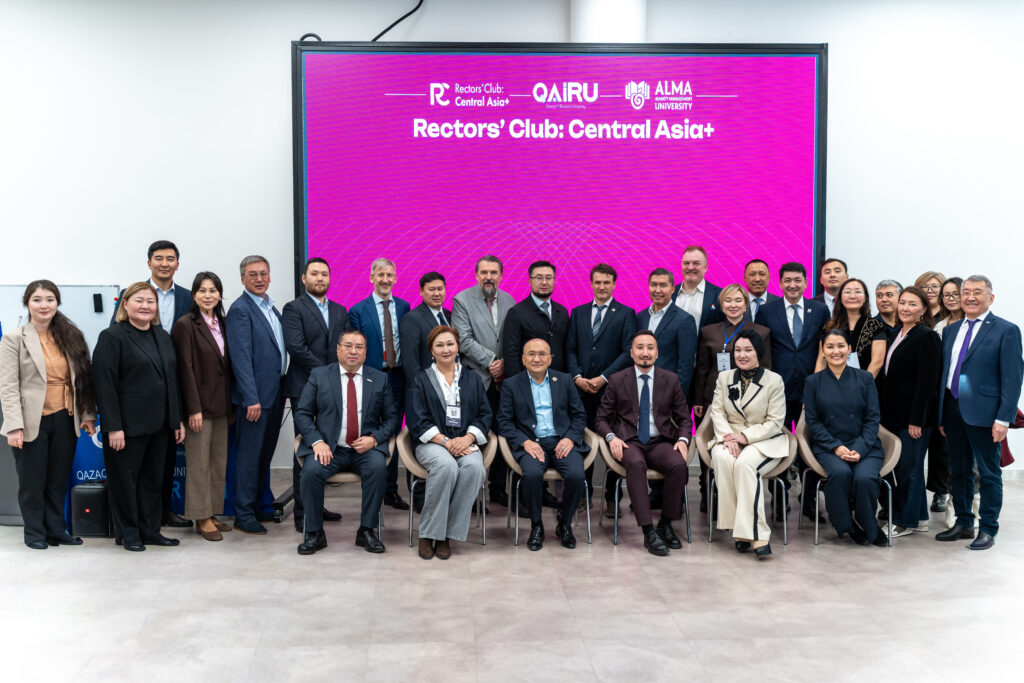
The meeting took place in the context of the Year of Artificial Intelligence in Kazakhstan and the international technology agenda of Digital Bridge 2026. The event was organized by Almaty Management University (AlmaU) and Qazaq AI Research University (QAIRU).
Sapar Toksanov, Rector of QAIRU, delivered the welcoming remarks. He emphasized the importance of inter-university dialogue in developing a shared regional perspective on artificial intelligence.
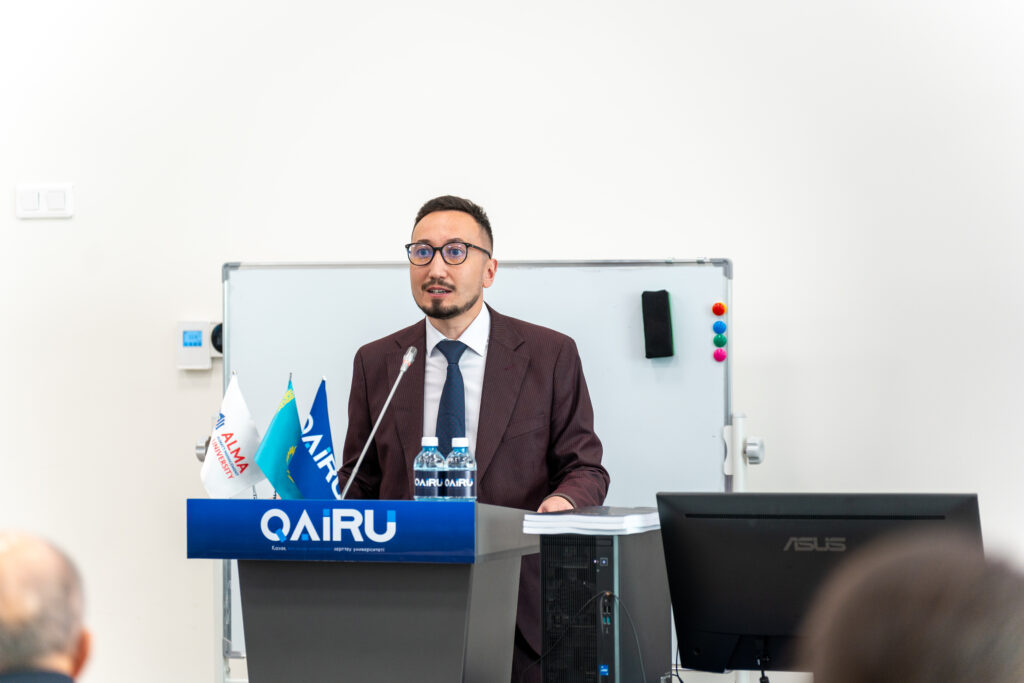
“Universities today face significant challenges, including those associated with the development of artificial intelligence. That is why it is particularly important to exchange experience and perspectives and work together to address these challenges. The Head of State has set us the task of developing the ‘AI + X’ model, which focuses on integrating artificial intelligence across different fields and areas of activity,” he said.
Asylbek Kozhakhmetov, President of AlmaU and Founder of the Rectors’ Club: Central Asia+, noted that the development of AI requires universities to reconsider not only educational technologies, but also the very logic of university education.
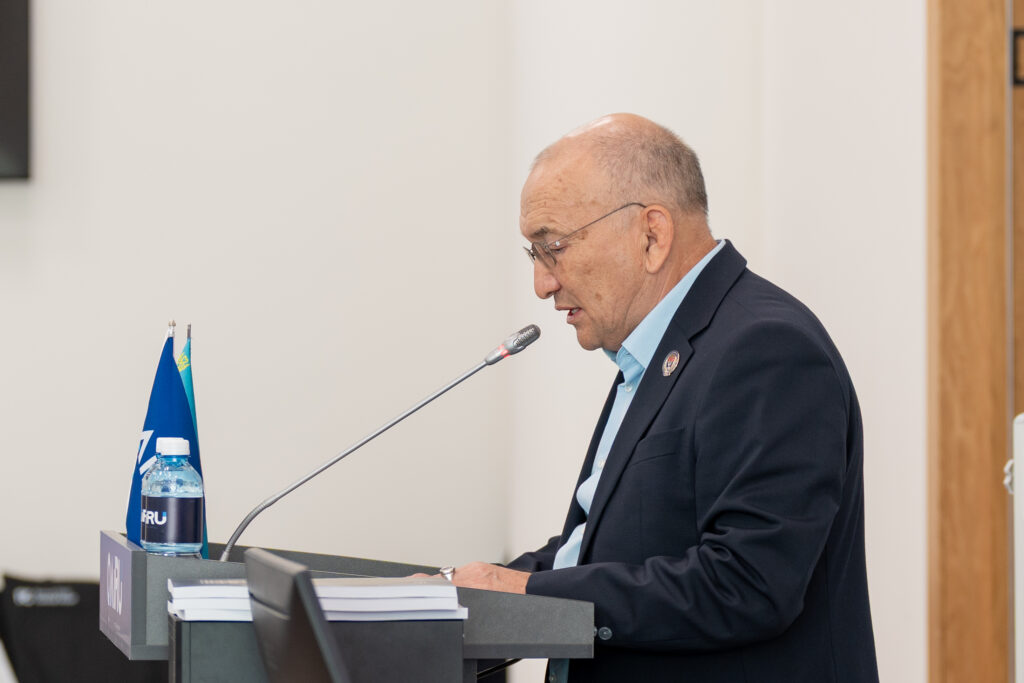
“Universities in Central Asia should go beyond simply interacting and exchanging experience. We need to contribute jointly to shaping the future of higher education and the development of universities across the region. Each university has its own strategy and vision for development, but we all face a common question: what will the university of the future look like? This is one of the reasons why we initiated the Rectors’ Club: Central Asia+. We share a responsibility not only for the development of our universities, but also for the future of the generations to come” – emphasized Assylbek Kozhakhmetov.
From Automation to a New Understanding of the University
The keynote speaker of the meeting was Alexander Sidorkin, Professor of Education, former Chief AI Officer, California State University Sacramento (USA), co-author of Universities After AI. His presentation, “Thinking in the Age of AI: From Automation to the Relational University”, focused on how universities can move beyond viewing AI solely as a tool for automation and begin rethinking the educational environment itself. In his speech, he addressed the changing role of human capital in the age of artificial intelligence:
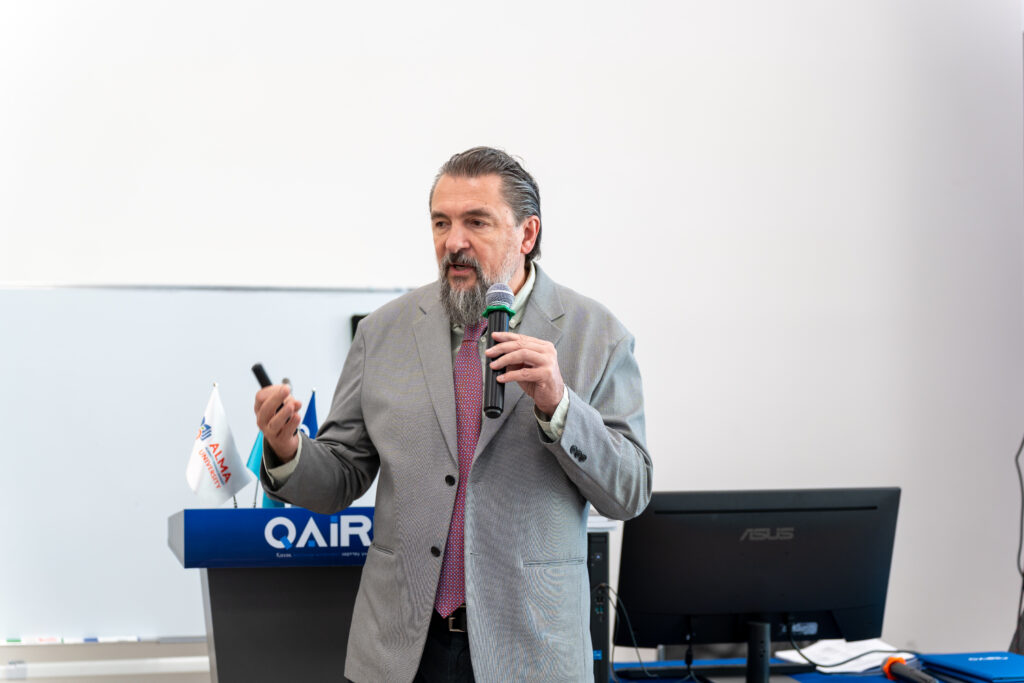
“As AI takes over an increasing share of routine and operational tasks, people need to focus on developing skills that complement technology, including critical thinking, leadership, decision-making, creativity, effective management, and the ability to work with AI”.
The Human and the University in the Age of AI
The keynote was followed by a panel discussion titled “The Human and the University in the Age of AI,” moderated by Madina Tynybayeva, Vice Rector for International Cooperation at QAIRU.
The participants discussed how to preserve human agency in a university where AI is becoming part of everyday educational practice. Particular attention was given to critical thinking, independent decision-making, creativity, and academic integrity. The participants also discussed the changing role of faculty, the future of discipline-based education, the need to develop new competencies, and the importance of preserving the cultural and academic identity of Central Asian universities while integrating global technological solutions.
The discussion featured:
- Rustem Bigari, President of the International Information Technology University (IITU), expert in digital transformation and AI policy;
- Sergey Pen, Deputy CEO for Research, Innovation and Artificial Intelligence, Maqsut Narikbayev University (MNU) ;
- Zhanar Rysbekova, Rector of Tashenev University;
- Neil Marshall, Director of Development, ChangeSchool; expert in executive education,
innovationand entrepreneurship development;
- Björn Birgisson, Vice Provost for Research and Innovation, Nazarbayev University.
From Dialogue to Joint Action
One of the practical outcomes of the meeting was the development of the Astana AI Declaration 2026, a statement by universities on artificial intelligence.
The document establishes a common framework for the human-centered transformation of higher education in the age of AI and reflects the commitment of universities across Central Asia+ to work together on key areas of development.
The meeting also featured an interactive workshop titled “University Transformation Framework,” led by Pavel Luksha, CEO of Global Education Futures and an expert in the future of education and systems transformation.
Cooperation Between AlmaU and QAIRU
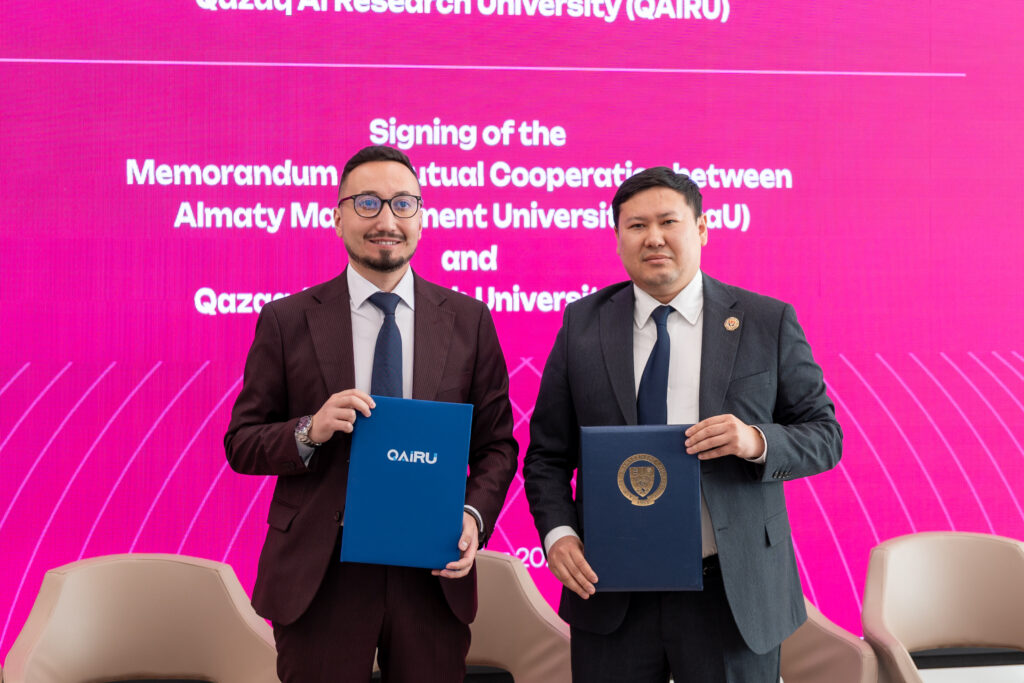
As part of the meeting, AlmaU and QAIRU signed a Memorandum of Cooperation. The document provides for the development of joint educational and research initiatives, the exchange of expertise, and the implementation of projects at the intersection of education, artificial intelligence, and entrepreneurship. The memorandum was signed by Sapar Toksanov, Rector of QAIRU, and Timur Buldabayev, Rector of AlmaU.
The Rectors’ Club: Central Asia+ therefore moved the conversation beyond the technological capabilities of AI toward a broader question: what should the university become when intelligent technologies become an integral part of the educational and research environment?
The next stage will focus on developing joint initiatives among universities and advancing the commitments outlined in the Astana AI Declaration 2026.