
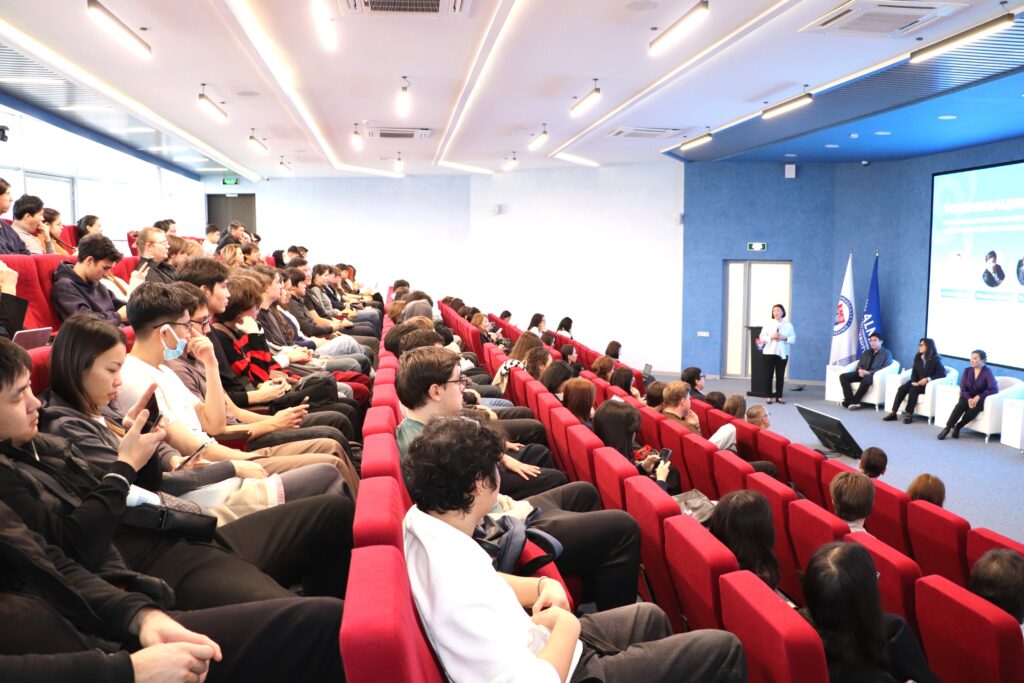
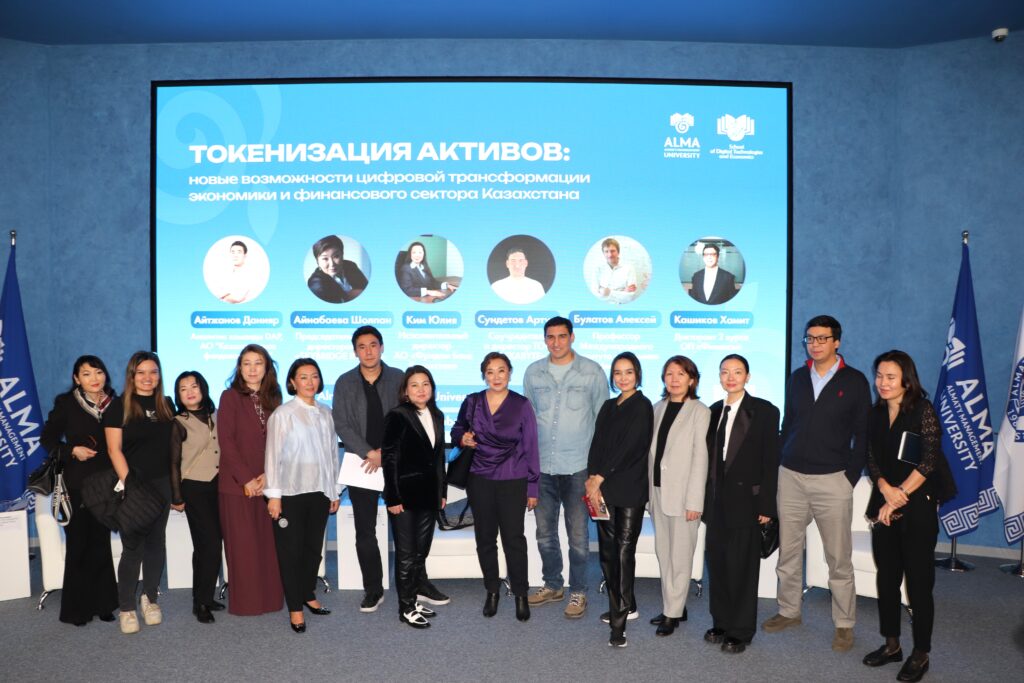
On 18 November 2026, AlmaU hosted an international academic and practical conference titled “Asset Tokenization: New Opportunities for the Digital Transformation of Kazakhstan’s Economy and Financial Sector.” The event was held to mark the 33rd anniversary of the national currency of the Republic of Kazakhstan.
The conference brought together representatives of the financial sector, capital markets, banks, investment and IT companies, government agencies, as well as Kazakhstani and international researchers, academics, doctoral candidates and master’s students.
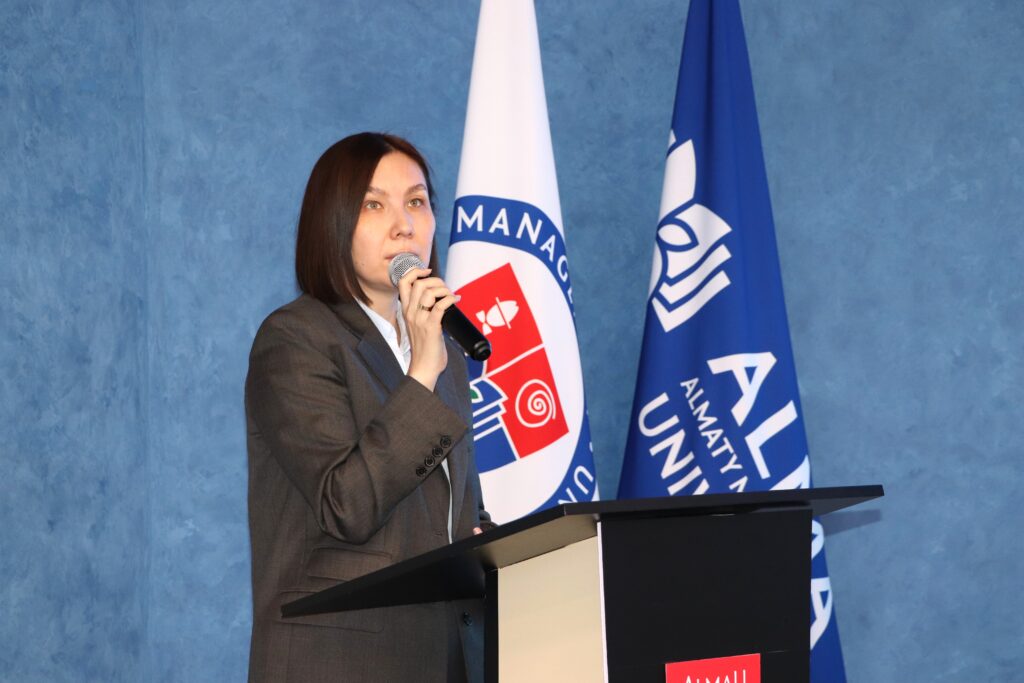
The opening remarks were delivered by Renata Kudaibergenova, Vice-Rector for Research and Commercialization at AlmaU, who highlighted the relevance of digital transformation in the financial sector and the importance of strengthening cooperation between academia and industry.
“Technological progress and constant change are presenting new challenges not only to universities in Kazakhstan but also to higher education institutions around the world. Our task is not simply to keep pace with these challenges, but also to prepare students who can adapt to new conditions, critically assess ongoing developments, explore emerging processes and become agents of change themselves – individuals who help shape the future of society. That is why the integration of digital technologies and economics is of fundamental importance to AlmaU. Today, these fields can no longer develop in isolation, and our conference is a clear testament to this.” – she noted.
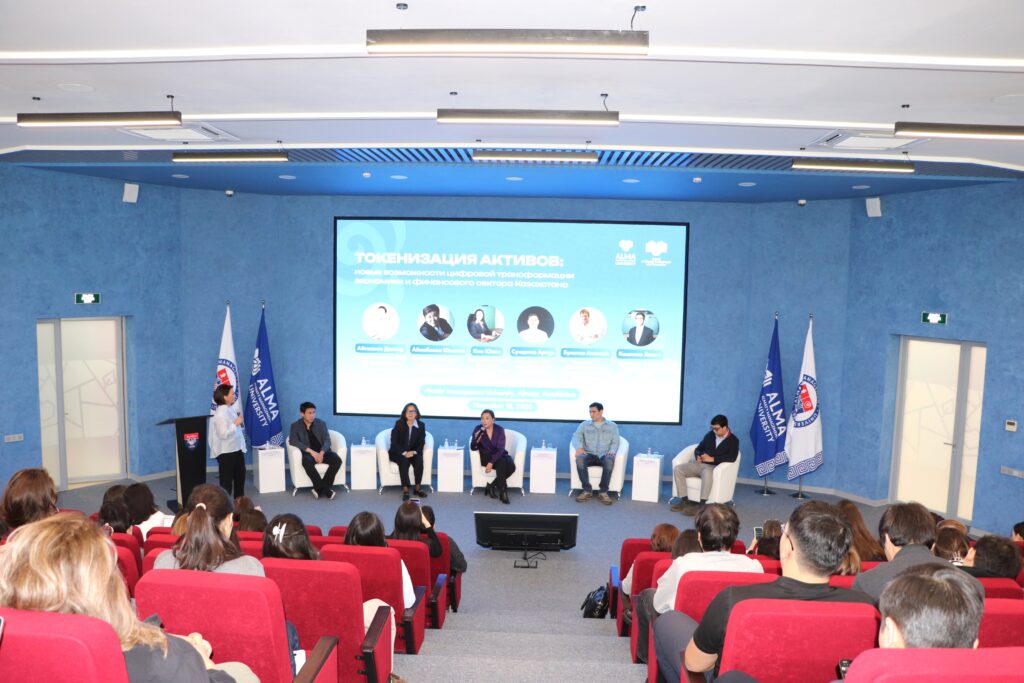
The conference focused on the development of digital financial instruments, the future of the digital tenge, the application of blockchain technology and the potential of real-world asset tokenization. Participants discussed how emerging technologies are transforming traditional approaches to investment, banking services and capital market operations.
The plenary session featured representatives of financial institutions, capital market infrastructure, technology companies and the academic community.
Sholpan Ainabayeva, Chairperson of the Board of Directors of SKYBRIDGE INVEST JSC, delivered a presentation titled “Tokenization: The New Infrastructure of Capital Markets”. She discussed the transformation of financial markets and emerging opportunities for attracting investment.
“By the late 20th and early 21st centuries, electronic assets had entered our lives, and, most importantly, so had electronic payments. It became possible to maintain securities holder registers electronically. This marked the next stage in the development of the capital market, enabling it to expand across virtually all markets through electronic assets. Thanks to the electronic format of securities and monetary settlements, there is no longer any need to visit stock exchanges in person or be physically present in the country where they are located. All necessary transactions can now be carried out remotely, regardless of geographical location. We believe that the next stage in the development of financial infrastructure is tokenized assets, where the issuance, recording and circulation of assets are facilitated by blockchain technology.” – she emphasized.
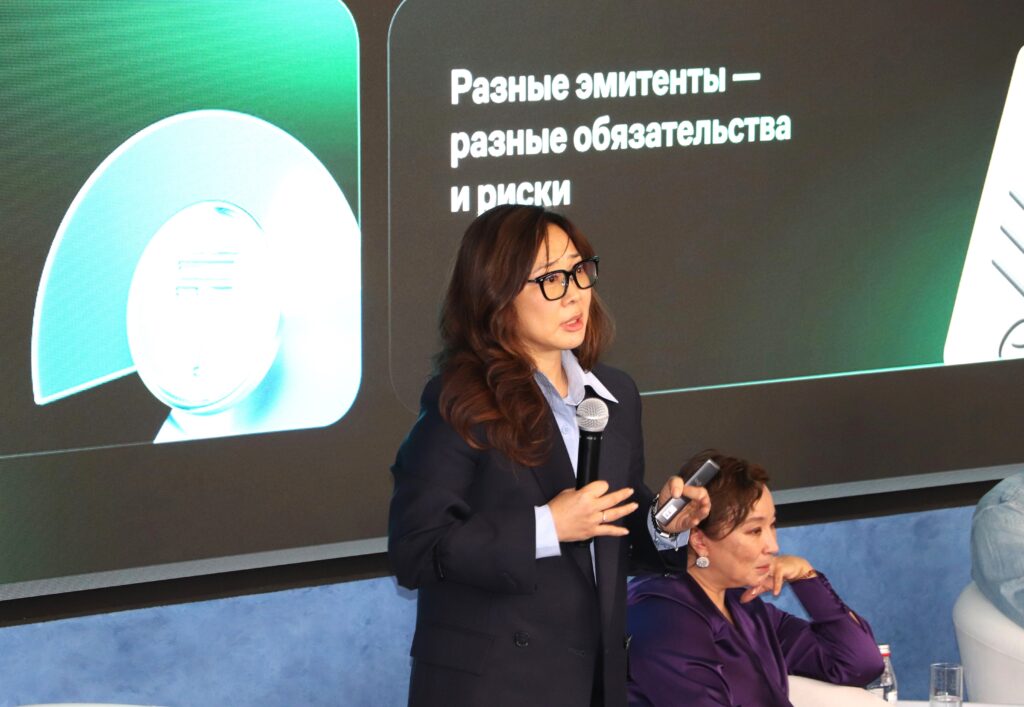
The changing role of banks amid the development of digital financial instruments was addressed by Yulia Kim, Executive Director of Freedom Bank Kazakhstan JSC, who delivered a presentation titled “Banks in the Era of Tokenization”.
“We bring together banking services, brokerage solutions, insurance and what is commonly referred to as lifestyle services within a single ecosystem. Our bank is relatively young, yet we are trendsetters in the field of digitalization. We are the first bank in Kazakhstan and worldwide to have launched a digital mortgage service. We have succeeded in creating an entirely new customer experience. Secured loans and mortgages can now be obtained much faster. Previously, the process involved numerous offline stages and obtaining a mortgage through a bank took approximately two weeks. Today, it takes just 24 hours. We even have a record of issuing a mortgage in just 3 hours and 14 minutes. That is a remarkable achievement. I would like to emphasize that, as a financial system, we are ready for digitalization and tokenization.” – the speaker noted.
Daniyar Aitzhanov, DAP Team Analyst at Kazakhstan Stock Exchange (KASE), spoke about asset tokenization in exchange markets, the platform’s experience and the prospects for further development in this area.
“Tokenization is a new way of representing assets. It is now set to become the fourth type of market. The key factors here are liquidity and new ways of generating it. These are precisely the opportunities that open up new prospects for the development of the exchange market and for working with digital assets. We are an IT team, but we are also product-oriented. We are developing our own platform, which allows us to bring assets onto the platform and withdraw cryptocurrency. We tokenize assets ourselves and organize trading independently. Essentially, we perform the same functions as a traditional exchange, but in a new digital format.” – he noted.
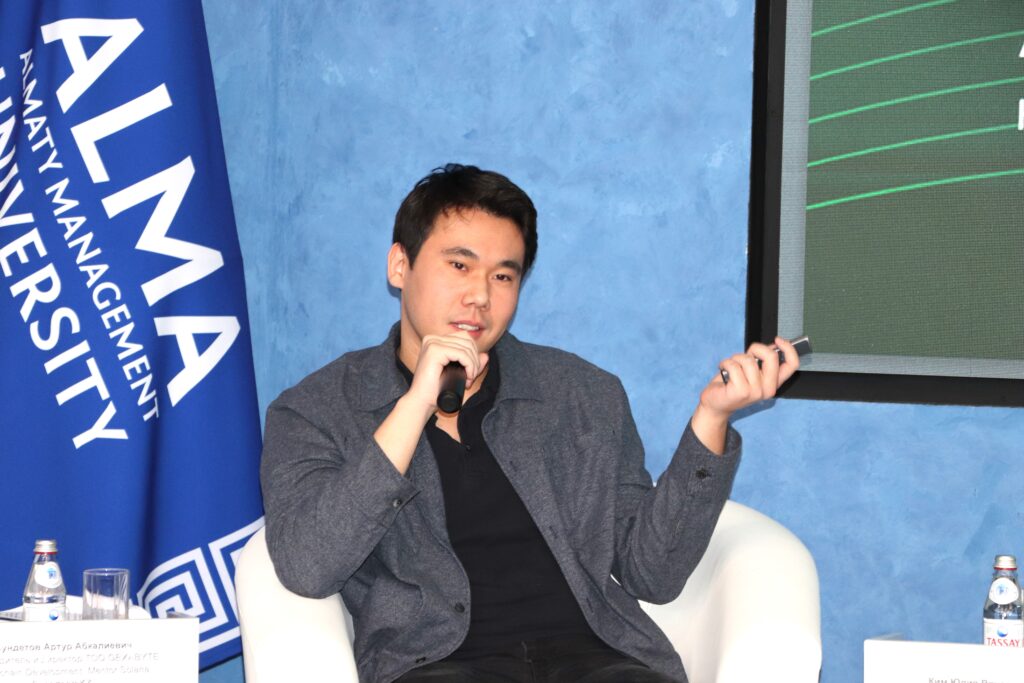
Artur Sundetov, Co-founder and Director of GEXABYTE Blockchain Development LLP and Mentor at Solana Superteam KZ, presented “Real-World Asset Tokenization”, exploring the practical applications of blockchain technology in managing tangible and intangible assets.
“With blockchain, you place your trust in the code. However, many people do not understand how code works and are not ready to explore software functionalities on their own. That is why public blockchain technology has been brought into traditional finance, where people are accustomed to placing their trust in banks. As a result, tokenization has brought together two approaches: trust in banks and trust in blockchain. Tokenization represents a new type of asset. Today, platforms and regulatory frameworks are emerging both in Kazakhstan and around the world, making it possible to work with these assets more conveniently and efficiently, test new solutions and explore further opportunities for development.” – Artur Sundetov highlighted in his presentation.
Special attention was also given to the role of the digital tenge in shaping the new financial infrastructure. Khamit Kashikov, a doctoral candidate in AlmaU’s Finance programme, presented his research on the use of the digital tenge as a settlement instrument in tokenized asset markets and its potential implications for monetary policy transmission and the banking sector.
During the discussions, participants examined the development of digital financial infrastructure in Kazakhstan, including the prospects for launching digital asset trading on the KASE platform. Experts exchanged views on emerging opportunities for investors and businesses, regulatory considerations and the future development of the financial market.
In the afternoon, the conference continued with three thematic sessions:
- “Asset Tokenization and the Transformation of Financial Instruments” – finance, accounting and auditing;
- “Digital Business Models, Data and Analytics in the Context of Economic Transformation” – business analytics and economics;
- “Blockchain, Tokenization and the Technological Infrastructure of the Digital Economy” – information technology and digital solutions.
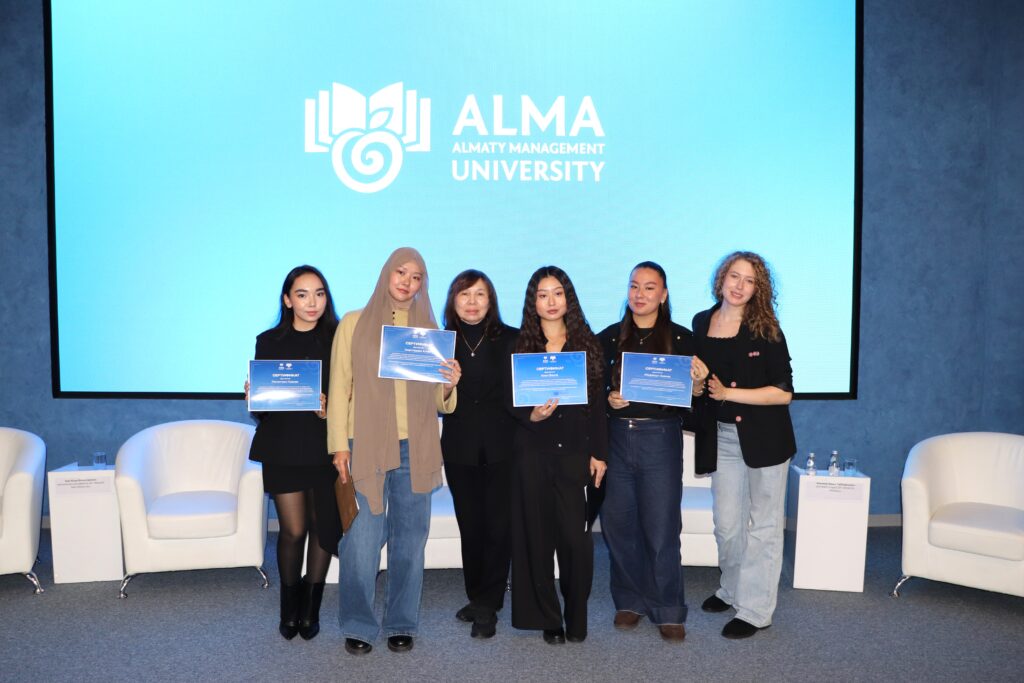
Participants presented their research and practical developments, discussing current trends in economic digitalization and the prospects for implementing technological solutions in the financial sector. As part of the “Financial Accounting and Auditing” session, SDTE students, master’s students and doctoral students delivered presentations on bond tokenization and improving financial accounting through the use of digital technologies.
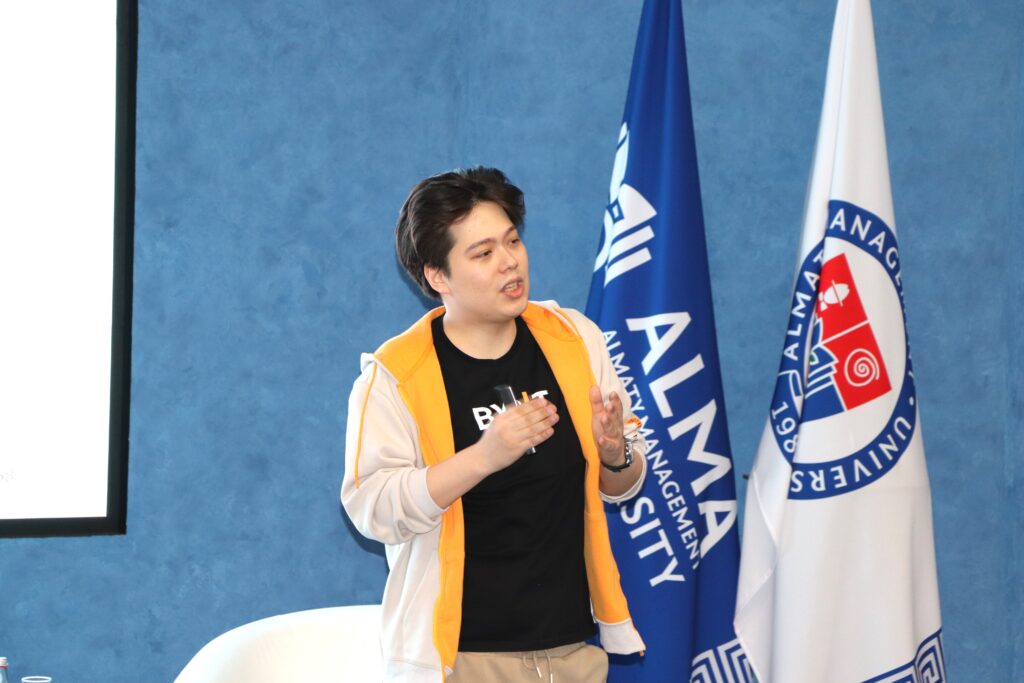
A guest lecture was also held by a representative of the cryptocurrency exchange Bybit Kazakhstan. The speaker was Sanzhar Zholayev, Head of Marketing at Bybit Kazakhstan. He introduced students to the operations of the cryptocurrency exchange and provided insights into cryptocurrencies. The lecture generated keen interest among the students. Following the quizzes, participants received branded gifts from Bybit Kazakhstan.
The conference served as a platform for professional dialogue among representatives of the financial market, business and the academic community, bringing together academic and practical approaches to exploring the digital transformation of Kazakhstan’s economy.