
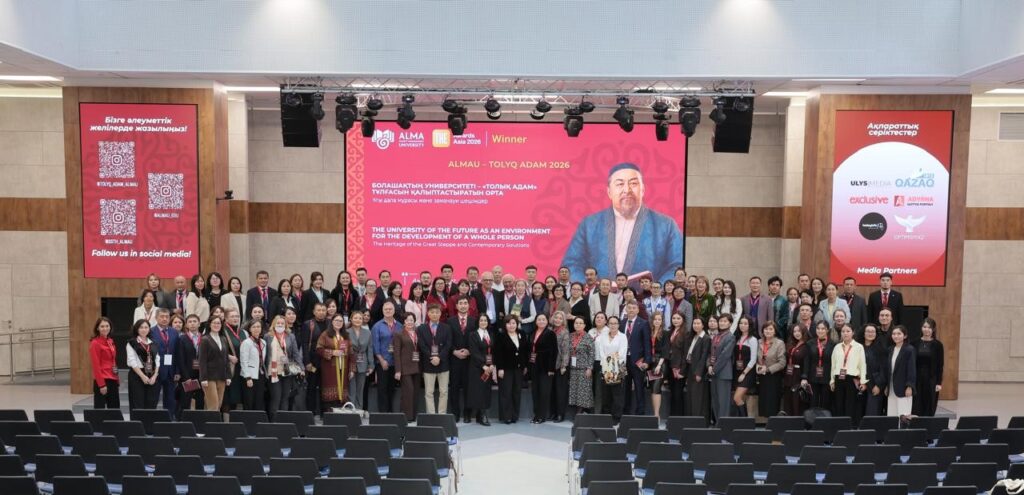
On October 30-31, 2026, AlmaU hosted the international TOLYQ ADAM-2026 conference, titled “The University of the Future as an Environment for Holistic Human Development: The Heritage of the Great Steppe and Contemporary Solutions.” The event brought together researchers, university leaders, and international experts to explore what education of the future should look like and how Kazakhstan’s philosophical heritage, the legacy of the Great Steppe, and contemporary educational approaches can contribute to its development. The conference was organized by AlmaU’s School of Social Sciences and Transformative Humanities and the Tolyq Adam Institute.
At the heart of the discussions was the idea that a university’s mission extends beyond the delivery of professional knowledge and the training of specialists. An equally important task of higher education is to create an environment that fosters independent thinking, moral responsibility, the ability to engage in dialogue, and conscious participation in society.
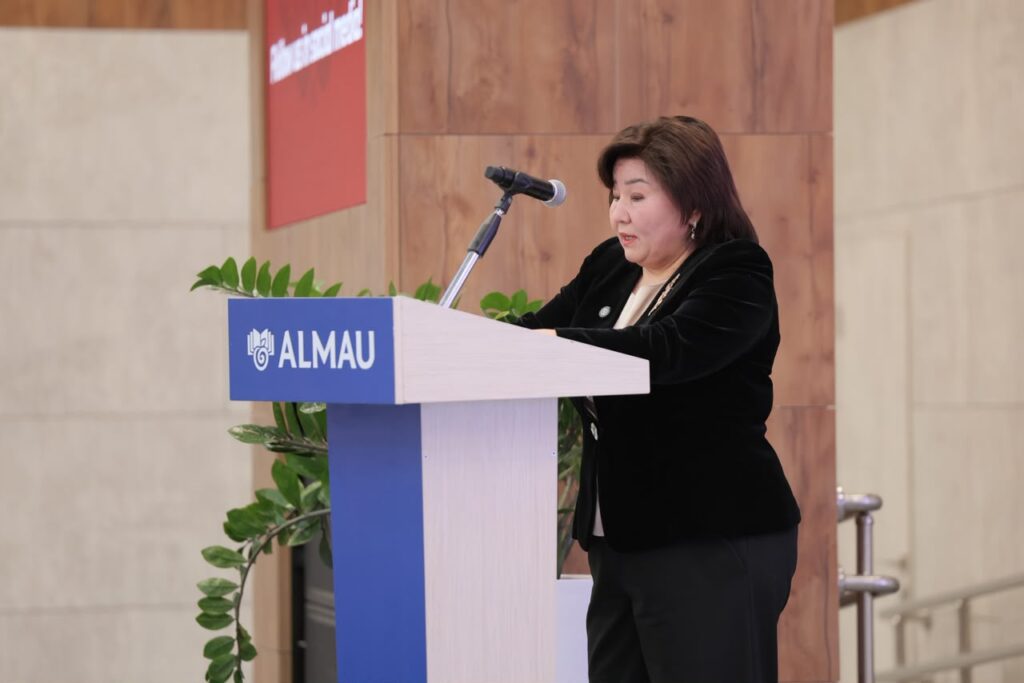
Akerke Abylaikhan, Deputy Chair of the Committee for Higher and Postgraduate Education Ministry of Science and Higher Education, highlighted the importance of:
“The mission of a university extends beyond providing quality education; it also involves nurturing responsible, ethical, and socially conscious individuals. Intellectual development must go hand in hand with emotional and personal growth. By receiving the THE Awards Asia 2026 in the ‘Teaching and Learning Strategy of the Year’ category, AlmaU reaffirms its commitment to humanistic education. Guided by Abai’s philosophy, we believe that education should not only broaden people’s knowledge but also help them become competent professionals, responsible citizens, and compassionate human beings” she emphasized.
The first day of the conference focused on one of the key questions facing modern education: what kind of person should a university graduate become in the age of artificial intelligence? Participants discussed how professional competencies can be combined with critical thinking, ethical principles, and social responsibility, as well as the role of Abai’s philosophy and the intellectual heritage of the Great Steppe in this process.
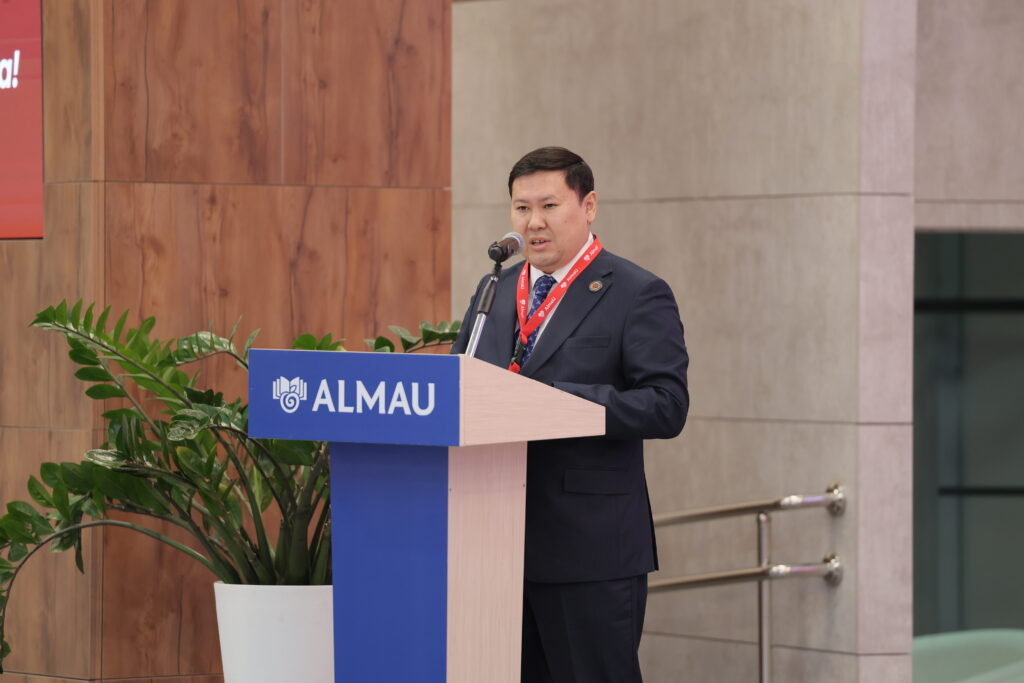
“To be educated means not only to possess knowledge, but also to know how to apply it for the benefit of society. Therefore, a university’s role goes beyond imparting knowledge; it also involves shaping individuals who can think independently, make ethical decisions, and take responsibility for society” said Timur Buldybayev, Rector of AlmaU.
As the founder and president of AlmaU, Assylbek Kozhakhmetov addressed Abai’s concept of Tolyq Adam – the holistic person, which emphasizes the unity of reason, heart, and will.
“We increasingly talk about technology, new professions, and the skills of the future. Yet behind all these changes lies a fundamental question: what kind of person should a university graduate become? We view Abai’s philosophy as the foundation of an educational model in which professional knowledge is complemented by ethical principles, independent thinking, and responsibility to society,” he emphasized.
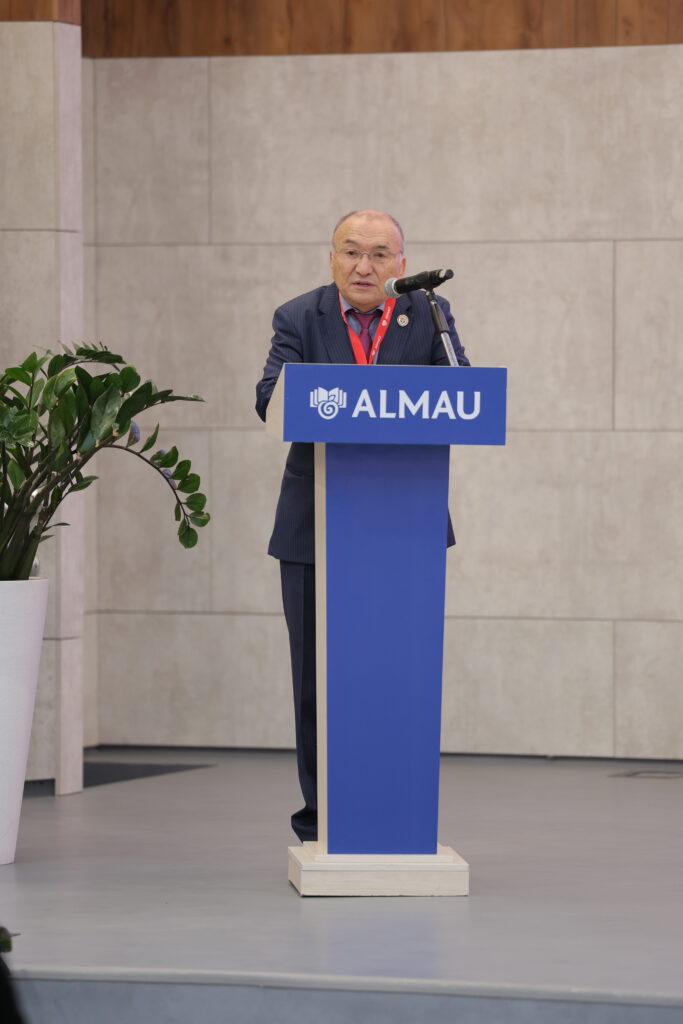
This philosophical idea underpins AlmaU’s Tolyq Adam educational model, which aims to support the comprehensive development of students.
The conference’s keynote address was delivered by Professor Joo-Yup Lee, a researcher of the history of Central Eurasia and the Turco-Mongol world. He explored the concept of holistic personhood in the context of Turkic and Kazakh nomadic societies, inviting participants to view historical heritage as a source of ideas for shaping the person of the future.
“Nomads were well-rounded individuals who combined the skills of warriors, hunters, herders, and craftsmen. Through practice, discipline, and continuous learning, they developed their expertise, strategic thinking, and ability to use available resources effectively. It was thanks to strong leaders and their loyal followers that the Kazakh people emerged as a distinct nation and preserved their identity and independence for centuries” he noted.
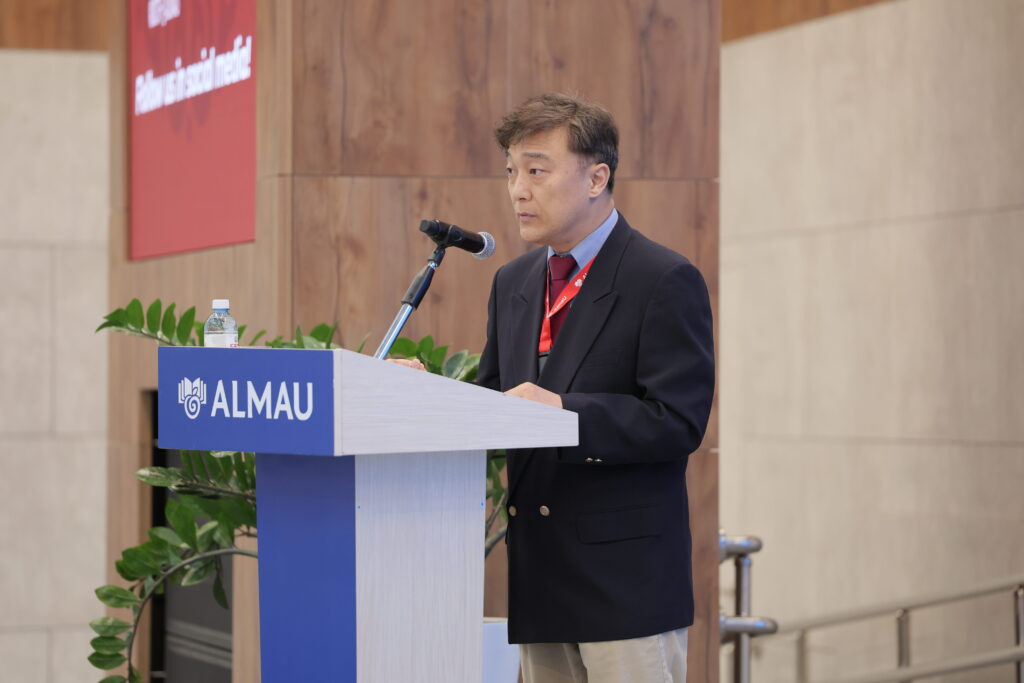
The historical perspective was further developed by Professor Marie Favereau of Paris Nanterre University, who joined online to discuss the relationship between the past and the future through the example of the Golden Horde. Peter Finke, Professor of Social and Cultural Anthropology at the University of Zurich, examined the experience of nomadic societies in his presentation, “Sociality in the Steppes: Three Lessons for the Modern World.”
Professor Zira Nauryzbai, PhD, Professor of Practice at AlmaU, cultural studies scholar, philosopher, and researcher of Kazakh mythology and traditional culture, explored how cultural heritage shapes personality. Her presentation focused on the role of music in personal development within Kazakh culture and the significance of musical heritage in the worldview of the Great Steppe.
The discussion also featured Professor Mark Ingham of the University of the Arts London, whose research focuses on nomadic pedagogy and new models of higher education; Professor Catherine Poujol of the National Institute for Oriental Languages and Civilizations, a specialist in Central Asian history and civilization; and Associate Professor Ainash Mustoyapova of Academician E. A. Buketov Karaganda University, whose research focuses on nomadic civilization, historical memory, and Kazakh identity.
Following the historical and philosophical discussions, participants turned to the practical implementation of the holistic personhood concept within the university environment.
AlmaU’s educational model was presented by Aizhan Sapargaliyeva, Dean of the School of Social Sciences and Transformative Humanities at AlmaU.
“The Tolyq Adam educational program has been implemented at AlmaU since 2023. It combines Abai’s philosophical heritage with contemporary educational methodologies and aims to foster holistic human development. In 2026, Tolyq Adam won the Teaching and Learning Strategy of the Year category at the international Times Higher Education Awards Asia. AlmaU became the first university in Central Asia to receive this distinction,” she said.
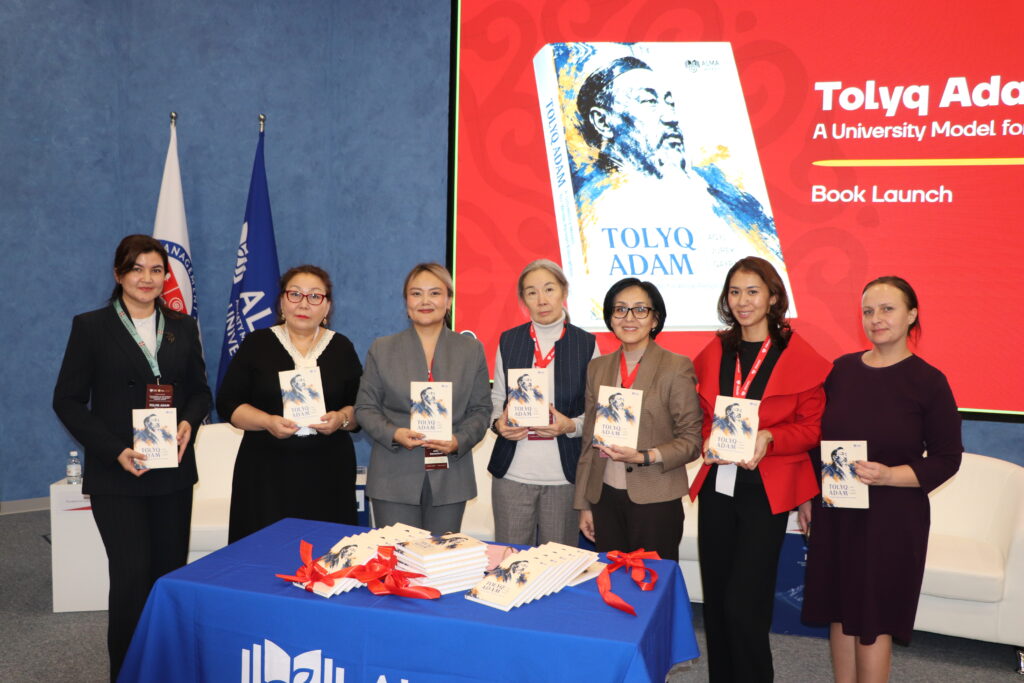
Another important highlight of the conference was the presentation of the book TOLYQ ADAM: A University Model for Whole-Person Education – Conceptual Foundations, Methodology, Evidence and Implementation. Its authors – Dr. Aizhan Saparghaliyeva, Dr. Almira Tabaeva, Maria Schmidt, Dr. Meruert Seidumanova, and Sholpan Sagatova, Candidate of Medical Sciences – presented the philosophical foundations of Kazakhstan’s holistic education model, its methodology, and approaches to integrating it into the educational process.
Building on the discussion of Kazakhstan’s model, participants explored international university practices, examining how educational institutions in different countries incorporate human values into their curricula.
Michelle Hoffman, Deputy Director of the Institute for Writing and Thinking (IWT) and Co-Director of the Center for the Study of Pedagogy in the Humanities and Sciences at Bard College, joined online to discuss rethinking the role of writing in the university of the future. Her presentation focused on writing as a tool for developing thinking and promoting meaningful learning. Gulnar Muratbayeva, a professor in the Department of Pedagogy at Abai Kazakh National Pedagogical University (KazNPU), gave a presentation on the educational potential of the “Tolyq Adam” (Complete Human Being) concept in the training of future educators.
Professor Pamela Pui Wan Leung, Acting Dean of the Faculty of Humanities and Executive Co-Director of the Academy for Educational Development and Innovation at The Education University of Hong Kong (EdUHK), presented approaches to fostering values among students.
Dr. Asmita Dani, Dean and Professor at Symbiosis International University, who leads international engagement and partnerships across South Asia and ASEAN, shared her institution’s experience in curriculum reform.
“In today’s world, it is no longer enough to possess digital skills and know how to use artificial intelligence. It is equally important to develop emotional intelligence, empathy, and the ability to understand others. Education should focus on nurturing well-rounded individuals by combining intellectual growth with moral values, emotional maturity, and a sense of social responsibility. While technology expands our capabilities, it is our human qualities that determine how we choose to use it” she noted.
Pascal Taranto, Professor of Philosophy at Aix-Marseille University and Director of the Gilles-Gaston Granger Center, discussed innovation in the humanities and social sciences and the development of the LABΩ research platform, which also incorporates AI agents.
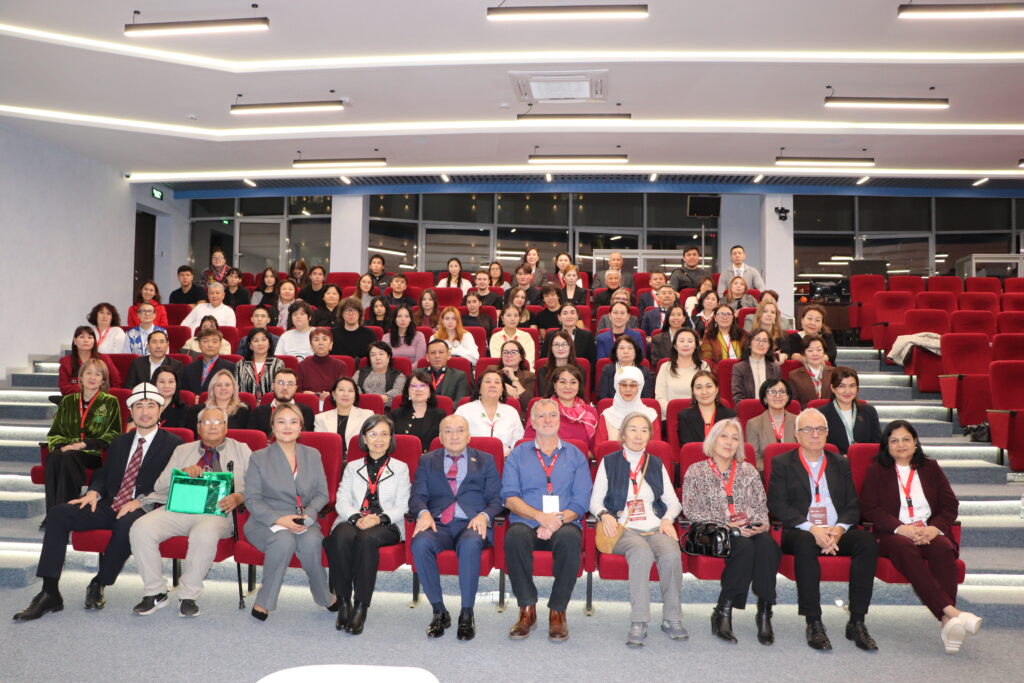
Issues of ethical leadership and critical thinking were addressed by Suran Rabaev, Head of the Development and Innovation Department at the Jusup Abdrakhmanov Academy of Public Administration under the President of the Kyrgyz Republic. Aigerim Tarbagatayeva, a researcher and doctoral candidate at the Nazarbayev University Entrepreneurship Research Centre, presented the topic of human-centric entrepreneurship for a sustainable future, based on the philosophy of Tolyq Adam.
The discussions covered a broad range of topics, from humanities pedagogy and the integration of AI into education to inter-university alliances, ethical leadership, and sustainable entrepreneurship. Throughout the conference, one central question remained: how can universities become environments that foster not only professional competence but also personal growth and development.
Gala Dinner: Continuing the Dialogue in an Informal Atmosphere
Following the conclusion of the first day of the conference, guests, speakers and participants were invited to a festive gala dinner. The evening provided an excellent opportunity for networking, informal conversations and continuing discussions, as well as meeting speakers personally and asking them questions.
Guests enjoyed a delicious dinner and live traditional music performed by an ensemble featuring the dombra, kobyz, zhetygen and cajón. A special atmosphere was created by Tolkyn Zabirova, Honoured Worker of Kazakhstan, renowned pop and opera singer, and professor, who delighted the audience with her beautiful performances.
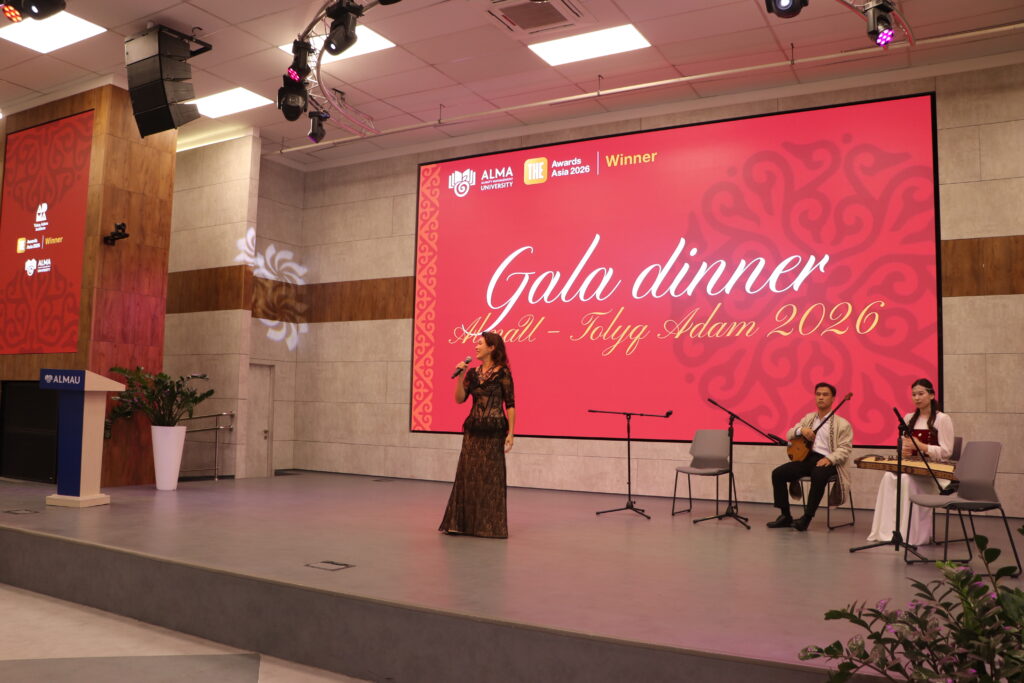
An evening filled with music, warmth, new connections and the spirit of Kazakh hospitality!
TOLYQ ADAM-2026 | DAY TWO: FROM DIALOGUE TO PRACTICE
The second day of the AlmaU TOLYQ ADAM-2026 international conference focused on in-depth academic dialogue, the exchange of international experience and the practical application of holistic personal development concepts in university education.
The programme began with a series of expert lectures delivered by leading international and Kazakhstani scholars.
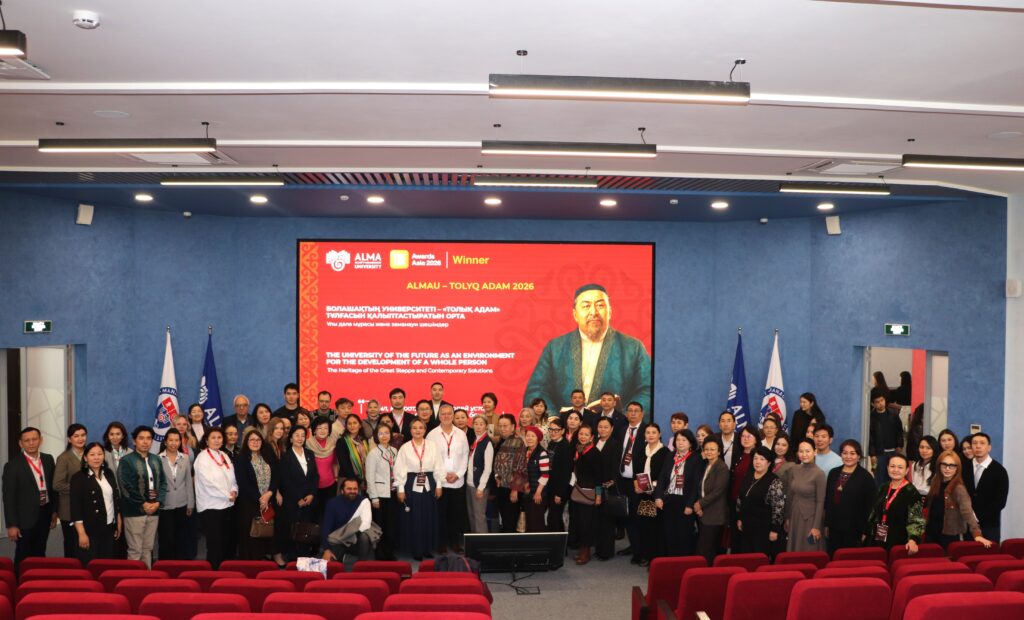
Professor Joo-Yup Lee (University of Toronto, Canada) presented a historical study on Qazaqlyk and the formation of the Kazakh people, exploring the connection between historical heritage and national identity. Professor Pascal Taranto (Aix-Marseille Université, France) introduced participants to the innovative LABΩ research platform and the possibilities of applying AI agents in research activities. Professor Zira Nauryzbayeva (AlmaU, Kazakhstan) dedicated her lecture to kui, Kazakh mythology and music as essential elements of the cultural code of the Great Steppe.
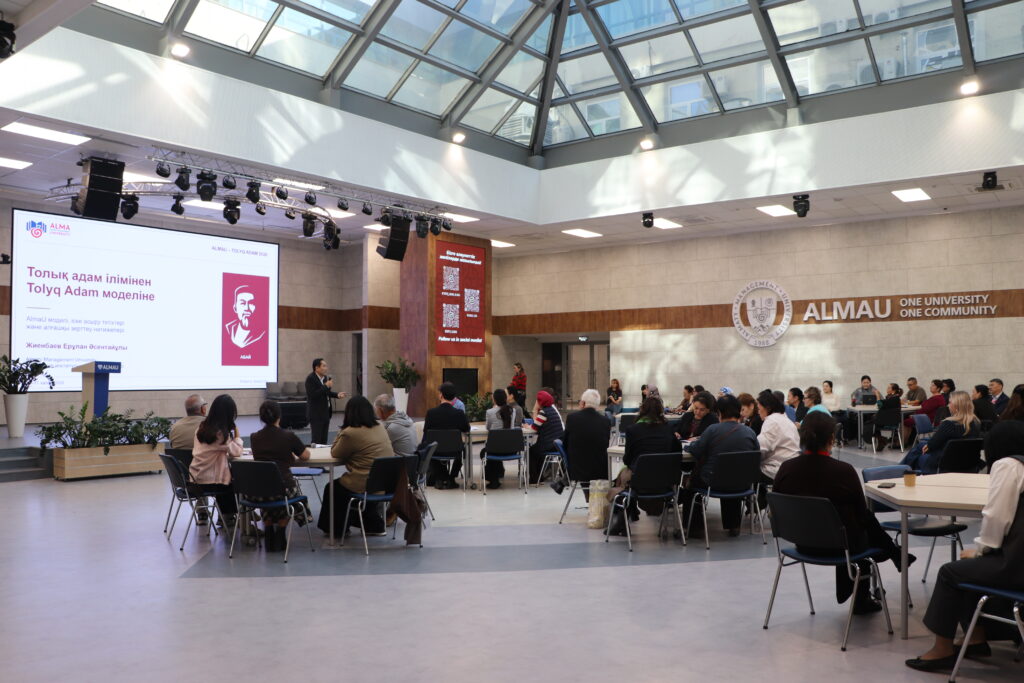
In the afternoon, participants moved from discussing concepts to hands-on experience through three workshops:
• AlmaU: TOLYQ ADAM Practical Lab – tools, courses, methodologies and opportunities for adapting the educational model at other universities.
• Hong Kong Education University (EdUHK): Professor Pamela Pui Wan Leung presented values-based approaches to teaching, assessment and the use of artificial intelligence to support meaningful learning.
• Symbiosis International University (India): Professor Asmita Dani shared practical approaches to integrating the principles of holistic personal development into educational programmes, teaching practices and student experience.
The TOLYQ ADAM-2026 conference aims to strengthen international academic dialogue and advance educational models that bring together national intellectual heritage, modern technologies and the values of human development.
We extend our sincere gratitude to all speakers, international guests and participants of TOLYQ ADAM 2026 for their participation, open dialogue, exchange of ideas and valuable contributions to discussions on contemporary approaches to education and holistic personal development!