
The offline phase of the Yessenov Data Lab (YDL) Summer School, one of Kazakhstan’s leading educational programs in data analytics and artificial intelligence implemented by the Shakhmardan Yessenov Foundation, has officially started at Almaty Management University (AlmaU). For several years, the university has served as a long-standing partner of the program, providing its campus for the final stage of the educational intensive.
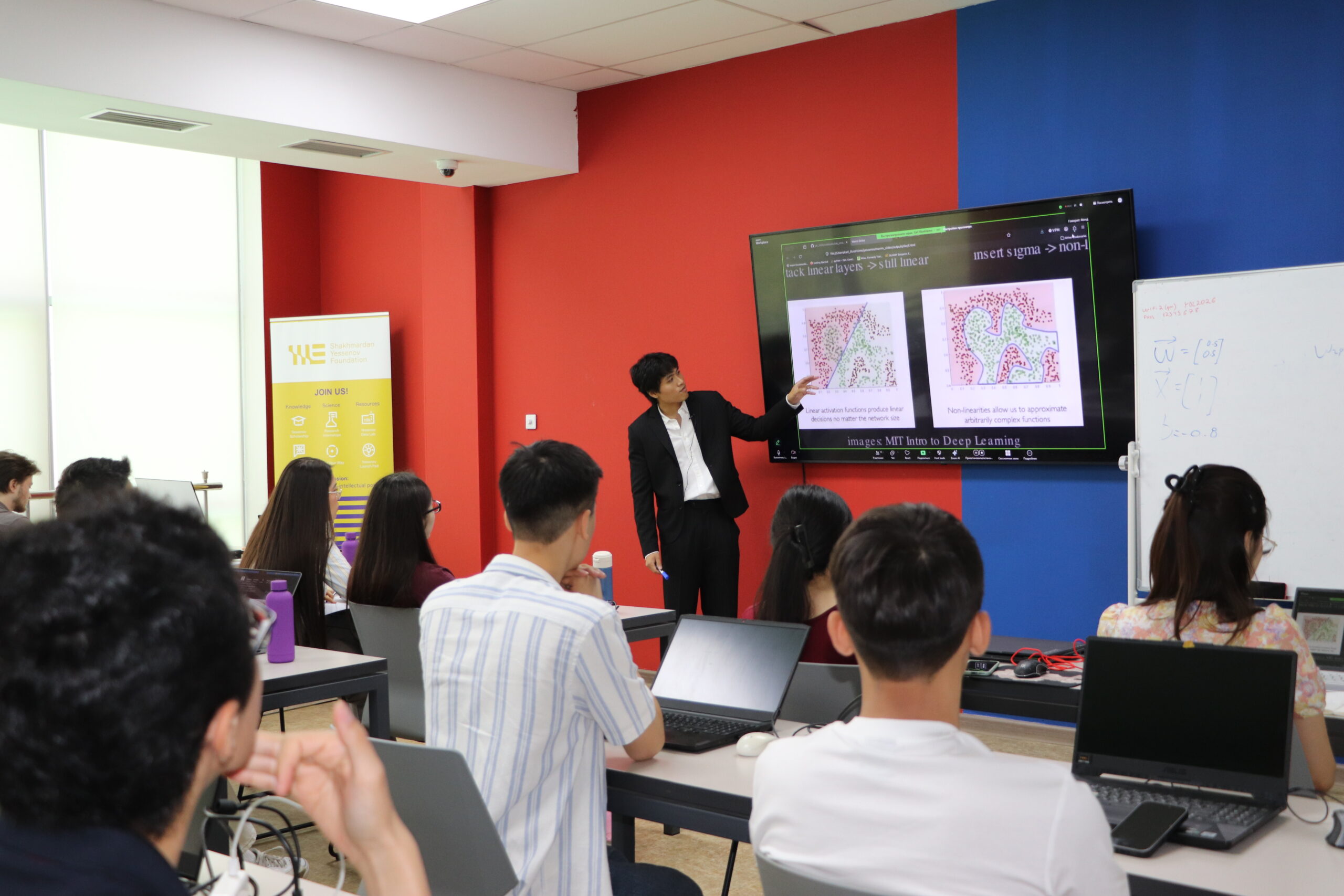
The YDL Summer School runs for four weeks and brings together talented students and young professionals from across Kazakhstan who have successfully passed a competitive selection process. In 2026, the program received 159 applications, with 20 participants ultimately awarded scholarships. The curriculum is designed to develop competencies in big data analytics, machine learning, and the development of artificial intelligence-based solutions.
The first two weeks of the program are conducted online, while the final offline module takes place at AlmaU. During the in-person stage, participants attend intensive sessions led by international experts covering large language models (LLMs), AI agent development, and modern approaches to Data Science. The lectures are delivered by Saeed Hussein, Lead Machine Learning Engineer at Sage UK (United Kingdom), and Carl Illustrisimo, a Data Science researcher and graduate student at the University of California, Berkeley (USA).
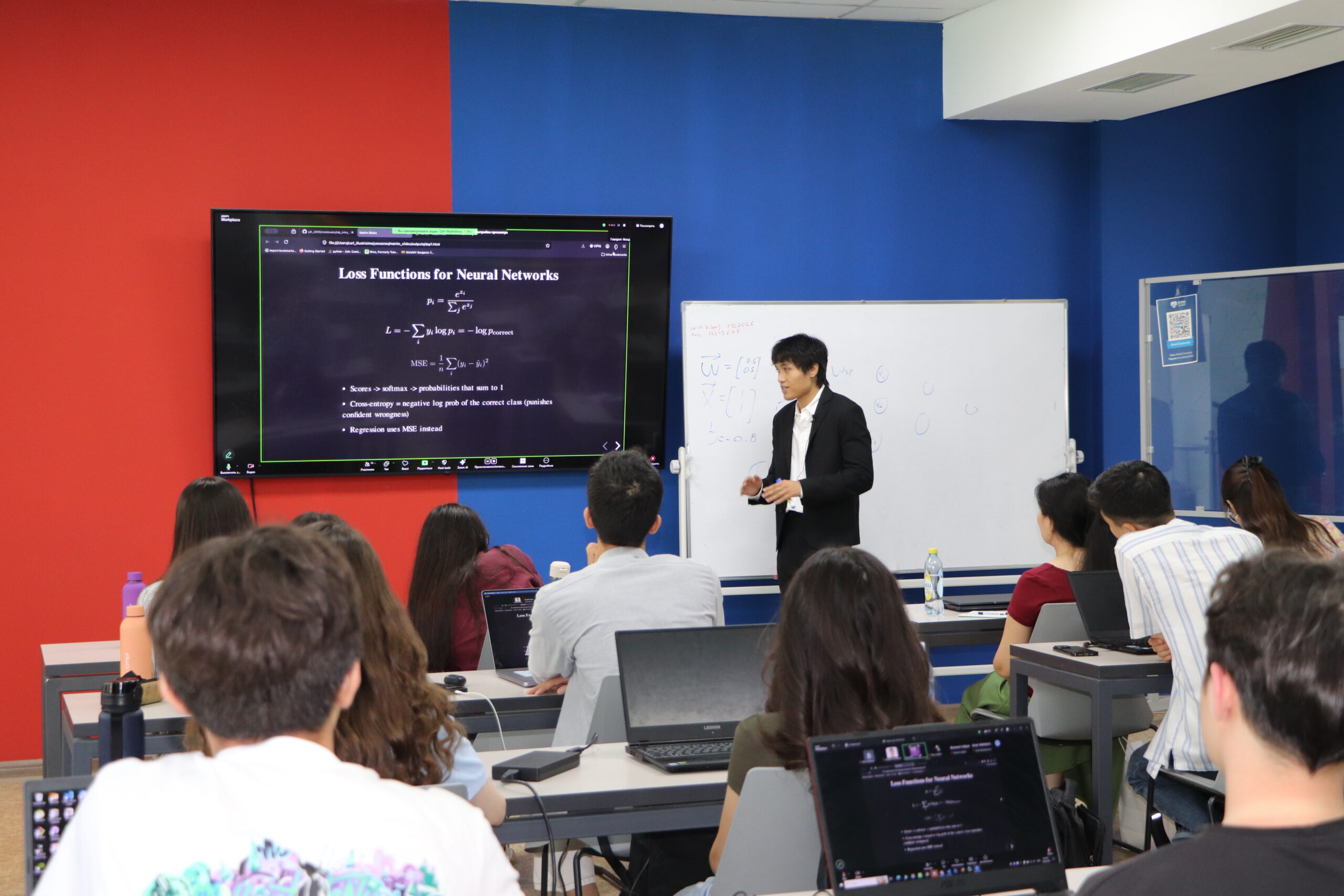
Hosting the Summer School at AlmaU aligns with the university’s strategic commitment to advancing education in digital technologies, artificial intelligence, and the preparation of next-generation professionals. Participants gain not only practical knowledge of cutting-edge data analytics tools but also the opportunity to develop their own projects using real-world datasets under the guidance of internationally recognized experts.
The partnership between AlmaU and Yessenov Data Lab contributes to the development of the professional Data Science community, strengthens the university’s collaboration with leading educational and research institutions, and creates favorable conditions for preparing highly sought-after specialists capable of addressing the challenges of today’s digital economy.