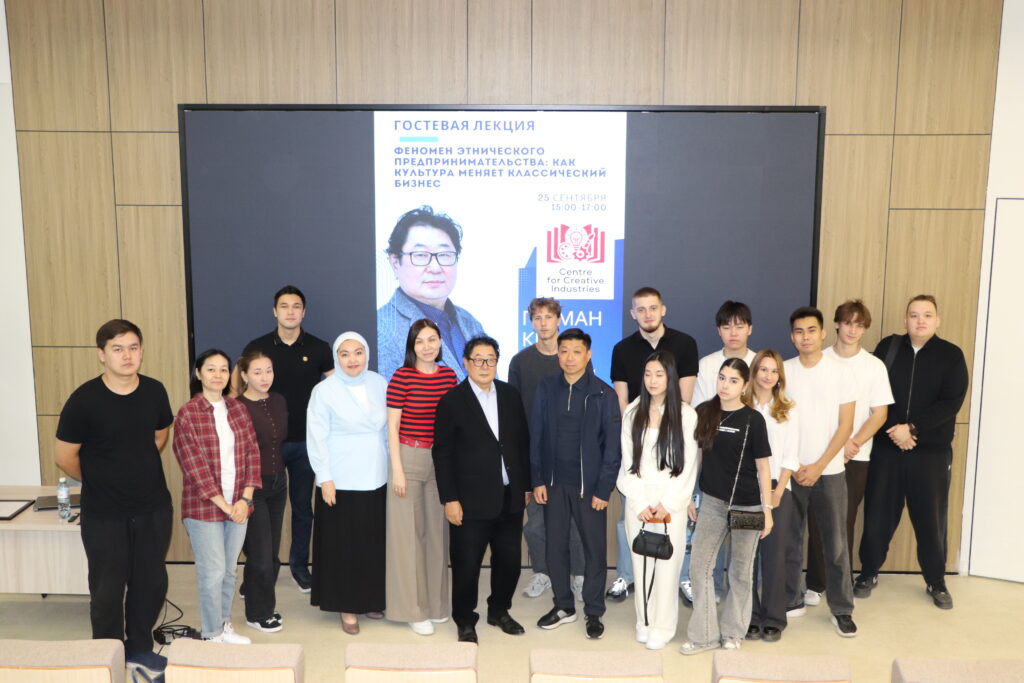
On September 25, AlmaU hosted a guest lecture titled “The Phenomenon of Ethnic Entrepreneurship: How Culture Changes Classical Business,” organized by the Center for Creative Industries of the AlmaU Higher School of Business.
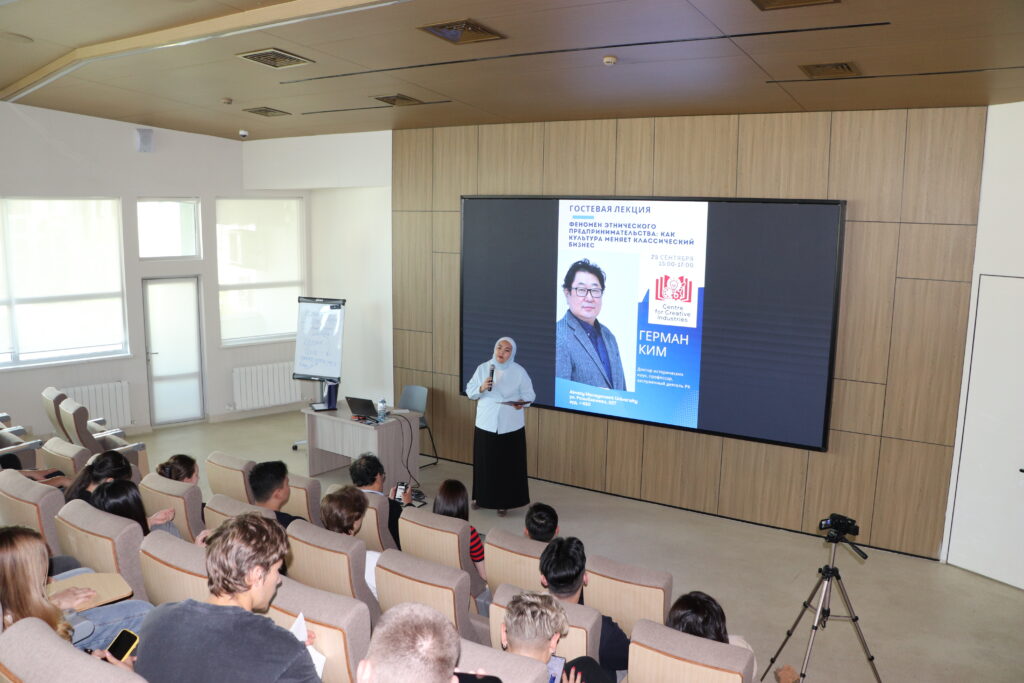
Assel Kakenkyzy Kamza, Director of the Center for Creative Industries, delivered welcoming remarks to the participants. She highlighted the importance of exploring the relationship between culture, entrepreneurship, and contemporary business processes.
The speaker was German Kim, Doctor of Historical Sciences, Professor, Director of the Institute of Asian Studies at Al-Farabi Kazakh National University, Honored Worker of Kazakhstan, and one of the leading specialists in Korean studies, diaspora history, and cultural heritage.

During the lecture, participants discussed how culture, family and ethnic ties, trust, and social networks can become resources for entrepreneurship. Unlike the classical business model, where the key components are an idea, risk, market, and profit, ethnic entrepreneurship also relies on community ties, cultural norms, and connections with the historical homeland.
One of the key topics was the development of businesses from an ethnic niche to a broader market. As the speaker noted, products and services initially aimed at a particular community can gradually move beyond its boundaries, become part of an interethnic market, and eventually serve as the foundation for a larger and more diversified business model.
Particular attention was paid to the role of entrepreneurship in adaptation and social mobility. For migrant communities, starting a business can serve not only as a source of income, but also as a way to integrate into a new society, create jobs, and expand opportunities for the next generation.
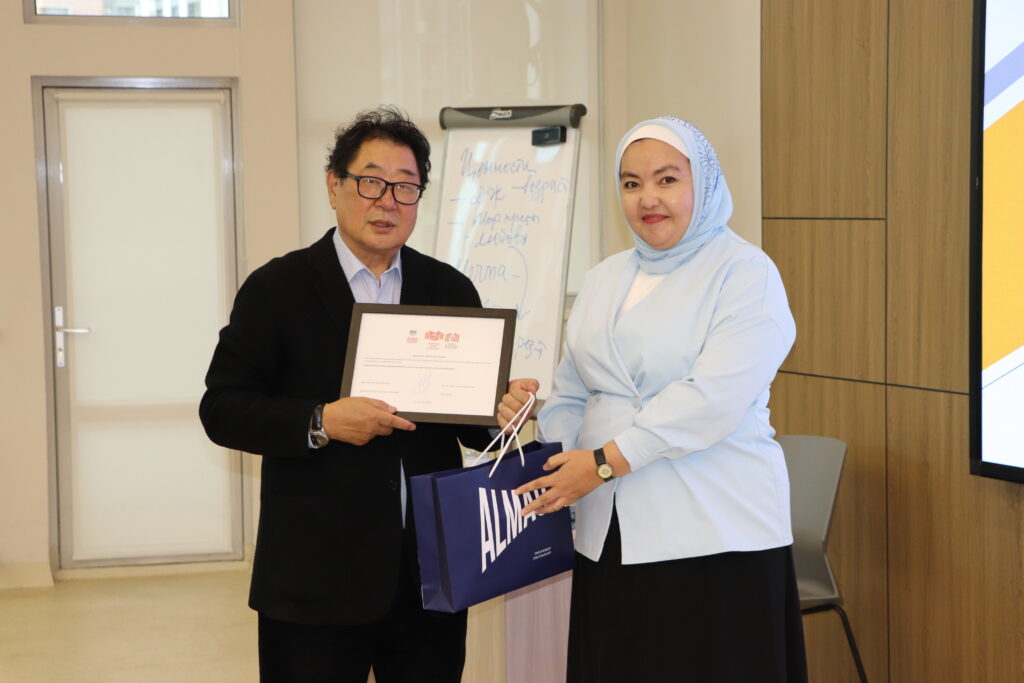
Using the example of Korean diasporas in different regions of the world, German Kim demonstrated how the same culture can shape different business trajectories depending on the characteristics of the local market. Participants also explored the opportunities and limitations of ethnic entrepreneurship: trust and connections within a community can facilitate the launch of a business, while further growth requires moving beyond a narrow niche and adapting to the broader market.
The lecture offered a fresh perspective on the relationship between culture and business, demonstrating how cultural codes can influence how entrepreneurs find customers and partners, build trust, access resources, and develop their companies. At the same time, culture does not replace market mechanisms but shapes distinctive ways of interacting with them.