
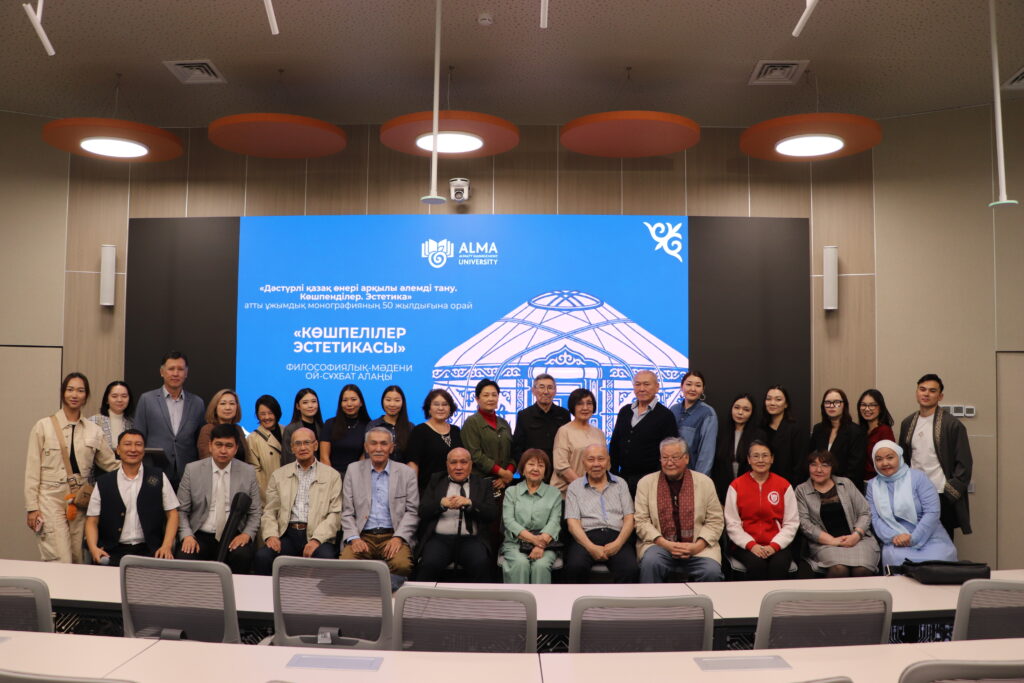
On September 24, AlmaU hosted the “Aesthetics of the Nomads” philosophical and cultural discussion dedicated to the philosophical and cultural studies-based understanding of traditional Kazakh art and the aesthetic worldview of nomadic culture.
The event was organized by the “Great Steppe Academy”. Research Center at AlmaU and the “Aesthetics of the Nomads” initiative group.
The event opened with welcoming remarks by Sholpan Orynassarqyzy Tazabek, PhD, Vice-Rector for Global Partnerships at AlmaU.

As part of the event, Turkologist and Arabist Zifa Alua Auezova sent a special video address from the Netherlands. A video address was also delivered from Tashkent by Alexander Dzhumaev, a cultural studies scholar, art historian, and researcher from Uzbekistan.
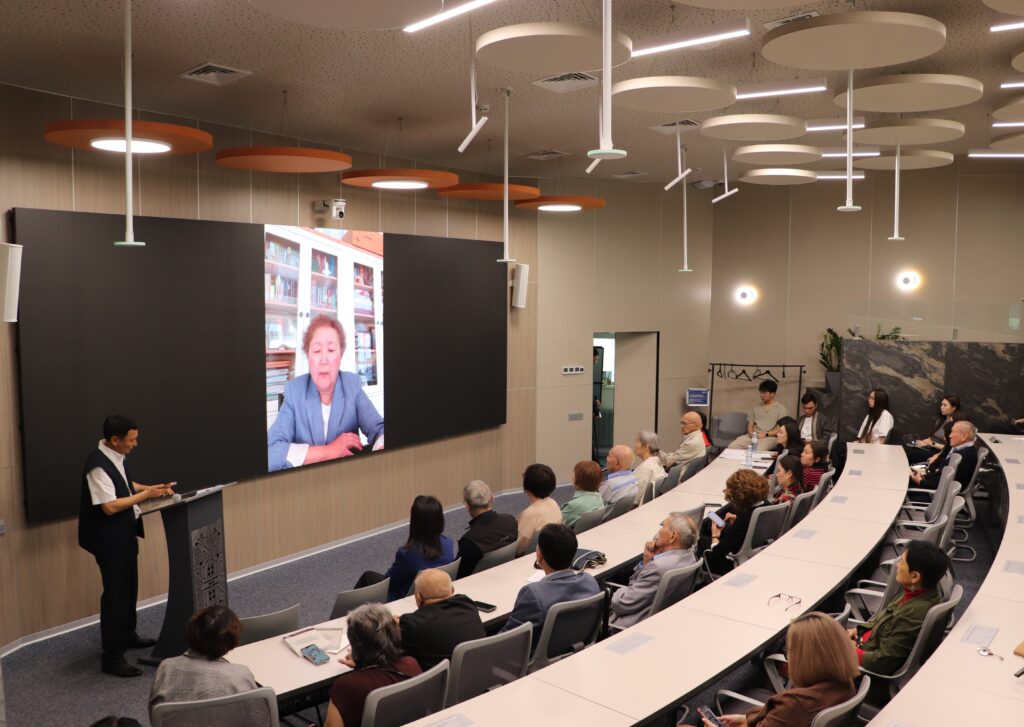
The philosophical and cultural discussion brought together historians, philosophers, cultural studies scholars, literary scholars, journalists, representatives of the creative intelligentsia, and students. During the discussion, Marat Sembi, members of the “Zholshy” philosophical community, community leader Aruzhan Ispergenova, Batyrkhan Zhangali, and other participants shared their views on the aesthetic and worldview dimensions of nomadic culture.
The meeting was dedicated to the 50th anniversary of the publication of the collective monograph “Understanding the World through Traditional Kazakh Art. Nomads. Aesthetics.” Published in 1976, the work became one of the significant academic studies to systematically examine traditional Kazakh art and the worldview and aesthetic foundations of nomadic culture.
The academic significance of the monograph goes beyond the description of individual forms of art. The authors sought to examine nomadic and sedentary cultures not as opposites, but in the context of the interconnectedness and integrity of the global cultural process.

In a number of historical interpretations of the Soviet period, nomadic culture was viewed as a phenomenon at a lower stage of development, while the nomadic world was often characterized as a force that destroyed the achievements of sedentary civilizations. The authors of the monograph presented extensive material that allowed such a one-sided approach to be reconsidered and sought to demonstrate the distinctive character of the spiritual culture of nomadic peoples, its civilizational potential, and its interaction with sedentary cultures.
This scholarly approach was reflected in many sections of the monograph, including:
- Sabit Akatayev — “On the Distinctive Features of Nomadic Culture”;
- Murat Auezov — “Enkidiada: On the Unity of the Nomadic and Sedentary Worlds”;
- Elvira Shakenova — “The Artistic Exploration of the World”;
- Yedige Tursynov — “The Unity of the Aesthetic Experience of Nomadic and Non-Nomadic Peoples”;
- Mirlan Karatayev — “The Nature of the Aesthetic in the Kazakh Heroic Epic”;
- Asiya Mukhambetova — “Some Aesthetic Issues of Kazakh Instrumental Culture”;
- Bolat Karakulov — “Aesthetic Features of Folk Melos”;
- Kanat Nurlanova — “The Symbolism of the World in Traditional Art”;
- Bek Ibrayev — “Concepts of Space in Nomadic Culture”;
- Alan Medeov — “Stone and the Aesthetics of the Nomads.”
The academic discussion also featured: Kairat Zhanabayev, Associate Professor at Al-Farabi Kazakh National University, zhyrau, poet, translator, and publicist; Abdirashit Bakiruly, philosopher and publicist; Sholpan Aidaralieva Ibzharova, Candidate of Philosophical Sciences and Associate Professor at AlmaU; Dauirzhan Tolubayev, Editor-in-Chief of “Aqiqat” magazine; Asyl Salimbekov, Editor-in-Chief of “Mysl” magazine; and Kүnekey Sobetqazyqyzy Akatayeva.
One of the main objectives of the “Aesthetics of the Nomads” discussion forum was to reconsider this scholarly legacy from the perspective of contemporary humanities.
The program also placed particular emphasis on the research of young scholars. Turan University students Aiman Tynybai and Saniya Maratova presented research devoted to contemporary interpretations of nomadic culture. Aiman Tynybai presented “From Looking Across the Steppe to a Worldview: The Philosophy of Nomadic Culture in Traditional Kazakh Art,” while Saniya Maratova presented “The Aesthetics of the Nomads in the Consciousness of Contemporary Kazakh Youth: From Traditional Cultural Code to New Identity.”
The event also featured presentations and contributions from Malika Atayeva, a student at Abai Kazakh National Pedagogical University; Kutbike Kabi, a student at Kazakh National Agrarian Research University; and AlmaU students Sofia Blednykh and Diana Soltanbekova.
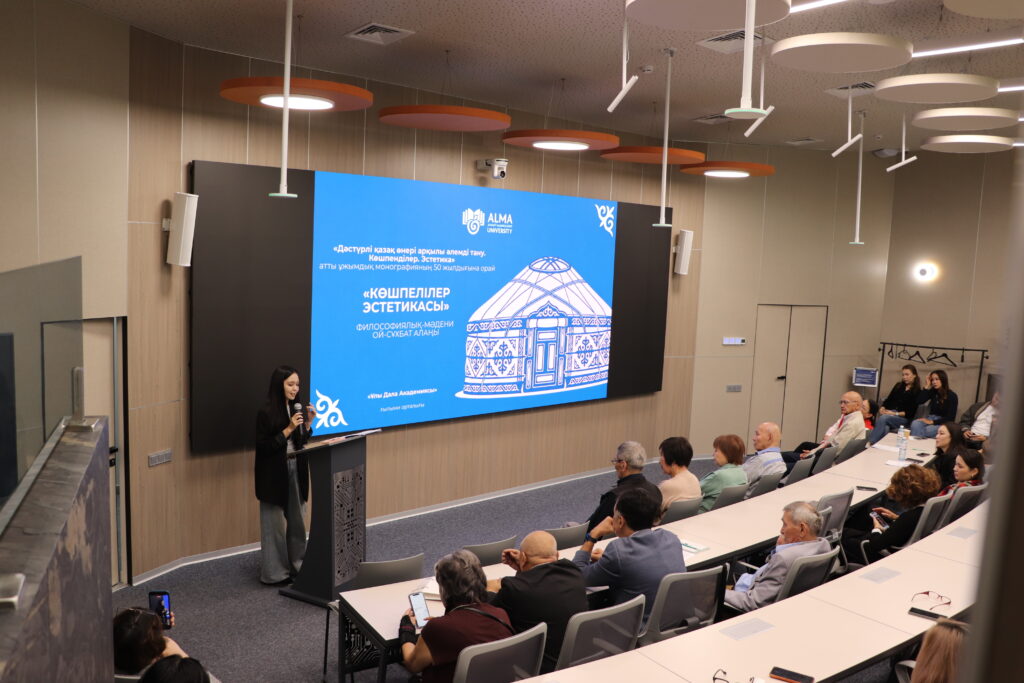
An important feature of the meeting was the effort to consider the aesthetics of nomadic culture not only within the history of traditional art, but also as a distinct cultural and philosophical way of perceiving and understanding the world. In this context, questions of image and symbolism in traditional art, space, the relationship between people and nature, cultural memory, and aesthetic experience were examined in connection with contemporary philosophical research.
The “Aesthetics of the Nomads” discussion forum brought together half a century of scholarly experience in the study of traditional Kazakh art and contemporary humanities. During the meeting dedicated to the 50th anniversary of the monograph, its scholarly legacy was reconsidered, and new opportunities for studying the aesthetic experience of nomadic culture from the perspectives of contemporary philosophy, cultural studies, and art history were discussed.

The event was organized and programmatically coordinated by Nurzhan Kulумzhanov, Director of the “Great Steppe Academy” Research Center, and Dulat Ilyassov, Research Fellow.